QUICK ANSWER
What should an incident postmortem template include?
An incident postmortem template should include record ownership, incident and RCA references, purpose and audience, measured impact, an evidence-backed UTC timeline, causal, contributing, and protective factors, what went well, what needs improvement, surprises, lessons, review decisions, dissenting views, actions with owners and verification criteria, and a dated follow-up state. Keep live response, raw evidence, legal findings, public communications, and release approval in their own records.
An incident postmortem is a post-stabilization learning record. It connects the factual incident record, measured impact, evidence-backed timeline, causal, contributing, and protective factors, lessons, review decisions, owned actions, verification criteria, and follow-up without turning the document into a blame exercise.
This downloadable pack includes an editable facilitator worksheet, a valid JSON starter, a fictional completed example, a closed JSON Schema, and a dependency-free validator with deterministic tests. It does not replace live response, the factual incident report, root-cause analysis, public status communication, legal or regulatory review, remediation execution, change approval, or proof that recurrence is impossible.
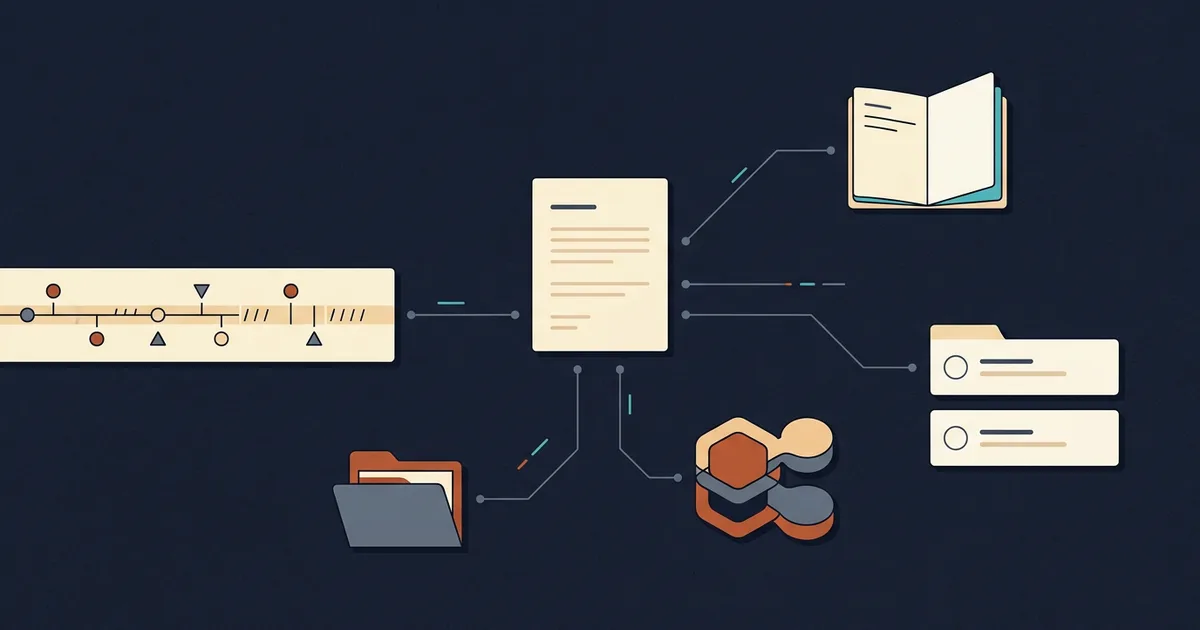
Run a review that preserves evidence and accountability
Wait until the incident is stable enough for learning, then review the system and decision context with the people who hold the evidence. Keep facts, analysis, actions, and follow-up linked but separately owned.
Set the trigger, owner, audience, and boundary
Use declared criteria to decide which incidents need a postmortem. Assign a facilitator or document owner, name the intended audience and confidentiality, link the incident record, and state what the review will not decide. Keep emergency work and time-bound notification duties ahead of the learning meeting.
Sources: [postmortem-pack], [google-sre-culture], [gitlab-incident-review]
Start from impact, records, and one ordered timeline
Summarize measured impact with explicit confidence, then build one UTC timeline from the incident record and sanitized evidence references. Preserve the lead-up, detection, response, stabilization, communication, and review-relevant decisions without rewriting uncertain observations into facts.
Sources: [postmortem-pack], [google-sre-example], [nist-800-61r3], [pagerduty-template]
Review system conditions without assigning blame
Assume people acted from the information and incentives available at the time. Examine causal, contributing, and protective factors across software, process, communication, tooling, ownership, and environment. Link formal causal claims to the separate RCA when one exists rather than treating one proximate error as the entire explanation.
Sources: [postmortem-pack], [google-sre-culture], [atlassian-postmortems], [aws-post-incident]
Capture learning wider than cause alone
Record what went well, what needs improvement, surprises, and lessons. Include decision context and unresolved or dissenting views so the final document does not imply more agreement than the review achieved. Remove or restrict end-user-identifying and operationally sensitive material before wider sharing.
Sources: [postmortem-pack], [google-sre-culture], [pagerduty-template], [gitlab-incident-review]
Turn accepted findings into verifiable actions
Give every corrective, preventive, detection, or process action a stable ID, source-factor references, role owner, due date, observable verification criteria, and follow-up date. Keep implementation and effectiveness as separate states; a merged change or completed task does not prove that risk was reduced.
Sources: [postmortem-pack], [atlassian-postmortems], [gitlab-incident-review], [aws-post-incident]
Review the record and close follow-up honestly
Complete a review of the findings and proposed actions, publish only to the appropriate audience, and revisit the evidence on the scheduled follow-up date. Mark an action verified, ineffective, or superseded from observed evidence. Leave the record open when effectiveness is unknown.
Sources: [postmortem-pack], [google-sre-culture], [nist-800-61r3], [atlassian-postmortems]
The incident postmortem boundary
Use this owner for post-stabilization learning, review decisions, and accountable follow-through. Reference adjacent records by stable ID rather than absorbing their authority.
Included
- Postmortem owner, incident and RCA references, revision, status, audience, confidentiality, purpose, and explicit exclusions
- Measured impact, confidence, sanitized evidence inventory, and an ordered UTC learning timeline
- Causal, contributing, and protective factors linked to evidence and an optional separate RCA record
- What went well, what needs improvement, surprises, lessons, decisions, and dissenting or unresolved views
- Corrective, preventive, detection, and process actions with owners, dates, source factors, verification criteria, and evidence
- Review completion, publication state, dated follow-up, and honest verified, ineffective, or superseded outcomes
Not included
- Live incident command, emergency instructions, containment, recovery execution, regulator notification, or a response runbook
- The immutable factual incident report, raw logs or personal data, forensic evidence store, public status update, or customer notice
- A substitute for evidence-led RCA, cause certification, blame assignment, employment action, legal advice, audit opinion, or compliance decision
- Remediation implementation, budget or capacity commitment, change or release approval, security or safety assurance, or proof that recurrence is impossible
- A project postmortem for scope, schedule, budget, delivery outcomes, client acceptance, or project closure
DOWNLOADABLE RESOURCE
Download the incident postmortem template pack
Use the Markdown worksheet to facilitate the review or the JSON starter to automate a bounded workflow. Inspect the fictional example, closed schema, validator, and tests before adapting the record.
Incident postmortem template pack
A fictional incident-learning record connecting one stabilized event to measured impact, evidence, timeline, factors, lessons, review decisions, owned actions, and unresolved follow-up.
Format: Markdown, JSON, JSON Schema, and dependency-free Node.js validator/tests in one ZIP
Locally reproduced August 1, 2026. SHA-256: 1771f27f34fc6f98ae1bc2aa3a4f4ff2fc0c051870513ac5cd7b107d7ee98af5
Included
- Editable Markdown facilitator worksheet and a valid JSON starter
- Completed fictional JSON example for one bounded synthetic service incident
- Closed Draft 2020-12 JSON Schema covering every root and nested record shape
- Dependency-free validator for exact keys, IDs, references, chronology, safe fictional URLs, workflow states, and all-false boundaries
- Twenty-nine deterministic tests covering both valid records and rejected unsafe or contradictory states
- README, package commands, fixed source timestamps, exact file allowlist, and reproducible ZIP bytes
Verification boundary
Validated the starter and completed example, passed 29 dependency-free tests, checked closed object shapes and cross-record references, copied an exact nine-file allowlist, stripped ZIP metadata, and reproduced the same archive hash.
Three incident postmortem patterns
The record shape stays stable while the incident changes. Each pattern keeps facts, causal analysis, actions, and approval with their accountable owners.
Customer-facing service incident
Use when: A service disruption is stable and the team needs one reviewable learning record across detection, response, stabilization, communication, and follow-up.
Link the factual incident record and measured impact, reconstruct the UTC timeline, preserve contributing and protective factors, record lessons, and assign actions that can be verified after implementation.
Structure
- Incident and evidence references remain authoritative for contemporaneous facts
- Causal claims link to the RCA record when deeper analysis is required
- Action implementation and effectiveness remain separate follow-up states
Watch for: The postmortem does not prove complete recovery, contractual compliance, customer notification, cause completeness, or future reliability.
Sources: [google-sre-example], [pagerduty-template], [nist-800-61r3]
Operational near miss
Use when: A protective control prevented visible impact, but the sequence and conditions reveal a credible failure path worth learning from.
Record the bounded sequence, the control that interrupted it, evidence limitations, contributing conditions, what worked, what remained fragile, and actions to strengthen detection or prevention.
Structure
- Impact can be zero while exposure and uncertainty remain explicit
- Protective factors receive the same evidence discipline as causal factors
- The review avoids inventing a counterfactual loss amount or severity claim
Watch for: A near-miss record cannot prove what would have happened, quantify avoided harm, or establish that the same control will work again.
Sources: [aws-post-incident], [google-sre-culture]
Recurring operational process failure
Use when: Several incidents share a handoff, approval, data, vendor, or support failure and the team needs to review systemic patterns instead of blaming the latest operator.
Link each incident record, bound the current postmortem, identify recurring process conditions, preserve dissent about ownership, and create actions whose evidence can be checked at a later review.
Structure
- The current record distinguishes shared patterns from incident-specific facts
- Role and process conditions stay separate from personal performance evaluation
- A follow-up date prevents publication from becoming the end of the workflow
Watch for: A pattern review does not establish negligence, fraud, employment findings, contractual liability, or a universal root cause.
Sources: [atlassian-postmortems], [gitlab-incident-review], [aws-post-incident]
Decide whether the postmortem is ready to publish
Structural validity makes missing ownership and contradictions visible. It cannot replace facilitator judgment, specialist review, or observed action outcomes.
The incident is still active, urgent protection is incomplete, or a time-bound notification decision is open.
Choose: Keep the postmortem in draft and return authority to the response, safety, security, privacy, legal, or regulator-notification owner.
Tradeoff: The learning document waits, but it does not distract from active protection or become an accidental command channel.
The timeline, impact, or factor statements have no evidence reference or contradict the incident record.
Choose: Preserve the disagreement, repair the reference, and keep unsupported claims out of the accepted findings.
Tradeoff: The review may publish later or with unresolved items, but confidence is not manufactured from consensus alone.
A causal statement relies on one human error, one proximate event, or an untested assumption.
Choose: Return it to hypothesis or contributing-factor status and investigate the system, process, tooling, communication, and decision context.
Tradeoff: The explanation becomes less simple, but the record is less likely to assign blame or fund an ineffective action.
An action has no source factor, role owner, due date, verification criteria, or follow-up date.
Choose: Keep the action unaccepted until its ownership and evidence contract are explicit.
Tradeoff: Fewer actions leave the meeting, but each accepted item can be tracked and challenged.
A change shipped, but the verification window has not passed or the expected result was not observed.
Choose: Record implementation without marking the action verified; keep follow-up open or mark it ineffective when evidence contradicts the intended result.
Tradeoff: Closure takes longer, but activity is not mislabeled as demonstrated risk reduction.
REVIEW THE SYSTEM
Download the incident postmortem and validate the follow-up graph
Open the facilitator worksheet or JSON starter, inspect the fictional completed example, and run the dependency-free checks before adapting the record.
Download the incident postmortem packThe ZIP is reproduced locally. Public availability, adapted evidence quality, review completeness, and real action outcomes require separate verification.
Preserve contemporaneous facts in the incident reportUse the incident report owner for observed facts, evidence, completed actions, open questions, and handoff. Use this page for the later learning review and follow-up.
What an incident postmortem cannot prove
A disciplined record supports organizational learning. Its conclusions still depend on available evidence, memory, observability, facilitation, access, participation, analysis quality, and the time allowed for follow-up.
- A blameless approach improves the review frame but does not guarantee psychological safety, complete participation, unbiased analysis, or fair organizational decisions.
- A detailed timeline can expose gaps and decision context, but chronology alone does not prove causation.
- One accepted cause model can omit interacting technical, organizational, vendor, environmental, or human factors.
- A published action list does not authorize implementation, allocate capacity, approve a release, or prove effectiveness.
- Redacted references and access labels do not independently prove privacy, confidentiality, chain of custody, retention compliance, or legal privilege.
- A quiet follow-up window is bounded evidence, not proof that the incident cannot recur.
- This template is not a response plan, incident report, root-cause certification, public status update, regulator report, audit record, legal opinion, or project postmortem.
- This ordinary informational article does not grant AI signup credits. The linked product page follows its own current eligibility rules.
Sources and verification record
The same-release artifact supports the fictional record and validator claims. Current primary and first-party operational sources support the review principles and field model without certifying this pack or making local conventions universal.
[postmortem-pack] Playcode:Incident postmortem fictional example
Checked August 1, 2026. Supports: The locally reviewed fictional record, field graph, validator behavior, tests, and reproducible archive. Public availability remains unverified until deployment.
[google-sre-culture] Google SRE:Postmortem Culture: Learning from Failure
Checked August 1, 2026. Supports: Google SRE guidance on written incident learning, blameless review, trigger criteria, formal review, action quality, stakeholder sharing, and protecting identifying information. It documents one operating model, not a universal standard.
[google-sre-example] Google SRE:Example Postmortem
Checked August 1, 2026. Supports: A fictional teaching example with status, summary, impact, trigger, resolution, detection, UTC timeline, factors, lessons, and owned action items. Its local field choices are not mandatory.
[nist-800-61r3] National Institute of Standards and Technology:NIST SP 800-61 Rev. 3
Checked August 1, 2026. Supports: The April 2025 publication’s guidance on event sequence, systemic causes, investigation records, data integrity, sensitive-record safeguards, follow-up reports, lessons-learned meetings, and prioritized improvements. It is cybersecurity guidance, not a generic postmortem schema.
[pagerduty-template] PagerDuty Incident Response Documentation:Postmortem Template
Checked August 1, 2026. Supports: PagerDuty’s own operational fields for ownership, meeting date, overview, contributing factors, resolution, quantified impact, responders, UTC timeline, evidence links, learning, and trackable actions. Timing and tool conventions remain local.
[atlassian-postmortems] Atlassian Incident Management Handbook:Incident postmortems
Checked August 1, 2026. Supports: Atlassian’s first-party practice for ownership, chronological timelines, blameless language, contributing causes, specific follow-ups, and separate review of findings and actions. Its workflow and service targets are company choices.
[gitlab-incident-review] GitLab Handbook:Incident Review
Checked August 1, 2026. Supports: GitLab’s public operating practice for blameless sequence and decision context, a named DRI, redaction, incident-record inputs, causal and action narrative, and linked follow-up. Its roles, tools, and timing are local.
[aws-post-incident] Amazon Web Services Well-Architected Framework:Perform post-incident analysis
Checked August 1, 2026. Supports: AWS guidance on blame-free analysis beyond immediate human error, clear ownership, impact and supporting evidence, lessons, corrective actions, near misses, and feeding patterns into operating controls. It is not a legal or forensic standard.
Incident postmortem template questions
What is an incident postmortem?
An incident postmortem is a post-stabilization learning record. It brings together the incident reference, measured impact, evidence-backed timeline, contributing and protective factors, lessons, review decisions, owned actions, verification criteria, and follow-up. Its purpose is organizational learning and accountable improvement, not blame or live response.
What is the difference between an incident report and a postmortem?
The incident report preserves contemporaneous facts, impact, evidence, actions already taken, and handoffs during or soon after one event. The postmortem is a later learning review that references that record, analyzes system conditions, captures lessons and decisions, and assigns verifiable follow-up. Do not rewrite uncertain incident observations into accepted facts merely because the review happens later.
Is a postmortem the same as root-cause analysis?
No. Root-cause analysis tests causal hypotheses and links evidence to causal and contributing factors, corrective actions, verification, and follow-up. A postmortem may reference that RCA, but also covers impact, timeline, detection and response, what went well, what needs improvement, surprises, decision context, dissent, broader lessons, and how findings are shared.
What makes an incident postmortem blameless?
A blameless review assumes people acted from the information, tools, incentives, authority, and constraints available at the time, then examines system and process conditions. It avoids naming one person as the explanation. That framing does not guarantee psychological safety or prevent separate qualified legal, safety, security, or employment processes when they are required.
When should an incident postmortem be closed?
The review can be published when evidence references, findings, decisions, ownership, and proposed actions are reviewable for the intended audience. Follow-up should close only when each action has an observed verified, ineffective, or superseded outcome with evidence. Shipping a change or completing a task is not enough to mark effectiveness verified.
Is an incident postmortem the same as a project postmortem?
No. An incident postmortem reviews a bounded operational or service incident, its impact, timeline, system factors, response learning, and follow-up. A project postmortem reviews delivery outcomes such as objectives, scope, schedule, budget, stakeholder expectations, acceptance, and project closure. The two may share learning techniques but need different evidence and owners.
Can Playcode turn this postmortem into a workflow?
Playcode can help build a bounded workflow around reviewed incident references, impact, evidence, timeline, factors, lessons, review states, actions, verification, and follow-up. Before operational use, verify restricted access, redaction, attachments, retention, audit, notifications, concurrent edits, integrations, export, monitoring, backup, recovery, and release ownership with the people accountable for the real process.
BUILD THE REVIEWED LEARNING WORKFLOW
Turn the accepted postmortem record into a bounded app
Give Playcode the reviewed fields, roles, states, evidence rules, and ownership boundaries. Verify restricted access, redaction, attachments, retention, audit, notifications, integrations, monitoring, backup, recovery, and release control before operational use.
Build and verify the postmortem workflowThis informational article does not grant AI signup credits. No review completeness, cause accuracy, action effectiveness, response quality, recovery, safety, security, privacy, compliance, legal sufficiency, or recurrence outcome is guaranteed.