QUICK ANSWER
How much does MVP development cost?
Using this page-authored U.S. role-hour model, a disposable interaction proof is about $8,000-$16,000 but is a prototype, not an MVP. Illustrative commissioned-project ranges are $35,000-$75,000 for a private workflow MVP and $70,000-$145,000 for a production pilot. These are planning estimates, not quotes, guarantees, or market averages. Pilot operations and later iterations remain separate.
An MVP budget should buy evidence for one product decision, not the fewest visible screens. A disposable interaction prototype, a private workflow MVP, and a production pilot have different data, access, failure, launch, support, and reuse obligations even when their interfaces look similar.
This guide separates disposable work from reusable work, prices planned learning cycles, and carries a bounded pilot through operating runway. Replace every hour, rate, user-research assumption, provider charge, and uncertainty with evidence from the learning goal you need to fund.
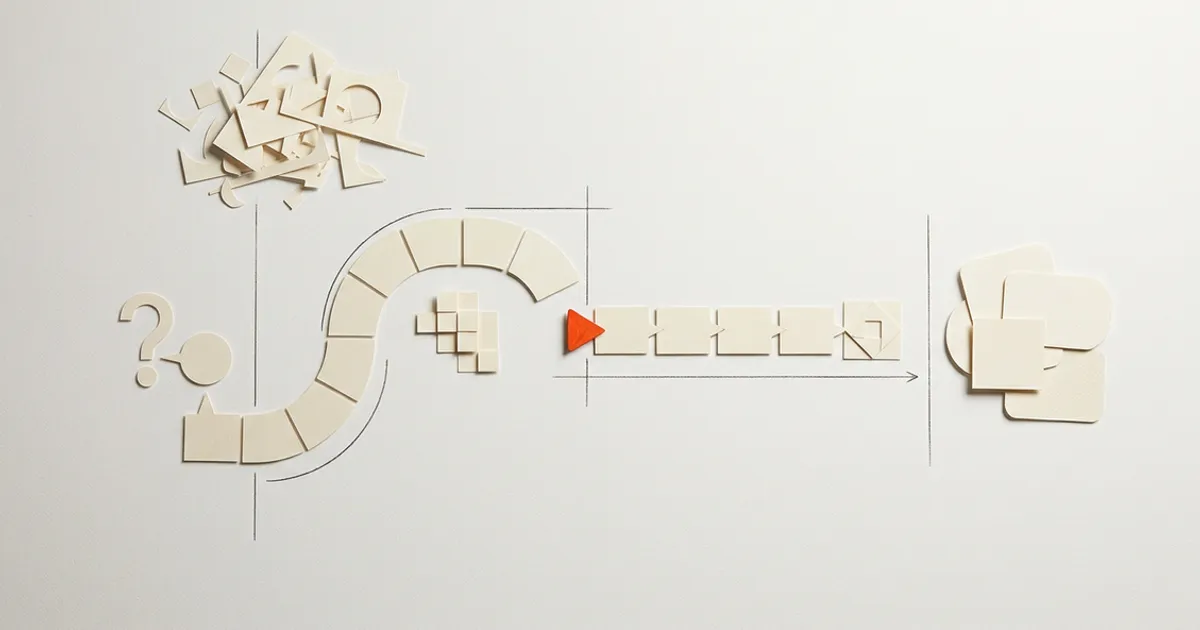
Planning assumptions behind the MVP ranges
The scenarios use editable role-hours and a U.S. employee-cost proxy. They describe commissioned-project planning, not founder cash spend, agency quotes, market averages, or Playcode plan prices.
| Assumption | Value used | Why it changes the estimate |
|---|---|---|
| U.S. employee-cost proxy | Product and project work $71/hour, interface and QA work $72/hour, and software development $94/hour. | Rounded rates derive from BLS medians and a broader professional-occupation wage share. They are not contractor or agency bill rates. |
| One learning decision | Each MVP tests one target user, one problem, one core workflow, and a stated evidence threshold. | Several audiences, workflows, channels, or business-model questions create parallel tests and should be priced separately. |
| Disposable versus reusable work | The worksheet labels each workstream by expected reuse and exposes disposable prototype labor separately. | Reusing a shortcut without adding its missing data, access, quality, and operating obligations creates hidden rework. |
| Iteration and runway | Scenario ranges include 15-25% reserve; the worksheet separately prices learning cycles and one to six months of pilot operation. | An MVP without time and ownership to observe, interpret, and act on evidence funds software but not the decision. |
EDITABLE LEARNING-SCOPE WORKSHEET
Budget the evidence, not a feature pile
Separate disposable prototype work from reusable application work, name the learning cycles, and include enough operating runway to observe the pilot. The result is an evidence budget, not a promise that the market will respond.
Planning boundary: All hours and USD amounts are 2026 editorial planning estimates based on the stated learning goal and editable inputs. They are not market averages, not quotes and not guarantees.
Download the blank MVP scope worksheet| Include | Workstream | Disposition | Hours | USD/hour | Subtotal |
|---|---|---|---|---|---|
| Problem evidence and acceptance boundary | learning | $2,272 | |||
| Disposable interaction prototype | disposable | $3,456 | |||
| One working end-to-end workflow | reusable | $22,560 | |||
| Roles, records, states and server-side access | reusable | $9,024 | |||
| Learning events, feedback and evidence export | learning | $6,016 | |||
| Acceptance, authorization and failure tests | reusable | $6,912 | |||
| Pilot launch, monitoring and recovery handoff | launch | $3,976 |
Planning result
- Included base work
- 632 hours
- Disposable prototype labor
- $3,456
- Reusable, learning, and launch labor
- $50,760
- Planned iteration labor
- $9,024
- Build plus reserve
- $78,888
- Evidence budget with runway
- $80,688
How this MVP cost model works
The worksheet starts with one decision and evidence threshold, then prices disposable exploration, reusable delivery, planned learning cycles, launch work, reserve, and operating runway separately.
Write the decision before the feature list
Name the target user, repeated problem, one observable outcome, the evidence that would support or reject the hypothesis, the recruitment path, and who makes the next product decision. Work that cannot change that decision needs a stronger reason to enter MVP scope.
Sources: [bls-oews-2025], [bls-employer-costs-2026]
Separate prototype work from reusable MVP work
Mark sketches, click-through interactions, fake data, manual handoffs, and temporary provider simulations as disposable when appropriate. Mark authoritative records, server access, real failure handling, learning events, tests, export, and recovery as reusable only when the next release is expected to retain them.
Sources: [nist-ssdf], [wcag-22]
Price a complete core workflow and its evidence
Estimate intake, valid and invalid states, one useful outcome, access, persistence, loading, empty, failure, retry, completion events, feedback, and evidence export. Include observed sessions and analysis instead of funding launch with no learning loop.
Sources: [bls-oews-2025], [bls-employer-costs-2026], [wcag-22]
Add production obligations only when the test needs them
A private test may use a bounded account list and manual support. A production pilot may require server authorization, privacy boundaries, monitoring, accessible web delivery, support, export, repair, and recovery. Playcode Cloud can provide backend, database, files, jobs, HTTPS, snapshots, and rollback within current plan limits; review the current Cloud capability boundary before replacing worksheet inputs.
Sources: [playcode-cloud], [nist-ssdf], [wcag-22]
What this MVP estimate owns
This guide owns the budget for one evidence-producing product test, including disposable versus reusable work and pilot runway. The commercial implementation path belongs to build an MVP. The broader app cost guide owns generic product and delivery-platform breadth; a procedural web-app guide owns the implementation sequence after the evidence boundary is chosen.
Included
- One learning goal, target user, core workflow, evidence threshold, recruitment path, and next-decision owner.
- Disposable interaction work, reusable product work, data and access boundary, failure states, tests, instrumentation, and evidence export.
- Planned learning cycles, pilot launch, monitoring, support, export, repair, recovery, and an editable operating runway.
- Explicit stop, revise, expand, and production-hardening decisions based on collected evidence.
Not included
- A prototype relabeled as an MVP without real users, a working outcome, persistent evidence, or a next decision.
- Generic app development cost, a complete SaaS roadmap, fundraising advice, valuation, revenue, growth, or product-market-fit guarantees.
- Unlimited features, every future architecture obligation, native mobile packaging, or production scale that the current learning test does not require.
- Legal, tax, privacy, security, accessibility, research-ethics, or regulated-professional advice.
Three illustrative MVP cost scenarios
These page-authored commissioned-project scenarios use the assumptions shown. They are planning estimates, not market averages, quotes, Playcode subscription prices, or ceilings.
Disposable interaction proof
Testing whether a target user understands and attempts a proposed workflow before production data or operating ownership exists.
- One-time
- $8,000-$16,000 planning estimate, including a 15% reserve.
- Recurring
- Participant recruitment, moderated sessions, prototype hosting, analysis, and later implementation are separate.
Includes
- 90-180 role-hours for the learning boundary, interaction prototype, fictional data, observed sessions, and evidence summary.
- Explicitly disposable work with no claim of production data, access, security, recovery, scale, or ongoing operation.
Excludes
- A working production outcome, authoritative records, server authorization, real provider integration, or reusable release code.
Uncertainty: Low only when the target user, recruitment path, workflow question, session plan, and decision threshold are known. This is a prototype, not an MVP.
Sources: [bls-oews-2025], [bls-employer-costs-2026], [wcag-22]
Private workflow MVP
Testing one complete working outcome with a bounded invited group, persistent records, and manual support.
- One-time
- $35,000-$75,000 planning estimate, including a 20% reserve.
- Recurring
- Recruitment, runtime, monitoring, support, evidence review, and the next learning cycle are separate.
Includes
- 340-740 role-hours across problem evidence, reusable workflow, simple access, records, instrumentation, failure tests, and pilot handoff.
- One user type, one authoritative record lifecycle, one useful outcome, bounded accounts, completion evidence, feedback, and export.
Excludes
- Self-service billing, several roles, enterprise identity, broad integrations, complex migration, native packaging, or unattended scale.
Uncertainty: Medium until participant access, data handling, success events, observation plan, support response, and the next-decision owner are confirmed.
Sources: [bls-oews-2025], [bls-employer-costs-2026], [nist-ssdf], [wcag-22], [playcode-cloud]
Production pilot
Testing repeat use and operational behavior with real customer data, named support, and a bounded release group.
- One-time
- $70,000-$145,000 planning estimate, including a 25% reserve.
- Recurring
- Runtime, providers, support, data operations, incidents, evidence review, releases, repair, and recovery.
Includes
- 680-1,400 role-hours across reusable workflow, roles, server authorization, instrumentation, accessible delivery, monitoring, export, and recovery.
- Named privacy and data boundary, production failure states, support owner, release checks, pilot runway, and stop or expansion criteria.
Excludes
- Every future persona, workflow, integration, geography, compliance target, high-availability target, and native channel.
Uncertainty: High until real data, providers, recruitment, service hours, support load, evidence threshold, and the production-hardening boundary are tested.
Sources: [bls-oews-2025], [bls-employer-costs-2026], [nist-ssdf], [wcag-22], [playcode-cloud]
What changes MVP development cost
MVP cost follows the evidence system, not the number of screens. Each added user, workflow, provider, data category, and production obligation can create new states and a separate test.
| Category | One-time | Recurring | Main drivers |
|---|---|---|---|
| Learning design and participant evidence Target user, problem, decision, recruitment, observed sessions, completion events, feedback, evidence export, analysis, and next action. Sources: [bls-oews-2025], [bls-employer-costs-2026] | Problem evidence, session design, recruitment setup, instrumentation, observation, synthesis, and decision review. | Recruitment, incentives when applicable, repeated sessions, evidence review, and product-decision time. | Audience access, learning threshold, behavior to observe, evidence quality, and decision owner.; Number of learning cycles and whether the workflow can be tested safely with fictional, bounded, or production data. |
| Disposable and reusable product work Interaction sketches, temporary simulations, durable records, server behavior, access, failure handling, tests, and release code. Sources: [nist-ssdf], [wcag-22] | Design, implementation, data modeling, authorization, provider proof, acceptance evidence, and rework after learning. | Continued implementation, dependencies, regressions, provider changes, and removal or hardening of temporary shortcuts. | What must survive the test, what can remain manual, and what will be intentionally discarded.; Roles, records, state transitions, sensitive data, providers, retries, accessibility, and browser or device coverage. |
| Pilot launch and operating runway HTTPS delivery, accounts, monitoring, support, data operations, export, repair, recovery, release ownership, and evidence review. Sources: [playcode-cloud], [nist-ssdf], [wcag-22] | Launch checks, dashboards, alerts, runbook, accessible delivery, support preparation, export path, and recovery rehearsal. | Runtime, providers, support, participant operations, incidents, data requests, evidence review, releases, and recovery. | Private versus public use, real data, service hours, user count, provider use, support response, and runway length.; Consequence of failure, privacy boundary, release frequency, repair policy, and retained evidence. |
Use unknowns to decide whether to prototype, build, or pause
An MVP estimate is stable only while the learning goal, user, workflow, evidence threshold, production boundary, providers, and runway remain stable. Unknowns should change the experiment or trigger re-estimation, not disappear into a feature list.
What moves the estimate
- The target user, repeated problem, recruitment path, learning decision, or evidence threshold is unresolved.
- The one complete workflow, authoritative record, access boundary, provider, sensitive-data rule, or failure behavior is unresolved.
- Pilot launch, support, export, repair, recovery, runway, evidence review, or next-decision ownership is unresolved.
Re-estimate when
- A new audience, workflow, role, record, provider, data category, geography, device channel, or production obligation enters scope.
- Observed sessions contradict the workflow, reveal missing states, or show that the evidence threshold cannot answer the decision.
- A disposable shortcut becomes a retained product boundary or the pilot moves from fictional and bounded data to production data.
Recurring MVP and pilot costs
Budget enough runway to recruit, observe, support, interpret, and act. A launched artifact without an evidence cycle is not a completed MVP investment.
| Cost | Cadence | Planning range | Boundary |
|---|---|---|---|
| Learning cycles and participant operations Sources: [bls-oews-2025], [bls-employer-costs-2026] | Per recruitment and observation cycle | Editable cycle count multiplied by product, research, design, engineering, and analysis hours needed for the next decision. | Participant incentives, recruitment services, travel, specialist review, and external research costs are excluded unless entered. |
| Pilot runtime and provider usage Sources: [playcode-cloud], [nist-ssdf] | Monthly usage during the chosen runway | Enter compute, database, files, transfer, jobs, logs, alerts, email, authentication, payments, analytics, and other actual provider meters. | Usage, data, environments, service hours, provider terms, and recovery requirements change the workload. |
| Support, data, release, and evidence ownership Sources: [bls-oews-2025], [bls-employer-costs-2026], [nist-ssdf], [wcag-22] | Monthly owner time plus incidents and releases | Hours for participant support, access, corrections, export, privacy requests, incidents, dependency work, accessibility, repair, recovery, and synthesis. | Name the owner and service window before inviting users with real data. |
Choose the smallest evidence-producing investment
The right MVP scope is the least work that can answer the decision credibly for the target user without creating an unsafe production shortcut.
The main unknown is whether target users understand or attempt the interaction, and no production record or service is required.
Choose: Run a disposable interaction proof, not an MVP.
Tradeoff: You learn cheaply but must not treat the prototype as reusable production software.
The decision requires one working outcome, persistent records, a bounded invited group, and observable completion evidence.
Choose: Build a private workflow MVP with manual support.
Tradeoff: You fund the durable core while deferring self-service breadth, advanced administration, and unattended operations.
The decision requires repeat use with real customer data, production access, support, monitoring, and recovery.
Choose: Fund a production pilot plus a named operating runway.
Tradeoff: The budget rises because the experiment now owns customer data and service obligations.
No target user, recruitment path, evidence threshold, next decision, or person who will review the evidence exists.
Choose: Pause development and define the learning contract first.
Tradeoff: You delay visible software but avoid funding a feature list that cannot resolve a product decision.
DEFINE THE EVIDENCE
Turn one product decision into a working MVP
Name the target user, one complete workflow, the evidence threshold, and the next decision. Then build only the data, access, failure, instrumentation, and launch boundaries the test needs.
Start building an MVPRecruitment, external providers, data rights, professional review, and pilot operations remain separate responsibilities.
See current Playcode plans and Cloud limitsPlaycode subscription prices are separate from the commissioned-project planning estimates above.
What this MVP cost model cannot tell you
This worksheet cannot choose a product hypothesis or make evidence credible by itself. It is a planning aid, not legal, tax, privacy, security, accessibility, research-ethics, fundraising, or compliance advice.
- BLS rates are U.S. employee-cost proxies, not agency, freelancer, global, founder-time, procurement, or Playcode prices.
- Scenario hours, evidence thresholds, reuse labels, learning cycles, reserves, and runway inputs are page-authored assumptions.
- No product-market fit, revenue, conversion, retention, fundraising, timeline, savings, adoption, uptime, or business result is guaranteed.
- NIST SSDF and WCAG identify work to investigate; citing them does not certify, approve, or prove an MVP.
- A disposable prototype is not automatically safe or economical to evolve into a production pilot.
- Playcode builds and hosts web apps. Native iOS or Android packaging, signing, and store submission are separate workstreams.
Sources and evidence dates
Primary government, standards-body, and Playcode sources support the labor proxy and product-quality boundaries. Scenario hours, evidence thresholds, and prices remain visible editorial assumptions.
[bls-oews-2025] U.S. Bureau of Labor Statistics:Occupational Employment and Wages, May 2025
Checked September 6, 2026. Supports: Median hourly wages of $65.38 for software developers, $50.14 for QA analysts and testers, $50.00 for web and digital interface designers, and $49.19 for project management specialists.
[bls-employer-costs-2026] U.S. Bureau of Labor Statistics:Employer Costs for Employee Compensation, March 2026
Checked September 6, 2026. Supports: For private-industry professional and related occupations, wages and salaries were 69.2% and benefits were 30.8% of compensation.
[nist-ssdf] National Institute of Standards and Technology:Secure Software Development Framework 1.1
Checked September 6, 2026. Supports: Secure requirements, risk decisions, provenance, verification, response, and acquisition communication belong throughout the software lifecycle.
[wcag-22] World Wide Web Consortium:Web Content Accessibility Guidelines 2.2
Checked September 6, 2026. Supports: WCAG 2.2 provides testable accessibility success criteria organized around perceivable, operable, understandable, and robust principles.
[playcode-cloud] Playcode:Playcode Cloud
Checked September 6, 2026. Supports: Playcode Cloud publishes backend, database, files, HTTPS, jobs, WebSockets, snapshots, and rollback capabilities subject to current plan limits.
MVP development cost questions
What is the average cost to develop an MVP?
There is no useful universal average. A disposable interaction proof, private workflow MVP, and production pilot answer different questions and carry different data, access, testing, launch, support, and recovery obligations. Use the visible scenarios only as planning examples and replace every input.
What is the difference between a prototype and an MVP?
A prototype can test whether users understand an interaction using fictional data and disposable implementation. An MVP should produce credible evidence through a working outcome for a bounded target user. If it handles real data or promises a service, it also needs the corresponding access, failure, support, and recovery boundary.
What should an MVP budget include?
Include the learning goal, recruitment, core workflow, records, access, loading and failure states, instrumentation, observed sessions, evidence export, planned iterations, tests, launch, runtime, support, data requests, repair, recovery, and the meeting that makes the next product decision. Exclude unsupported future breadth.
How many features should an MVP have?
Use one complete workflow rather than a feature count. The workflow should move one authoritative record from a trigger through valid and invalid states to one useful outcome, while collecting enough evidence to support a stated decision. Add another feature only when the test cannot answer the decision without it.
Should MVP code be reusable?
Only where reuse is expected and worth the obligation. Label temporary prototypes, simulations, and manual work as disposable. Build records, access, failure handling, tests, instrumentation, and operations to a reusable standard when the next release will retain them. Do not let accidental reuse hide hardening work.
Can Playcode build an MVP?
Playcode can build and host web MVPs with backend, database, files, jobs, HTTPS, previews, custom domains, snapshots, and rollback within current plan limits. External providers still require available APIs, accounts, credentials, terms, and owner oversight. Native mobile packaging is not implied.
BUILD THE LEARNING LOOP
Fund the evidence, not a backlog in disguise
Describe one user, one repeated problem, one working outcome, the evidence to collect, and the stop or expansion rule. Use the editable app to learn before broadening the product.
Start buildingPilot runtime, participant operations, support, and later iterations remain separate inputs.