QUICK ANSWER
What is the difference between a user story and a use case?
A user story is a small, negotiable backlog item that connects a user, need, and value to a deliverable increment and acceptance discussion. A use case describes how an actor and system interact across main, alternate, and failure flows to achieve one goal. A use case can inform several stories, and a story can support several use cases, so link stable IDs instead of assuming a one-to-one conversion.
A user story and a use case can describe related product intent, but they are not interchangeable records. A user story keeps one valuable delivery slice discussable and prioritizable. A use case keeps the fuller interaction between an actor and a system reviewable across the main path, alternatives, and failures needed to achieve one goal.
The useful relationship is rarely one to one. One actor-goal use case may be delivered through several stories, while one shared story can support several use cases. This guide compares the two records, applies them to the same fictional workshop-reservation goal, and defines the links that let each change without silently rewriting the other.
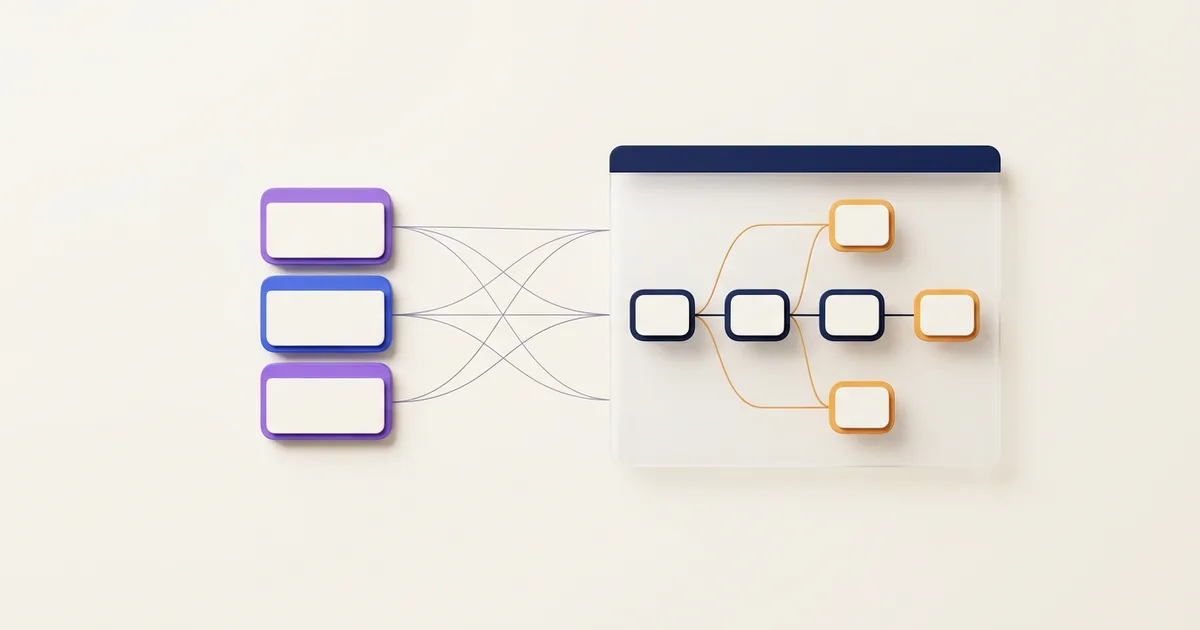
Compare the decision and lifecycle, not the sentence format
A short use case can look like a story, and a detailed story can contain scenarios. Use these five passes to identify the record that should own the unresolved decision before choosing a label.
Name the user need and actor goal
Start from evidence about what a person is trying to achieve. Record the need separately from the planned feature. A user story can then own one valuable implementation slice, while a use case can own the interaction paths through which a primary actor reaches the broader goal.
Sources: [govuk-user-needs], [govuk-user-stories], [ivar-use-case-foundation]
Choose the unit that must stay stable
Use a story when the team must prioritize, discuss, split, and accept one increment. Use a use case when the main path, alternatives, supporting actors, and guarantees must remain coherent around one actor goal even as implementation is staged.
Sources: [agile-alliance-user-stories], [govuk-user-stories], [ivar-use-case-foundation]
Separate flows from acceptance evidence
Describe the use-case interaction without turning every step into a story. Give each selected story observable acceptance criteria or examples without claiming that formatted scenarios prove the implementation. Actual execution results, defects, and approval remain separate evidence.
Sources: [govuk-user-stories], [ivar-use-case-foundation], [cucumber-gherkin]
Link stable IDs in both directions
Record which use-case flows a story advances and which stories currently implement or change each flow. Allow several links on both sides. Preserve version references and unresolved gaps instead of copying the entire use case into cards or rebuilding the use case from story titles.
Sources: [agile-alliance-user-stories], [govuk-user-needs], [ivar-use-case-foundation]
Review each artifact on its own trigger
Revisit stories when priority, value, acceptance, dependencies, or the delivery slice changes. Revisit the use case when the actor goal, system boundary, main flow, alternate paths, guarantees, or supporting actors change. Then reconcile the link graph and identify affected tests and decisions.
Sources: [agile-alliance-user-stories], [govuk-user-stories], [ivar-use-case-foundation], [omg-uml-251]
The owner boundary for this comparison
This page owns the selection and composition decision between user stories and use cases. The template owners keep the editable artifact jobs, and adjacent requirements and testing records keep their own decisions.
Included
- A criterion-by-criterion comparison of scope, narrative, actors, exceptions, acceptance, planning, traceability, and maintenance
- One fictional workshop-reservation goal shown as a fuller use case and several linked backlog stories
- Rules for choosing one artifact, using both, or using neither when another record owns the question
- A many-to-many link contract with stable IDs, versions, maintenance triggers, and explicit gaps
- A two-way internal-link contract: this comparison links both template owners, while each template keeps a concise difference FAQ that points back to this full decision guide
Not included
- The editable user-story artifact and download intent owned by /blog/user-story-template
- The editable use-case artifact and download intent owned by /blog/use-case-template
- A product requirements document, software requirements specification, backlog-priority policy, user-flow diagram, workflow model, acceptance-criteria pack, test plan, or UAT decision
- A claim that every organization uses these labels identically or that every story must map to exactly one use case
- Production behavior, implementation authorization, legal or compliance approval, validated accessibility or security, passed tests, or delivery guarantees
Ten criteria for choosing a user story, use case, or linked pair
Apply every criterion to the same product question. The answer depends on the decision and record lifecycle, not whether the text happens to fit on a card or contains numbered steps.
Decision unit
Separates one prioritizable increment from the fuller interaction contract needed to achieve an actor goal.
Scope boundary
Prevents a short backlog item from hiding several flows or a use case from becoming a system-wide requirements document.
Narrative shape
Shows whether the team needs a concise value reminder or an ordered interaction with main and alternate paths.
Actors and roles
Keeps the person receiving value distinct from supporting actors, product ownership, delivery roles, and approval authority.
Exceptions and alternatives
Makes failure and alternate paths visible without forcing every exception into one oversized backlog card.
Acceptance boundary
Connects value and interaction intent to observable criteria without treating either artifact as execution evidence.
Planning and sequence
Distinguishes backlog priority and delivery slicing from the logical order in which an actor and system interact.
Many-to-many traceability
Avoids the false assumption that every use case maps to one story or every story belongs to only one actor goal.
Maintenance trigger
Keeps story decisions and use-case flows aligned as needs, rules, behavior, and delivery boundaries change.
Paired workshop example
Demonstrates how one fictional actor goal can remain stable while several backlog slices are delivered and revised.
User story and use case decision matrix
Neither artifact is a more detailed version of the other. Choose the record that owns the current uncertainty, then link them when delivery slices must remain traceable to a fuller actor-goal interaction.
User story
Best for: One small user-centered increment that a team needs to discuss, prioritize, refine, accept, and deliver through a backlog.
Use a user story to preserve who needs something, what valuable change is requested, why it matters, and the current acceptance boundary for one manageable slice. Keep the card concise enough to prompt conversation and link its evidence and dependencies.
| Criterion | Finding |
|---|---|
| Decision unit | Own one selected increment that can contribute value and be discussed, prioritized, and accepted without pretending it describes the actor's entire goal. Sources: [agile-alliance-user-stories], [govuk-user-stories] |
| Scope boundary | Keep the story smaller than an epic and specific enough for the current planning horizon. Link the broader need, product decision, and use-case flows instead of duplicating them. Sources: [agile-alliance-user-stories], [govuk-user-stories] |
| Narrative shape | Use a brief actor, need, and value statement as a reminder for collaborative discussion. The familiar sentence format is optional and does not by itself make the story useful. Sources: [govuk-user-stories], [agile-alliance-user-stories] |
| Actors and roles | Name the user role receiving value, then keep the product owner, delivery team, reviewers, and approvers in separate ownership fields rather than turning them into fictional users. Sources: [govuk-user-stories], [govuk-user-needs] |
| Exceptions and alternatives | Capture only the exceptions that change the selected slice and its acceptance. Link other actor-goal alternatives to the use case or split them into separately reviewable stories. Sources: [agile-alliance-user-stories], [ivar-use-case-foundation] |
| Acceptance boundary | Attach concise observable outcomes or examples that clarify the story. Keep execution records and final acceptance decisions separate from the planning statement. Sources: [govuk-user-stories], [cucumber-gherkin] |
| Planning and sequence | Place the story in a backlog where product ownership can compare priority, dependencies, value, and readiness. Backlog order does not define the actor's interaction sequence. Sources: [govuk-user-stories], [agile-alliance-user-stories] |
| Many-to-many traceability | Link the story ID to every use-case flow and user-need version it advances. One shared story may support several actor goals, so allow multiple current links and record the rationale. Sources: [govuk-user-needs], [agile-alliance-user-stories] |
| Maintenance trigger | Review when evidence, value, scope, priority, acceptance criteria, dependencies, or the planned increment changes. Preserve closed history instead of rewriting delivered intent silently. Sources: [govuk-user-stories], [agile-alliance-user-stories] |
| Paired workshop example | For fictional workshop.example.test, separate stories let a participant review current workshop availability, submit one seat request with a visible pending state, and cancel an existing request. Each story links to the relevant reservation use-case flows without claiming a confirmed seat or real service behavior. Sources: [govuk-user-stories], [agile-alliance-user-stories] |
Tradeoffs
- Small increments support priority changes and faster feedback, but a set of cards can hide the end-to-end interaction, alternate paths, and shared behavior when no wider model connects them.
- Acceptance criteria can clarify one story, while packing every actor, flow, exception, business rule, and test into the card makes it difficult to split, prioritize, and maintain.
Use case
Best for: A fuller actor goal that needs a coherent system boundary, main interaction, alternatives, failures, guarantees, and supporting actors.
Use a use case to keep all meaningful ways an actor can use the system to achieve one goal in a reviewable interaction contract. Describe the stable goal and flow network independently of backlog order, screen layout, and implementation technology.
| Criterion | Finding |
|---|---|
| Decision unit | Own one primary actor goal and all relevant ways the actor can use the bounded system to reach value or a defined failure outcome. Sources: [ivar-use-case-foundation], [omg-uml-251] |
| Scope boundary | Name the system of interest, primary actor, goal, start condition, success boundary, and exclusions. Link wider requirements rather than making one use case describe the whole product. Sources: [ivar-use-case-foundation], [omg-uml-251] |
| Narrative shape | Describe a main flow plus alternate and failure flows as actor-system interactions. The format may be textual or visual, but the paths and their meaning matter more than diagram ceremony. Sources: [ivar-use-case-foundation], [omg-uml-251] |
| Actors and roles | Identify the primary actor who initiates the goal and supporting actors the system calls upon. Keep product, delivery, review, and approval roles outside the interaction unless they truly act in it. Sources: [ivar-use-case-foundation] |
| Exceptions and alternatives | Preserve challenged, optional, failure, and recovery paths at the step where they diverge. Do not hide unresolved alternatives inside a generic final exception section. Sources: [ivar-use-case-foundation] |
| Acceptance boundary | Use the flow network to identify meaningful acceptance examples, while leaving exact criteria on the reviewed requirement or story and execution evidence in test records. Sources: [ivar-use-case-foundation], [cucumber-gherkin] |
| Planning and sequence | Keep the logical interaction coherent even when teams deliver the main flow and alternates across different increments. The use case is not a priority queue or release commitment. Sources: [ivar-use-case-foundation], [agile-alliance-user-stories] |
| Many-to-many traceability | Link each flow or extension to the stories and requirements that currently implement or change it. One flow can involve several stories, and a shared story can affect several use cases. Sources: [ivar-use-case-foundation], [govuk-user-needs] |
| Maintenance trigger | Review when the actor goal, system boundary, main flow, alternatives, guarantees, business rules, or supporting actors change, then reconcile every linked story and acceptance owner. Sources: [ivar-use-case-foundation], [omg-uml-251] |
| Paired workshop example | The fictional Reserve a workshop seat use case follows a participant from selecting an available workshop through submitting a request and seeing its pending state. It branches for registration closed, no remaining capacity, duplicate request, changed accessibility needs, and cancellation, while linked stories deliver selected slices over time. Sources: [ivar-use-case-foundation], [govuk-user-stories] |
Tradeoffs
- A fuller interaction model exposes gaps between delivery slices, but it requires disciplined scope so it does not absorb every requirement, interface state, workflow, or test case.
- Use cases can be implemented in stages, while their flows and links must be maintained as stories change behavior or defer an alternate path.
Choose one, both, or neither without forcing a conversion
Start from the unresolved decision. Use both artifacts only when the actor-goal interaction and the delivery slices each need a stable owner and a maintained link between them.
The team understands the broader interaction and needs one small user-centered increment to prioritize and accept.
Choose: Write a user story and link it to the affected need and use-case flows.
Tradeoff: The backlog stays actionable, but the story depends on external context and must not silently redefine the actor goal.
The actor goal is known, but the main interaction, supporting actors, alternatives, failures, or guarantees remain unclear.
Choose: Model the use case before splitting or approving implementation stories.
Tradeoff: Delivery planning starts later, while the team exposes missing behavior before distributing it across unrelated cards.
A stable actor goal spans several increments, or one shared increment supports several actor goals.
Choose: Keep a use case and user stories as separate versioned records with explicit many-to-many links.
Tradeoff: Maintaining two record types takes discipline, but it preserves both interaction coherence and delivery flexibility.
The unresolved question is system-wide requirements, interface layout, workflow state, test execution, or business approval.
Choose: Use the SRS, PRD, wireframe, workflow, test, or approval owner instead of relabeling it as a story or use case.
Tradeoff: The team may maintain more linked artifacts, while each decision remains reviewable in the scope that can support it.
The change is a purely technical task with no independently reviewable user value but supports an approved story.
Choose: Track it as a technical task linked to the parent story and affected use-case flow rather than inventing a fictional user.
Tradeoff: The backlog loses a uniform sentence pattern but gains honest ownership and traceability.
MODEL THE HANDOFF
Turn one reviewed actor goal into a traceable product slice
Describe the actor, goal, interaction boundary, selected increment, acceptance evidence, and links. Start with one pair your team can review without copying either record.
Start BuildingThe planning model does not approve implementation or prove that a delivered flow works.
Open the user story template for the artifact itselfThe comparison owner remains separate from the editable story and use-case template jobs.
Limits of this comparison
User-story and use-case practice varies across organizations. This guide defines a reviewable local contract and does not make one method mandatory.
- A story can be detailed and a use case can be lightweight. Length alone does not determine which decision the record owns.
- A use case is not automatically UML-conformant because it has actors and flows, and a user story is not automatically useful because it follows an actor-need-value sentence.
- Many-to-many links expose relationships but do not prove completeness, correctness, priority, coverage, implementation, or acceptance.
- Fictional workshop records illustrate composition only. They do not verify availability, accessibility, privacy, security, payments, notifications, or booking behavior.
- Legal, regulatory, safety, accessibility, security, privacy, financial, and sector-specific obligations require accountable review outside this general planning comparison.
Official sources and verification record
These sources were checked on August 1, 2026. They support the two artifact shapes, the surrounding evidence boundary, and the explicit warning against one-to-one conversion. The exact comparison matrix and paired fictional example remain Playcode editorial synthesis.
[govuk-user-stories] GOV.UK Service Manual:Writing user stories
Checked August 1, 2026. Supports: User stories as records of actor, need, and goal used for team discussion, prioritization, backlog planning, acceptance criteria, evidence links, and splitting large work.
[govuk-user-needs] GOV.UK Service Manual:Learning about users and their needs
Checked August 1, 2026. Supports: Evidence-led user needs, the distinction between broader needs and constrained user stories, and traceability from stories back to the needs they serve.
[agile-alliance-user-stories] Agile Alliance:User Stories
Checked August 1, 2026. Supports: Stories as functional increments and conversation vehicles whose detail changes with the planning horizon, plus the explicit warning that stories and use cases are not equivalent and do not map one to one.
[ivar-use-case-foundation] Ivar Jacobson International:Use-Case Foundation
Checked August 1, 2026. Supports: Use cases around a system, primary actor, goal, and network of successful, alternate, challenged, and failure flows, with staged implementation and implementation-independent descriptions.
[omg-uml-251] Object Management Group:Unified Modeling Language Specification Version 2.5.1
Checked August 1, 2026. Supports: The current formal UML 2.5.1 specification record and normative model documents that bound any claim of UML conformance beyond a practical written use case.
[cucumber-gherkin] Cucumber:Gherkin Reference
Checked August 1, 2026. Supports: The official structure and keywords for executable-specification scenarios, used here only to distinguish formatted acceptance examples from planning artifacts and actual execution evidence.
User story and use case questions
Is a user story a shorter use case?
No. A user story owns a small backlog increment and its value and acceptance discussion. A use case owns an actor-goal interaction across main and alternate flows. Either can be brief or detailed, and expanding a story does not automatically turn it into a use case.
Can one use case have several user stories?
Yes. Teams often deliver one actor goal in increments, so separate stories can implement the main path, alternatives, shared behavior, or later refinements. Link each story to the exact use-case flows it changes and keep deferred gaps visible.
Can one user story support several use cases?
Yes. A shared capability such as displaying current availability or validating an attachment can support several actor goals. Record every affected flow instead of assigning the story to one convenient use case and hiding the remaining impact.
Do user stories need acceptance criteria?
They need a reviewable acceptance boundary before implementation is accepted, but the format can vary. Keep criteria observable and tied to the story version. Given, When, Then can help clarify examples, but formatting alone does not prove completeness or execution.
Does a use case need a UML diagram?
No. A written use case can be useful when its actor, goal, system boundary, main path, alternatives, failures, and guarantees are clear. If a team claims UML conformance, review the current OMG specification rather than treating any actor-and-oval sketch as sufficient.
Which should be written first?
Start with the uncertainty. If the actor-goal interaction is unclear, establish the use case before slicing stories. If the interaction is already understood and the team needs one deliverable increment, start with the story and link its existing context.
Should technical work be written as a user story?
Only when the item genuinely owns a user-centered increment. Otherwise track a technical task, risk, experiment, or operational item and link it to the parent story and affected use-case flows. Do not invent a fictional user to preserve a sentence template.
How should stories and use cases stay synchronized?
Use stable IDs, version references, explicit flow links, and event-driven review. When a story or use-case flow changes, identify every linked record, acceptance owner, test, and unresolved gap. Preserve history instead of silently overwriting delivered intent.
START WITH ONE LINKED DECISION
Build the smallest product workspace that preserves the actor goal
Give Playcode the reviewed users, records, states, acceptance boundaries, and traceability links. Keep real authorization, testing, provider behavior, and production verification with their accountable owners.
Start BuildingNo credit card required. AI credits are included to start; production requirements and plan limits still apply.