QUICK ANSWER
What should an event proposal template include?
An event proposal template should include the problem and purpose, target audience, concept, bounded outcomes and measures, scope and exclusions, assumptions, a rough cost envelope, high-level timing, feasibility flags, required specialist reviews, one decision ask, approval conditions, and downstream handoffs. It should stop before detailed planning, contracting, risk assessment, emergency procedures, registration, and delivery.
A useful event proposal gives a sponsor enough evidence to approve detailed planning, request revision, or stop before the team spends money and makes public promises. It connects the problem and purpose to an audience, concept, bounded outcomes, explicit scope, rough cost envelope, timing, assumptions, feasibility flags, specialist reviews, and one clear decision ask.
This downloadable pack includes an editable worksheet, a valid fictional starter, an original fictional example, a closed JSON Schema, and a dependency-free validator with deterministic tests. It treats an event brief as a shorter presentation of the same pre-approval decision packet. It does not replace the detailed event plan, safety process, sponsorship proposal, vendor response, or post-event record.
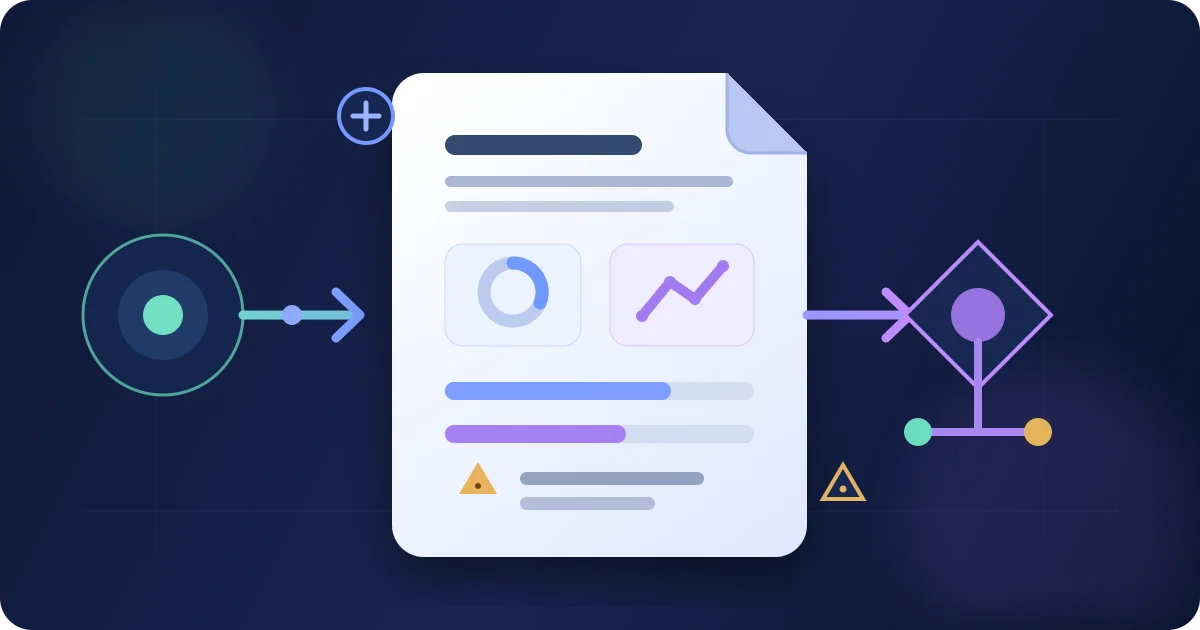
Build the proposal around one accountable decision
Give the approver enough bounded information to decide whether planning should begin without presenting uncertain logistics, costs, requirements, or outcomes as settled facts.
Control the proposal and decision deadline
Assign a stable proposal ID, revision, status, event reference, owner role, independent approver role, preparation and update times, and decision deadline. Replace silent edits with revision reasons so later planning can identify the proposal it received.
Sources: [proposal-pack], [nus-event-proposal], [sfu-event-brief]
State the problem, purpose, concept, and audience
Explain the problem or opportunity, why the decision matters now, the proposed event-level concept, and the intended audience in aggregate ranges. An event brief can be the concise stakeholder view of this same proposal, not a second owner with different facts.
Sources: [proposal-pack], [nus-event-proposal], [sfu-event-brief], [creighton-event-guide]
Define bounded outcomes and evidence ownership
Give every intended outcome a proposed measure, target, evidence-owner role, and attribution limit. A planning target can focus later work, but it does not guarantee attendance, learning, revenue, accessibility, impact, or success.
Sources: [proposal-pack], [nus-event-proposal], [sfu-event-brief], [creighton-event-guide]
Separate scope from exclusions and pending claims
List what the concept includes, what it explicitly excludes, and which public claims still require review. Keep detailed venue, program, registration, sponsorship, vendor, speaker, agenda, and event-day work in their accountable downstream records.
Sources: [proposal-pack], [case-western-resources], [events-canberra-resources]
Expose assumptions, rough costs, and timing uncertainty
Assign each material assumption an owner, review date, evidence reference, state, and limitation. Present costs as a low-confidence envelope with basis and exclusions, not an approved budget, quote, commitment, or ledger. Keep timing at event-window and major-milestone level.
Sources: [proposal-pack], [case-western-resources], [creighton-event-guide], [nus-event-proposal]
Route feasibility questions to qualified reviewers
Record accessibility, venue, safety, emergency, privacy, insurance, permit, finance, procurement, security, and legal questions as flags with owner roles, destinations, due dates, and stop conditions. Do not score risk or prescribe controls in the proposal.
Sources: [proposal-pack], [nus-event-proposal], [events-canberra-resources]
Record the decision and conditional handoffs
Ask for approval to plan, conditional approval, revision, or stop. Store decision metadata and conditions, then hand the approved concept to planning, venue review, risk assessment, contingency planning, finance, agenda or run of show, registration, and post-event owners only when their workflow is actually required.
Sources: [proposal-pack], [case-western-resources], [events-canberra-resources]
Minimize proposal data and validate the portable record
Use roles and aggregate audience ranges instead of names, contact details, accommodation information, credentials, incident narratives, or emergency procedures. Record access, retention review, and disposal, then run the closed-schema and cross-record checks before sharing.
Sources: [proposal-pack], [ec-data-principles], [json-schema-2020-12], [rfc-2606]
The event proposal owner boundary
Use this page for a pre-approval event decision packet. Once the concept is accepted, specialized planning and execution records take ownership.
Included
- Proposal identity, revision, problem or opportunity, purpose, audience, concept, bounded outcomes, proposed measures, evidence-owner roles, and attribution limits
- Scope, exclusions, pending public claims, assumptions, rough cost envelope, event window, major milestones, feasibility flags, specialist reviews, and stop conditions
- Decision ask, approval state and conditions, conditional downstream handoffs, aggregate-only data boundary, retention review, and disposal trigger
- Editable Markdown, valid fictional starter, fictional worked example, closed Draft 2020-12 schema, validator, tests, and deterministic archive
Not included
- Detailed event planning or execution, task scheduling, venue evaluation or selection, vendor coordination, staffing plans, or event-day operations
- Risk assessment, risk scoring, safety or accessibility advice, control selection, incident response, contingency planning, crisis management, or emergency procedures
- An approved budget, cost ledger, quote, financial commitment, contract, procurement decision, insurance decision, permit determination, tax advice, or legal advice
- An event sponsorship proposal or package, vendor sales proposal, RFP response, bid, call for speakers, speaker contract, or fundraising approval
- Detailed agenda, run of show, registration form or system, ticketing, payments, check-in, attendee records, survey instrument, debrief, evaluation report, or post-event report
- A guarantee of feasibility, funding, attendance, accessibility, safety, compliance, revenue, learning, impact, approval, or event success
DOWNLOADABLE RESOURCE
Download the event proposal template pack
Start with the worksheet or validator-clean fictional starter, inspect the completed fictional example, and run the dependency-free checks before adapting the proposal to a real approval process.
Event proposal template pack
An original fictional pre-approval proposal covering purpose, audience, outcomes, scope, rough costs, timing, assumptions, feasibility, specialist reviews, decisions, and handoffs.
Format: Markdown, JSON, JSON Schema, validator, and tests in one reproducible ZIP archive
Locally reproduced August 1, 2026. SHA-256: ff8a2b0e1123207e6e08685665cb7dad402013a7de1c57931812c162cf4b4a1c
Included
- Editable Markdown worksheet and a validator-clean fictional JSON starter
- Completed fictional community-event proposal with conditional approval, open feasibility flags, and six downstream handoffs
- Closed JSON Schema Draft 2020-12 contract plus dependency-free cross-record validator
- Forty-eight deterministic tests for dates, ranges, owner roles, references, approval states, specialist-review conditions, privacy boundaries, and unsafe claims
Verification boundary
Validated both fictional records, ran 48 tests, checked closed object shapes and cross-record state, copied an exact eight-file allowlist, stripped ZIP metadata, and reproduced the same archive bytes across consecutive builds.
Three proposal shapes for different approval contexts
The same decision packet can be proportionate to the concept while preserving the boundary between approval, specialist judgment, detailed planning, and execution.
Community learning event
Use when: Several partners want a sponsor decision on one combined event before they commit staff time, venue research, communications, or production work.
Describe the shared problem, audience range, session concept, bounded indicators, rough cost and date envelope, material assumptions, specialist-review flags, and conditional planning handoff.
Structure
- Aggregate interest and prior-event evidence support the audience range without introducing attendee identities
- Conditional approval permits bounded planning but leaves venue, accessibility, safety, privacy, and finance decisions open
Watch for: Expressions of interest, an early venue note, and a rough envelope are not reservations, commitments, approvals, or evidence that the event will achieve its outcomes.
Sources: [proposal-pack], [sfu-event-brief], [events-canberra-resources]
Campus program proposal
Use when: A student or department event needs an institutional concept review before campus partners begin detailed coordination and specialist approvals.
Connect objectives, audience, provisional program details, cost categories, timing, and required reviews to one accountable decision while treating campus procedures as local requirements.
Structure
- The proposal records which approvals and specialist reviews are required without copying their procedures or deciding their outcome
- Campus planning, facility, finance, accessibility, safety, communications, and post-event systems receive separate handoffs
Watch for: NUS, Creighton, Case Western Reserve, and SFU examples are institution-specific. Their roles, timelines, permits, systems, and approval rules are not universal.
Sources: [proposal-pack], [nus-event-proposal], [creighton-event-guide], [case-western-resources]
Internal company event concept
Use when: A team needs an executive decision on whether an internal meeting, customer session, launch, or learning concept deserves detailed planning.
State the business problem, audience, format concept, measurable but bounded outcomes, constraints, rough envelope, dependencies, public-claim limits, and decision conditions.
Structure
- A compact event brief can present the same facts to stakeholders while this proposal remains the canonical decision packet
- Names, contact details, accommodation data, executive schedules, security information, contracts, and attendee records stay in approved restricted systems
Watch for: Do not turn the proposal into a vendor sales document, RFP response, sponsorship package, personnel assessment, or public promise.
Sources: [proposal-pack], [sfu-event-brief], [ec-data-principles], [json-schema-2020-12], [rfc-2606]
Decide whether the concept is ready to enter planning
Structural validation can reveal missing fields and contradictory states. The accountable sponsor still owns the judgment and authority.
The proposal has no bounded problem, audience, outcome, scope, or decision ask.
Choose: Keep it draft and resolve the concept before asking downstream teams for estimates, reservations, or plans.
Tradeoff: The decision waits, but planning does not begin around an event whose purpose and boundary remain unclear.
The cost number lacks a basis, range, exclusions, currency, or uncertainty label.
Choose: Replace it with a low-confidence rough envelope or remove it until adequate early evidence exists.
Tradeoff: The sponsor receives less precision, but an early guess is not mistaken for an approved budget or quote.
A venue, accessibility, safety, emergency, privacy, insurance, permit, finance, security, or legal question is unresolved.
Choose: Use conditional approval or revision, assign the specialist owner and stop condition, and keep the downstream decision open.
Tradeoff: Some planning may remain bounded or paused, but the proposal does not manufacture specialist approval.
The proposal starts to contain detailed tasks, controls, contacts, contracts, registration fields, or event-day instructions.
Choose: Restore the pre-approval boundary and hand those records to the planning, risk, finance, registration, or operations owner.
Tradeoff: Several records remain, but sensitive details and accountable decisions stay in the systems built to govern them.
From approved concept to public experience
Build the event website after the facts are approved
Once the concept, audience, public claims, owners, and specialist-review boundaries are approved, use Playcode to create the event website without treating the page as the planning system.
Explore the event website builderKeep proposal authority, venue decisions, safety records, attendee data, contracts, and operational plans in their approved systems.
Continue with the event planning checklistThe proposal owns the concept decision; the checklist owns detailed planning and readiness work.
What the event proposal cannot establish
A disciplined proposal makes uncertainty and handoffs visible. It cannot replace evidence quality, authority, specialist judgment, detailed planning, execution, or later evaluation.
- The validator checks representation and internal consistency; it does not authenticate research, assumptions, quotes, approvals, or specialist evidence.
- Audience ranges and intended outcomes are planning inputs. They do not guarantee registration, attendance, learning, satisfaction, revenue, reach, or impact.
- A rough cost envelope is not an approved budget, quote, commitment, contract, procurement decision, tax calculation, insurance decision, or financial forecast.
- A feasibility flag does not assess risk or prescribe an accessibility, safety, security, emergency, legal, permit, insurance, privacy, or operational control.
- Conditional approval permits only the stated next work. It does not approve a venue, public claim, registration flow, speaker, partner, vendor, agenda, or event launch.
- An event brief is treated here as a concise view of this proposal job. Creating a second document does not create a second truth or approval state.
- This ordinary informational article does not grant AI signup credits. The linked product page follows its own current eligibility rules.
Sources and verification record
The pack is the source for its fictional contract and tests. Current university, government, and regulatory sources support proposal fields, planning handoffs, local review boundaries, and data minimization without endorsing this template.
[proposal-pack] Playcode:Event proposal fictional example
Checked August 1, 2026. Supports: The locally reviewed fictional proposal, closed schema, validation rules, approval states, role boundaries, specialist reviews, handoffs, and deterministic tests. Public availability remains unverified until deployment.
[nus-event-proposal] National University of Singapore Office of Student Affairs:Writing An Event Proposal
Checked August 1, 2026. Supports: An institutional proposal example covering objectives, audience, provisional program details, budget categories, permits, safety review, catering, transport, sponsorship policy, and endorsement. Its Singapore campus rules are not universal.
[sfu-event-brief] Simon Fraser University Ceremonies and Events:Event brief
Checked August 1, 2026. Supports: An institutional event-brief structure covering summary, objectives, success measures, messages, background, issues, audience groups, speakers, partners, schedule, operations, communications, catering, and stakeholder circulation.
[case-western-resources] Case Western Reserve University Mandel School:Event Resources
Checked August 1, 2026. Supports: Institutional separation of an event brief, planning timeline, expense budget, run order, facilities, security, promotion, AV, catering, and emergency resources, plus budget approval before commitments.
[creighton-event-guide] Creighton University:Planning Your Event
Checked August 1, 2026. Supports: An institutional planning example that begins with event details, purpose and goals, strategic alignment, a measure, location, budget, approval, and task ownership. It is a campus guide, not a universal process.
[events-canberra-resources] Events ACT, Australian Capital Territory Government:Events Planning and Resources
Checked August 1, 2026. Supports: A current government event toolkit that describes its resources as generic starting points to adapt and routes approvals, permits, venue, safety, licensing, and other requirements to accountable local processes.
[ec-data-principles] European Commission:Principles of the GDPR
Checked August 1, 2026. Supports: EU principles for purpose limitation, data minimization, accuracy, storage limitation, integrity, confidentiality, and accountability. Qualified advice remains necessary for a real context.
[json-schema-2020-12] JSON Schema:JSON Schema Draft 2020-12
Checked August 1, 2026. Supports: The schema dialect declared by the downloadable closed JSON Schema.
[rfc-2606] RFC Editor:RFC 2606 Reserved Top Level DNS Names
Checked August 1, 2026. Supports: Use of reserved .test domains for fictional evidence and handoff references.
Event proposal template questions
What is included in this event proposal template?
The pack includes proposal control, problem and purpose, audience, concept, outcomes and measures, scope, exclusions, assumptions, rough costs, high-level timing, feasibility flags, specialist reviews, decision ask, approval conditions, downstream handoffs, data boundaries, a closed schema, validator, and tests.
What is the difference between an event proposal and an event brief?
This guide treats both as the same pre-approval job at different depths. The proposal is the canonical decision packet; a brief is a concise stakeholder view of its approved facts. Neither should become a second truth, detailed plan, run of show, risk assessment, or final report.
What is the difference between an event proposal and an event plan?
An event planning proposal asks whether a concept should enter detailed planning; this page treats that phrase as the same pre-approval proposal job. The event plan turns an approved concept into owned tasks, dependencies, venue and vendor work, accessibility and safety reviews, communications, readiness, event-day handoffs, and closeout. Conditional approval does not complete those tasks.
Should an event proposal include a budget?
Include a clearly labeled rough cost envelope when early evidence supports one. State currency, low and high values, basis, exclusions, and low or medium confidence. Keep approved amounts, commitments, invoices, taxes, procurement, variance, and reconciliation in the accountable finance system.
Should an event proposal include a risk assessment?
No. Record unresolved risk, accessibility, safety, security, emergency, insurance, permit, privacy, finance, and legal topics as feasibility flags with qualified owner roles and stop conditions. The separate accountable process owns assessment, controls, approval, and event-specific procedures.
Is this template an event sponsorship proposal?
No. A sponsorship proposal owns sponsor fit, rights, benefits, inventory, valuation, delivery evidence, approval, and commercial terms. This proposal owns the internal decision to advance an event concept. It may mark sponsorship as an assumption or handoff without selling a package.
When is an event proposal approved?
Only the named authority can decide. Record approval, conditional approval, revision, or rejection with the decision time, role, reference, conditions, and revision reasons. Conditional approval permits only the stated next work and does not approve downstream specialist decisions or public claims.
Create the approved event page
Turn reviewed event facts into a focused website
Describe the public event experience you need and build a first version with Playcode while keeping proposal, planning, safety, and attendee records in their accountable systems.
Build an event websiteThis ordinary informational article does not grant AI signup credits. Current product eligibility and limits apply.