QUICK ANSWER
What should an event sponsorship package include?
An event sponsorship package should include a finite benefit inventory, capacity units, eligibility and approval rules, reusable tiers, package limits, pricing inputs, fulfillment owners, proof references, substitution rules, and aggregate reporting boundaries. Keep sponsor-specific objectives and tailoring in a proposal, visual storytelling in a deck, enforceable terms in an agreement, and attendee data outside the package.
A sponsorship package works best as a reusable organizer-owned catalog, not a promise assembled from attractive ideas. Start with benefits the event can actually control, give each one a capacity and accountable owner, then allocate that inventory across a small number of reviewable tiers.
This guide includes an editable worksheet, a closed JSON record, a benefit inventory, a tier-allocation matrix, a fulfillment register, an aggregate reporting template, and a dependency-free validator. It keeps the package separate from a prospect-specific proposal, presentation deck, signed agreement, invoice, price benchmark, attendee-data permission, and outcome guarantee.
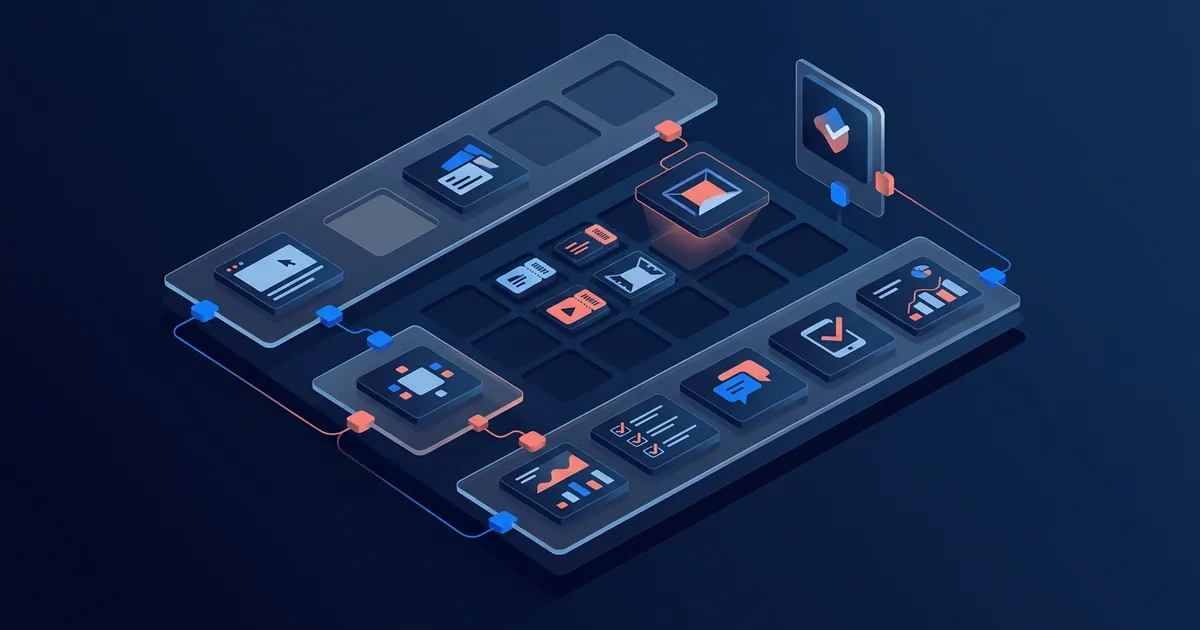
Build sponsorship tiers from controlled inventory
The model begins with what the organizer can deliver and verify, then creates reusable packages. That order makes scarcity, approvals, conflicts, and fulfillment visible before a sponsor-specific pitch begins.
Define the package owner and event frame
Give the reusable catalog a package ID, revision, effective date, source of truth, owner, approval authority, and change owner. Describe the event and audience at an aggregate level. Institutional guidance shows that package development, branding, sponsorship documentation, and event information can require advance coordination.
Sources: [washu-policy], [ubc-toolkit], [package-pack]
Inventory organizer-controlled benefits
List each acknowledgement, access, onsite, promotion, reporting, or in-kind opportunity before naming tiers. Record a capacity unit, total capacity, reservations, owner, evidence reference, eligibility, conflict group, approval state, and disclosure-review state. Public toolkits and prospectuses show varied benefit menus, but their specific benefits and amounts remain organization-specific.
Sources: [ubc-toolkit], [nypcma-prospectus], [package-pack]
Separate acknowledgement from promotion
Route logo use, promotional copy, presentation time, exclusivity, endorsements, and other high-risk benefits to the responsible reviewers. In the US tax-exempt context, IRS guidance distinguishes sponsor acknowledgement from advertising and substantial return benefits. FTC guidance separately emphasizes clear, conspicuous disclosure when a material connection must be disclosed. The template records handoffs; it does not decide the law.
Sources: [irs-sponsorship], [ftc-disclosure], [washu-policy], [package-pack]
Allocate inventory across reusable tiers
Set how many packages of each tier can be offered, then assign a quantity of each benefit per package. Multiply tier capacity by benefit quantity and reject any allocation that exceeds available inventory. Keep every amount labeled as a fictional or separately approved planning input, not a market-price recommendation.
Sources: [ubc-toolkit], [nypcma-prospectus], [package-pack]
Attach fulfillment and aggregate evidence
Create one obligation for every tier-benefit pair with an owner, due point, proof reference, status, and bounded substitution rule. Report only aggregate counts and organizer-controlled evidence. Preserve attendee permissions and person-level data in their proper systems, never in the package artifact.
Sources: [nypcma-prospectus], [washu-policy], [package-pack]
Validate, review, and freeze the revision
Run the closed-schema and cross-reference checks, resolve approval holds, and let the named authority release the exact revision for proposals. If inventory, benefits, policy, pricing inputs, or fulfillment owners change, create a new revision rather than silently changing a package already shared.
Sources: [json-schema-2020-12], [package-pack]
What the package owns
The package is the reusable source for organizer-controlled inventory and tier composition. Adjacent artifacts consume the approved revision without taking over its authority.
Included
- Package ID, revision, lifecycle state, event frame, source of truth, owner, approval authority, and change owner
- Benefit inventory with capacity arithmetic, eligibility, approvals, disclosure review, conflicts, status, owners, and proof references
- Reusable tier names, package capacities, intended fit, price inputs, benefit quantities, review state, and false outcome guarantees
- Tier-benefit fulfillment parity, event-relative due points, accountable roles, evidence references, status, and substitution boundaries
- Aggregate non-personal reporting metrics, privacy boundary, source register, closed JSON Schema, CSV exports, and deterministic archive
Not included
- One prospect's objectives, tailored benefits, negotiation history, acceptance decision, or sponsor-specific proposal
- Presentation narrative, slide design, pitch deck, outreach email, sales pipeline, or contact database
- Signed agreement, cancellation and payment terms, invoice, collection, intellectual-property license, liability, or jurisdiction-specific clauses
- Market-price benchmark, valuation, fair-market-value conclusion, tax classification, legal advice, endorsement approval, or disclosure sufficiency
- Attendee names, emails, phone numbers, credentials, payment data, person-level activity, tracking identifiers, or inferred profiles
- A guarantee of sponsor demand, exposure, attendance, leads, revenue, conversion, fundraising, renewal, or return
DOWNLOADABLE RESOURCE
Download the reproducible package-design pack
The archive keeps the worksheet, machine-readable record, finite inventory, tier matrix, fulfillment register, aggregate reporting template, source boundaries, schema, validator, tests, and deterministic builder together.
Event sponsorship package template pack
A reproducible organizer-controlled starter pack for designing sponsorship tiers from finite benefits, approval gates, fulfillment owners, and aggregate reporting.
Format: ZIP with Markdown, JSON, JSON Schema, CSV, and Node.js validation scripts
Locally reproduced August 1, 2026. SHA-256: 117624da172e550d1ad03203048e5ce7b275327a5f0db1d52afd95e7c58e6073
Included
- Editable package-design worksheet and fictional closed JSON example
- Benefit inventory, tier-allocation matrix, fulfillment register, and aggregate reporting CSVs
- Draft 2020-12 JSON Schema plus exact source and ownership boundaries
- Dependency-free validator with 35 positive and mutation tests
- Deterministic thirteen-file archive builder with fixed timestamps and an exact allowlist
Verification boundary
Run npm test and npm run validate after extraction. Rebuild with npm run build, inspect the exact archive allowlist, and compare its SHA-256 with the value shown here.
Three package structures to adapt
Choose a structure based on inventory and review needs, not because a tier name or amount appears in another organizer's prospectus.
Capacity-led sponsorship tiers
Use when: The event has a small set of recurring benefit bundles and needs to prevent logo, registration, venue, program, or communication inventory from being oversold.
Define package capacity, assign benefit quantities per package, multiply consumption across every offered tier, and hold any tier that depends on an unapproved or unavailable benefit.
Structure
- Finite benefit records with capacity unit, reserved quantity, owner, approval, and evidence
- Reusable tier records with package capacity and explicit per-package benefit quantities
- Calculated allocation, remaining availability, conflicts, and revision-controlled review state
Watch for: A mathematically valid tier can still be commercially weak, operationally impractical, or legally inappropriate. Human owners must approve the benefits and pricing inputs.
Sources: [ubc-toolkit], [nypcma-prospectus], [package-pack]
Core tier plus approved add-ons
Use when: Most sponsors need a consistent base package but a few organizer-controlled opportunities can be selected separately.
Keep the base tier stable and model add-ons as separately capacity-limited benefits. Apply the same owner, approval, conflict, price-input, fulfillment, and evidence rules instead of treating add-ons as unlimited exceptions.
Structure
- One reusable base package with a bounded set of approved benefits
- Separate add-on inventory with its own capacity, eligibility, conflict, and review state
- One revision that records the selected combination before it enters a prospect-specific proposal
Watch for: An add-on that changes promotion, exclusivity, endorsement, tax, privacy, or agreement terms needs the relevant review even when its inventory is available.
Sources: [ubc-toolkit], [irs-sponsorship], [ftc-disclosure], [package-pack]
In-kind support package
Use when: The organizer can accept approved goods or services and needs to record operational fit without treating the contribution as a cash-equivalent price recommendation.
Describe the requested property or service, acceptance owner, quantity, timing, quality and safety constraints, acknowledgement inventory, fulfillment evidence, and separate finance or tax handoff.
Structure
- Requested in-kind resource with quantity, delivery window, acceptance criteria, and accountable owner
- Organizer-controlled acknowledgement benefits with capacity and approval status
- Separate agreement, finance, tax, brand, privacy, and disclosure handoffs where applicable
Watch for: Do not use this template to assign tax value, issue a receipt, accept unsafe goods or services, or conclude that a benefit is merely an acknowledgement.
Sources: [ubc-toolkit], [washu-policy], [irs-sponsorship], [package-pack]
Decide whether a tier is ready for proposals
A tier is proposal-ready only when its inventory, owners, approvals, conflicts, and fulfillment evidence are coherent in one frozen revision.
A benefit has no finite capacity, accountable owner, eligibility rule, or evidence reference
Choose: Keep it out of every tier until the organizer can define and verify what will be delivered.
Tradeoff: The package may look smaller, but it no longer sells an unowned promise or hides scarcity.
Tier allocation exceeds the available capacity of any benefit
Choose: Reduce package capacity, remove the benefit, reserve less inventory elsewhere, or create a separately approved substitute before release.
Tradeoff: Fewer packages can be offered, while fulfillment remains possible across every offered tier.
A benefit includes promotion, stage access, exclusivity, attendee data, or a possible endorsement
Choose: Hold the benefit and route it through the applicable program, brand, privacy, policy, legal, tax, and disclosure owners.
Tradeoff: Review slows package release, but the validator does not impersonate authorities it cannot replace.
A prospect asks for tailoring within approved inventory
Choose: Reference the package revision in a separate sponsor-specific proposal and record any requested change without rewriting the base catalog.
Tradeoff: The team maintains two linked artifacts, while reusable inventory and prospect negotiation stay auditable.
A price input comes from another organizer's package or an undated guess
Choose: Treat it as unapproved, research your own event economics and audience, and assign a price decision owner before proposals use it.
Tradeoff: You lose false benchmark certainty and gain a price input grounded in your own costs, constraints, value, and risk.
Editable artifact
Start with the finite benefit inventory
Download the pack, replace the fictional Harbor Exchange record, and run its capacity and boundary validator before a package review.
Download the package templateThe validator checks structure and arithmetic. It cannot approve benefits, pricing, policy, privacy, legal, tax, brand, or commercial decisions.
Place sponsorship work in the event planning checklistThe checklist owns event-wide planning. This package owns reusable sponsor benefit inventory and tier design.
What this package cannot prove
A complete catalog and valid capacity model improve control, but they cannot determine sponsor demand, fair pricing, legal treatment, or whether a benefit is appropriate.
- Harbor Exchange, its objectives, audience, prices, capacity, evidence references, roles, benefits, fulfillment, and metrics are fictional and must not be presented as market evidence.
- The UBC toolkit and NYPCMA prospectus show structures used in their contexts; they do not establish universal tier names, benefits, prices, audience value, or expected return.
- IRS and FTC materials cited here are limited US handoff signals, not legal or tax advice and not a conclusion about any particular package, payment, advertisement, or disclosure.
- A validator pass does not prove that an owner can deliver a benefit, a venue allows it, a sponsor will accept it, a price is sound, or an agreement is enforceable.
- Aggregate reporting does not create permission to disclose attendee-level or sponsor-contact data. Use the correct consent, privacy, access-control, and retention systems.
- Policies, programs, prospectuses, and regulatory guidance can change after the checked date; recheck authoritative sources and your own rules before release.
Authoritative source map
These primary institutional, government, standards, and same-release artifact sources were checked on 2026-08-01. Each supports only the bounded statement shown; none endorses this template or Playcode.
[package-pack] Playcode:Event sponsorship package example JSON
Checked August 1, 2026. Supports: The same-release fictional record, capacity model, tier allocation, fulfillment parity, aggregate reporting boundary, approval handoffs, and false ownership flags described on this page.
[ubc-toolkit] University of British Columbia Applied Science:Sponsorship Package Toolkit
Checked August 1, 2026. Supports: A sponsorship package can present promotional opportunities, audience fit, project context, tiers, a la carte benefits, in-kind support, and supporting documents.
[nypcma-prospectus] New York Chapter of PCMA:2026 Sponsorship Prospectus
Checked August 1, 2026. Supports: A dated real-world prospectus differentiates tiers and additional opportunities through organization-specific benefits, event context, and deliverables.
[washu-policy] Washington University in St. Louis:Sponsorship of WashU Academic Events
Checked August 1, 2026. Supports: In its academic-event context, the institution requires advance coordination for sponsorship documentation, tier development, brand materials, and factual non-endorsing wording.
[irs-sponsorship] Internal Revenue Service:Advertising or qualified sponsorship payments?
Checked August 1, 2026. Supports: For US tax-exempt organizations, IRS guidance distinguishes qualified sponsorship acknowledgement from advertising and substantial return benefits.
[ftc-disclosure] Federal Trade Commission:Endorsement Guides: What People Are Asking
Checked August 1, 2026. Supports: When an endorsement disclosure is required, the FTC evaluates whether the connection is disclosed clearly, conspicuously, noticeably, readably, and understandably.
[json-schema-2020-12] JSON Schema:JSON Schema draft 2020-12
Checked August 1, 2026. Supports: Draft 2020-12 is the published JSON Schema vocabulary used to describe the closed machine-readable package record.
Event sponsorship package questions
What is the difference between a sponsorship package and a sponsorship proposal?
The package is the organizer's reusable catalog of approved benefit inventory, tier capacity, pricing inputs, and fulfillment ownership. A proposal applies one approved package revision to one prospective sponsor's objectives, fit, evidence, requested changes, decision process, and agreement handoff.
Is a sponsorship package the same as a sponsorship deck?
No. The package is the controlled source for benefits, capacity, tiers, approvals, and obligations. A deck is a presentation format that may summarize approved package data for a particular audience. It should not become an independent source of prices or promises.
How many sponsorship tiers should an event offer?
Use the smallest set that matches distinct sponsor needs and can be fulfilled from finite inventory. Three fictional tiers appear in the pack to demonstrate allocation, not as a universal recommendation. Add or remove tiers only when the benefit differences and operational capacity are clear.
How should sponsorship package prices be set?
Treat price as an owned planning input, not a number copied from another event. Consider your event economics, audience, benefit scarcity, delivery cost, risk, alternatives, and approvals. The example amounts are invented teaching values and are not market benchmarks or valuation advice.
Can a sponsorship package include attendee data?
Do not assume so. This template excludes attendee-level and sponsor-contact data and permits only aggregate reporting rows. Any data use needs its own lawful basis, consent where applicable, privacy review, access controls, retention rules, agreement terms, and accurate public disclosure.
Does the validator approve legal, tax, or disclosure compliance?
No. It checks closed shapes, capacity arithmetic, cross-references, approval states, aggregate-data flags, prohibited authority, and reproducible files. The named legal, tax, privacy, brand, program, and disclosure owners still decide what is allowed for the exact event and jurisdiction.
Does this article or template grant AI credits?
No. This is ordinary informational content with a downloadable artifact. The page is AI-credit-ineligible and does not grant signup AI credits; product eligibility and plan limits are separate.
From approved catalog to public event surface
Build the sponsor information workflow in Playcode
After owners approve a package revision, use Playcode to prototype an event website or organizer tool that publishes only approved benefits and keeps capacity and fulfillment operationally visible.
Open the event website builderThis informational article is AI-credit-ineligible and does not grant signup AI credits. Product eligibility and plan limits are separate.