QUICK ANSWER
What should a gap analysis template include?
A gap analysis template should include a bounded subject, one defined dimension and metric per gap, the unit and desired direction, a dated current state, a target or target range with its basis, source references, confidence and assumptions, a recomputed absolute, percentage-point, relative, or target-range delta, an accountable owner, and review and expiry dates. Keep recommendations, approvals, plans, tasks, execution, and outcomes in their own systems.
A useful gap analysis is a dated current-versus-target evidence ledger, not a disguised plan. It defines one dimension and metric at a time, records the unit and desired direction, links both states to dated sources, recomputes the delta, exposes assumptions and confidence, and names the owner and review date.
This downloadable pack includes editable Markdown, a fictional JSON example, a closed JSON Schema, and a dependency-free validator with mutation and security tests. It does not rank alternatives, diagnose causes, recommend strategy, approve work, create tasks, execute actions, or claim an outcome.
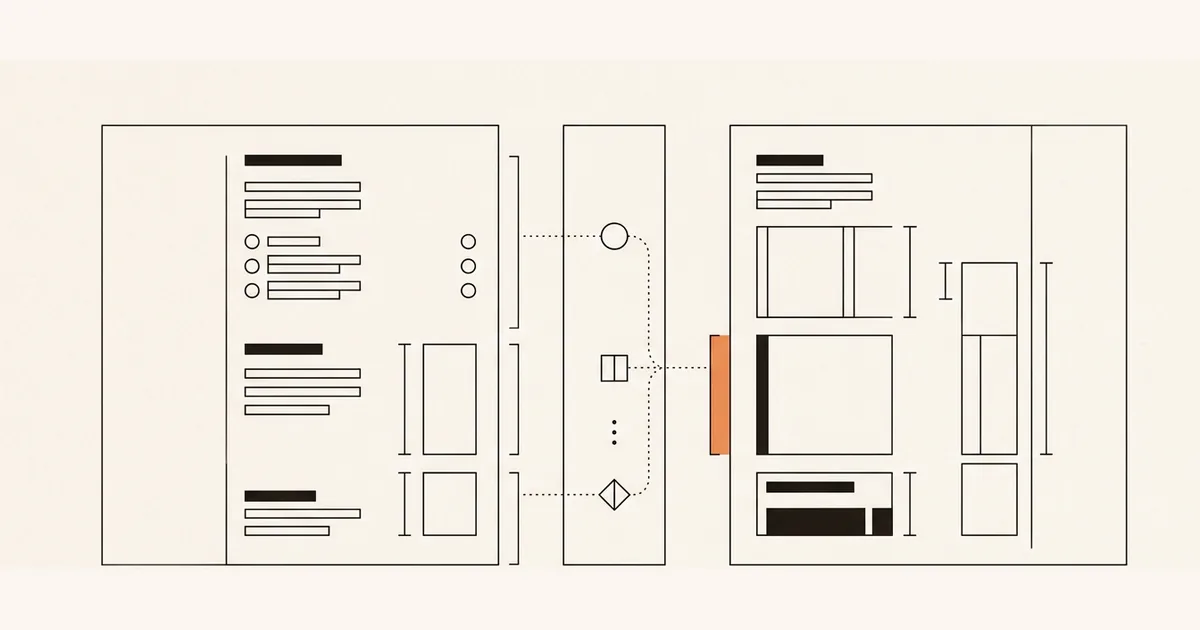
Build the delta from comparable evidence
Keep each comparison narrow enough that the current state and target use the same definition, unit, direction, and period. Preserve the evidence before interpreting what the gap means.
Bound the subject and dimension
Name the organization, service, process, or capability in scope, then define one dimension without importing rankings, SWOT factors, risks, causes, options, or project work. A profile can describe current and target outcomes while leaving implementation choices to their owners.
Sources: [nist-profiles], [nist-sp-1301], [opm-hcf]
Define the metric, unit, and desired direction
State exactly what is measured, whether higher or lower is better, and whether the target is a scalar or range. Do not compare percentages with hours or a count with a rate. The JSON Schema and validator close each object so hidden units or decision fields cannot silently change the record.
Sources: [gap-pack], [json-schema-2020-12]
Capture the current state with dated evidence
Record the value, as-of date, source IDs, confidence, and rationale. Keep observations within a declared evidence cutoff. The AQuA Book emphasizes proportionate quality assurance for analysis, while the Human Capital Framework uses evidence and outcomes to inform evaluation.
Sources: [aqua-book-2025], [opm-hcf], [gap-pack]
Define the target and its basis
Record the target value or range, effective date, source IDs, confidence, and rationale. A target profile expresses intended outcomes; it is not itself approval, strategy, a roadmap, or evidence that the outcome will occur.
Sources: [nist-profiles], [nist-sp-1301], [gap-pack]
Recompute the delta and expose assumptions
Select absolute, percentage-point, relative, or target-range calculation, store the exact formula and tolerance, and independently recompute the result. Reject a zero relative denominator, mismatched direction or unit, invalid range, or result outside tolerance instead of repairing it silently.
Sources: [gap-pack], [aqua-book-2025]
Review, expire, and hand off externally
Name the accountable analysis owner, review date, expiry date, and review triggers. Send any recommendation, approval, prioritization, project plan, task, execution, or outcome tracking to an external accountable system. The gap ledger records the handoff reference but does not absorb that authority.
Sources: [gap-pack], [opm-hcf], [json-schema-2020-12]
The gap-analysis boundary
Use this record to compare a sourced current state with a sourced target using one consistent measure. Stop before analysis becomes diagnosis, recommendation, approval, or execution.
Included
- Bounded subject and dimensions, metric definitions, units, desired direction, current and target values or ranges, dates, source references, confidence, assumptions, formulas, tolerance, owners, review, expiry, and external handoff references
- Absolute, percentage-point, relative, and target-range calculations that are recomputed and rejected when their units, directions, ranges, dates, or denominators are invalid
- Editable Markdown, fictional JSON, closed Draft 2020-12 JSON Schema, dependency-free validator, security tests, and a deterministic archive
Not included
- Alternative comparison, vendor ranking, SWOT classification, RAID records, causal or root-cause diagnosis, change adoption, roadmap, project plan, build-versus-buy analysis, or business-case recommendation
- Priority, approval, authorization, task creation, execution status, completion, actual results, outcome attribution, forecast, or guarantee
- Credentials, personal data, unsafe references, private sources, real-company performance claims, or assurance that a chosen target is correct or achievable
DOWNLOADABLE RESOURCE
Download the gap analysis template pack
Start with the Markdown worksheet, inspect the fictional example, and replace every subject, source, value, target, owner, and handoff before using the record for a real review.
Gap analysis template pack
A fictional current-versus-target ledger covering dimensions, metrics, dated sources, confidence, assumptions, four calculation kinds, ownership, review, expiry, and external action handoffs.
Format: Markdown, JSON, JSON Schema, validator, tests, and deterministic builder in one ZIP archive
Locally reproduced August 1, 2026. SHA-256: 5cac203bfd0c3cf01899466bc3cd5bde98ca8d9fda5254330b912c8775b7fbaf
Included
- Editable gap-analysis worksheet and completed fictional example in Markdown
- Fictional JSON example with absolute, percentage-point, relative, and target-range gaps
- Closed Draft 2020-12 JSON Schema and dependency-free validator
- Eighty-nine native tests for formulas, dates, references, boundaries, PII, credentials, unsafe content, and hidden decision or execution fields
- Dependency-free deterministic nine-file ZIP builder
Verification boundary
Validated the fictional example, ran 89 mutation and security tests, checked closed object shapes and references, recomputed every formula, copied an exact flat allowlist, fixed archive metadata, and reproduced identical ZIP bytes across time zones.
Three neutral gap records
These fictional patterns show how the same ledger handles exact targets, percentage points, and target ranges without becoming a plan or outcome claim.
Lower-is-better response time
Use when: The current and target states share a time unit and a lower value is preferred.
A fictional service records 11.2 hours current and 6 hours target, then recomputes an absolute 5.2-hour gap with dated source references and tolerance.
Structure
- Keep both values in hours and state that lower is better
- Store formula, result, tolerance, confidence, owner, review, and external handoff
Watch for: The 6-hour target is fictional and does not establish a benchmark, approved service level, plan, or achievable outcome.
Sources: [gap-pack], [nist-profiles]
Percentage-point service gap
Use when: Both states are percentages and the intended comparison is their point difference.
A fictional current state of 58 percent and target of 72 percent recomputes to 14 percentage points, not a 14 percent relative change.
Structure
- Label the unit as percent and calculation as percentage-point
- Keep the target basis, assumptions, confidence, and review visible
Watch for: Percentage points and relative percent change answer different questions; the ledger rejects a unit or formula substitution.
Sources: [gap-pack], [aqua-book-2025], [opm-hcf]
Current value outside a target range
Use when: The desired state is a bounded interval rather than one exact number.
A fictional error rate of 4.2 percent is compared with a 0-to-2-percent target range, producing a 2.2-percentage-point distance to the nearest boundary.
Structure
- Validate minimum is no greater than maximum and omit a scalar target value
- Return zero only when the current value is already inside the target range
Watch for: Being inside a range does not prove quality, success, approval, or causal improvement; it only yields a zero distance for this defined metric.
Sources: [gap-pack], [json-schema-2020-12], [nist-sp-1301]
Decide whether the gap is reviewable
A polished table is not reviewable when its states are incomparable, stale, or unsupported. Stop and repair the evidence contract before interpreting the gap.
The current and target states use different metrics, units, directions, or periods.
Choose: Split or redefine the dimension until both states use one explicit comparison contract, then collect the evidence again.
Tradeoff: The table may contain fewer rows, but an invalid subtraction no longer appears precise.
A source is missing, dated after the cutoff, stale at review, or has no confidence rationale.
Choose: Mark the gap unready and obtain a current authorized source before calculation or handoff.
Tradeoff: Review waits, but an old or unattributed value does not become a current fact.
The stored result differs from the recomputed formula beyond tolerance.
Choose: Block the record, fix the input or declared calculation, and rerun validation instead of editing the result alone.
Tradeoff: The artifact remains strict, but a presentation error cannot silently alter the gap.
The requested output is a recommendation, priority, approval, project plan, task, or actual outcome.
Choose: Freeze the reviewed gap and hand its stable reference to the external accountable owner and system.
Tradeoff: The ledger stops before action, but evidence work does not acquire hidden decision or execution authority.
Evidence-backed gap pack
Start with comparable states and recomputed deltas
Download the fictional ledger and validator, then replace every subject, source, value, target, assumption, owner, and handoff before a real review.
Download the gap analysis packSame-release artifact. Local bytes are verified; public availability is checked only after deployment.
Open the business case templateUse the separate decision record when a reviewed gap becomes an investment question.
What this template cannot prove
A strict ledger can expose inconsistent measures, stale evidence, and hidden assumptions. It cannot decide whether a target is desirable or prove what will close the gap.
- A source-backed current state is limited to its scope, date, definition, collection method, and confidence rationale.
- A target is an intended state with a recorded basis, not a benchmark, approval, strategy, commitment, forecast, or guarantee.
- A calculated delta does not identify root cause, rank remedies, justify investment, assign priority, create a plan, execute work, or attribute an outcome.
- This ordinary informational article is AI-credit-ineligible. Product entry eligibility follows the current route policy.
Sources and verification record
These primary references and the same-release artifact were checked on 2026-08-01. They support current-versus-target framing, evidence quality, human-capital outcomes, schema structure, and the locally verified pack without reviewing this article or any real analysis.
[nist-profiles] National Institute of Standards and Technology:Cybersecurity Framework Profiles
Checked August 1, 2026. Supports: Using current and target profiles to describe present and intended outcomes while keeping implementation choices outside the profile comparison.
[nist-sp-1301] National Institute of Standards and Technology:NIST SP 1301: NIST Cybersecurity Framework 2.0 Quick-Start Guide for Creating and Using Organizational Profiles
Checked August 1, 2026. Supports: The current-profile and target-profile method and using their comparison to identify and analyze gaps.
[opm-hcf] U.S. Office of Personnel Management:Human Capital Framework reference materials
Checked August 1, 2026. Supports: Evidence-informed evaluation, intended outcomes, measures, and accountable review in a human-capital context.
[aqua-book-2025] UK Government:The AQuA Book: guidance on producing quality analysis for government
Checked August 1, 2026. Supports: Proportionate analytical quality assurance, transparent assumptions, evidence, and review of analysis.
[json-schema-2020-12] JSON Schema:JSON Schema Draft 2020-12
Checked August 1, 2026. Supports: The declared schema vocabulary used by the closed machine-readable record.
[gap-pack] Playcode:Gap analysis fictional example
Checked August 1, 2026. Supports: The locally reviewed fictional values, four calculation kinds, source and date rules, confidence, assumptions, owner and review fields, external handoffs, schema, validator, security boundaries, and 89 native tests. Public availability remains unverified until deployment.
Gap analysis template FAQ
What is the difference between a gap analysis and a SWOT analysis?
A gap analysis compares a defined current state with a defined target using comparable measures. SWOT classifies internal strengths and weaknesses and external opportunities and threats. This template does not classify SWOT factors.
Does a gap analysis identify root causes?
No. A measured delta shows where the current and target states differ. Causal or root-cause analysis needs its own evidence, method, and accountable owner.
Can the target be a range?
Yes. Define the minimum and maximum in the same unit as the current state. The validator returns the distance to the nearest boundary, or zero when the current value is inside the range.
When should I use percentage points instead of relative percent?
Use percentage points for the direct difference between two percentages. Use relative percent for change compared with a nonzero baseline, and disclose the formula. The pack validates both calculations separately.
Does this template create a project plan or approve work?
No. The ledger records the reviewed gap and an external handoff reference. Prioritization, approval, planning, tasks, execution status, and outcomes stay in their accountable systems.
Does opening this article grant Playcode AI credits?
No. This ordinary informational article is AI-credit-ineligible. Any product entry eligibility is controlled by the current product route policy, not this page.
Build from an approved plan
Turn accountable decisions into working software
Describe the approved workflow and constraints. Playcode can help build and run the app while your team keeps analysis, recommendation, approval, and outcome ownership in their proper systems.
Explore the AI app builderThis article is AI-credit-ineligible. Product entry eligibility follows the current route policy.