QUICK ANSWER
What should a release notes template include?
A release notes template should identify the product and version, publication date, affected audiences, concise summary, shipped changes, observable impact, required reader actions, compatibility and migration notes, known limits, and public-safe evidence. It should separate security advisories when needed and state that the record does not approve a release, request a change, plan future work, or prove universal compatibility.
Release notes should give an audience a durable record of one version: what changed, who is affected, what action is required, whether compatibility changed, which limits remain, and where the public-safe evidence can be checked. They should describe released behavior, not act as a request, plan, approval, or promise about future work.
The downloadable pack includes original editable Markdown and JSON templates, a completed fictional JSON example, a closed Draft 2020-12 schema, and a dependency-free validator with mutation tests. Its IDs connect audiences, shipped changes, reader actions, known limits, and evidence so an editor can detect broken references and unsafe disclosure before publication.
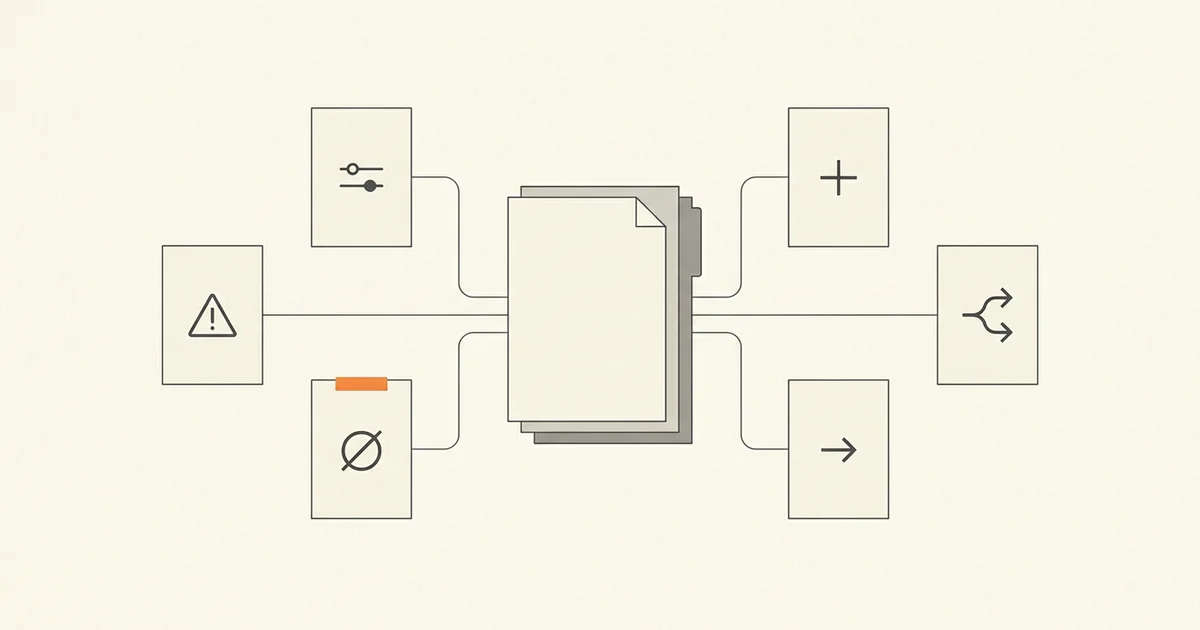
Write from the released version back to the reader
A useful release note starts with a stable version boundary, then connects each shipped change to its audience, effect, action, compatibility, known limits, and public evidence.
Freeze the released identity and publication state
Name the product, current version, previous version, release date, publication timestamp, editor role, and controlled revision. Published notes should correspond to released content rather than a draft plan, and released version contents should not be silently rewritten.
Sources: [github-about-releases], [semver-2]
Name each audience and describe its observable impact
Group changes by the people who need to understand or prepare for them. Write short present-state summaries and explain what each audience can observe, avoiding internal implementation detail unless it changes a public contract.
Sources: [github-release-note-content], [google-style]
Separate shipped change, reader action, and compatibility
Record added, changed, fixed, deprecated, removed, and security items as completed release facts. Link any required reader action in both directions. For an incompatible SemVer release, state the migration note and major-version boundary explicitly.
Sources: [github-release-note-content], [semver-2]
Expose known limits and public-safe evidence
Attach reproducible public documentation, test, manual-check, or metric references to every published change. Name known limits and workarounds without publishing tokens, passwords, personal data, private endpoints, vulnerability details, or other sensitive operational records.
Sources: [github-about-releases], [owasp-logging]
Validate the closed record before publication
Check exact keys, stable IDs, cross-references, dates, shipped state, evidence chronology, compatibility flags, security-advisory routing, URLs, and ownership boundaries. A closed Draft 2020-12 schema documents the shape while the bundled validator applies cross-field rules.
Sources: [json-schema-2020-12], [semver-2], [owasp-logging]
What this release notes pack owns
Use the pack for an audience-facing record of one shipped version. Keep planning, approval, change control, roadmap, incident, and product-changelog decisions with their accountable owners.
Included
- Controlled release identity, revision, publication state, version, previous version, release date, publication timestamp, editor role, and audience map
- Shipped additions, changes, fixes, deprecations, removals, or security classifications with audience impact and bidirectional action references
- Compatibility state, required migration notes, known limits, workarounds, public-safe evidence, disclosure flags, and explicit ownership boundaries
- Original editable Markdown and JSON, completed fictional JSON example, closed Draft 2020-12 schema, validator, mutation tests, README, and deterministic ZIP build
Not included
- A change request, prioritization decision, implementation ticket, release plan, test plan, deployment plan, launch checklist, or release approval
- Future roadmap promise, estimated ship date, upcoming feature announcement, marketing commitment, or prediction about unshipped behavior
- Playcode product changelog ownership, incident record, root-cause analysis, private customer communication, or security advisory content
- Credentials, private endpoints, personal data, customer records, internal logs, exploit detail, confidential evidence, or universal compatibility proof
DOWNLOADABLE RESOURCE
Download the release notes template pack
The ZIP contains original editable Markdown and JSON templates, one completed fictional release record, the closed schema, and the exact dependency-free validator and tests used to check references, compatibility, chronology, disclosure, and ownership boundaries.
Release notes template pack
A versioned audience-facing record for shipped changes, impact, required actions, compatibility, migration notes, known limits, public-safe evidence, and disclosure.
Format: Markdown, JSON, JSON Schema, and dependency-free Node.js validator/tests in one ZIP
Locally reproduced August 1, 2026. SHA-256: baca0adc32588676b1281af5e6765b3b202702f86e86218967d25557261d1d61
Included
- Editable Markdown worksheet and JSON starter with release identity, audience, change, action, compatibility, limit, evidence, disclosure, boundary, and publication-gate fields
- Completed fictional Larkspur Queue 3.0.0 JSON example with three audiences, three shipped changes, one required migration action, one known limit, and three reserved-host evidence references
- Closed Draft 2020-12 schema plus forty-six dependency-free tests covering exact shape, IDs, references, backlinks, publication dates, SemVer, migration, evidence chronology, HTTPS, credentials, security disclosure, secrets, and ownership boundaries
Verification boundary
The exact nine-file allowlist was reproduced twice, extracted, byte-compared across source, public, and archive copies, and tested locally. This verifies deterministic bytes and internal contracts, not whether a real release shipped, its evidence is true, its disclosure is safe, or its compatibility claims are complete.
Three release-note shapes for different readers
Keep one versioned record, then vary the audience, impact, action, compatibility, limit, and evidence detail according to the shipped release.
SaaS interface release
Use when: Administrators and operators need a concise record of shipped interface changes, fixes, or limits, but no public contract is incompatible.
List the affected roles, observable behavior, optional actions, unchanged compatibility, visible limits, and public help or test references for the completed version.
Structure
- Version identity, release summary, affected administrator and operator audiences, and each shipped interface change
- Observable impact, optional reader action, compatible status, known limits, public documentation, and manual-check evidence
Watch for: A screenshot or editor claim does not prove rollout coverage, accessibility, reliability, adoption, support readiness, or compatibility across every environment.
Sources: [github-release-note-content], [google-style]
Public API major version
Use when: Integration owners must change a consumer because a released public contract is incompatible with the previous major version.
Connect each breaking contract change to the affected integrator, a required migration action, verification step, major version, supported-from boundary, and public-safe contract evidence.
Structure
- Current and previous SemVer versions, incompatible change, observable consumer impact, and precise migration note
- Bidirectional required action, verification fixture, compatibility flags, known limits, and dated evidence
Watch for: A major version and passing fixture do not prove every consumer migrated, every language client behaves identically, or old-version support exists beyond the stated boundary.
Sources: [semver-2], [github-about-releases]
Security-sensitive release
Use when: A shipped version contains a security-classified change and public notes must point to a separately managed advisory without exposing sensitive operational detail.
State the audience-safe effect, required action, compatible or incompatible boundary, and advisory reference while keeping secrets, exploit instructions, personal data, and private evidence outside the release record.
Structure
- Security change classification, affected audience, reader action, migration boundary, and public-safe evidence
- Required advisory flag and URL, explicit sensitive-details exclusion, and separately owned advisory content
Watch for: This template does not decide disclosure timing, severity, affected versions, remediation completeness, legal duties, or who may publish a security advisory.
Sources: [github-about-releases], [owasp-logging]
Decide whether the release note is ready to publish
Publish only when the version boundary is stable and every audience-facing claim connects to a shipped change, impact, action, limit, compatibility statement, and safe evidence as required.
A listed change has not shipped, is still requested, or describes an upcoming date or roadmap commitment.
Choose: Remove it from the release note and keep it in the separately owned request, plan, or roadmap record until the represented version ships.
Tradeoff: The note contains less promotional anticipation, but readers get a trustworthy record of released behavior.
A reader must change configuration, code, workflow, or stored data, but the note has no linked action and verification step.
Choose: Add a required action tied bidirectionally to the affected change and audience, then state how that reader can verify completion.
Tradeoff: The note becomes longer, but impact can no longer hide behind a generic change summary.
An incompatible change keeps the old major version or omits migration and support boundaries.
Choose: Reconcile the versioning decision and add the migration note, backward-compatibility flag, required action, and supported-from statement before publication.
Tradeoff: Publication waits for a clear contract, preventing an incompatible change from being presented as routine.
Evidence contains credentials, private endpoints, personal or customer data, internal logs, exploit detail, or unannounced work.
Choose: Remove the sensitive material, retain only a public-safe reference and result, and route security content through the accountable advisory process.
Tradeoff: Readers may see less implementation detail, but the release note does not become a disclosure channel for protected records.
FROM A VERSION RECORD TO THE NEXT BOUNDED BUILD
Keep shipped facts separate from the next implementation
Use the completed release record to understand current behavior, then define any new app by its own users, records, states, constraints, tests, and approval boundary.
Explore AI app buildingA prior release note is context, not automatic authorization or complete requirements for the next change.
Download the software project plan templateUse a separately owned plan for future work, sequencing, dependencies, and delivery. Release notes own only the audience-facing record of a shipped version.
Limits to review before publishing release notes
A structured release note can expose inconsistent fields and unsafe patterns. It cannot independently prove that software shipped, evidence is true, every reader is represented, or a compatibility claim is complete.
- The pack is an editorial release record, not a change request, release plan, deployment approval, roadmap, incident report, security advisory, legal opinion, or Playcode product changelog process.
- A validator pass checks closed shape, IDs, references, backlinks, dates, state, evidence chronology, SemVer consistency, migration rules, URL safety, disclosure flags, and boundaries. It does not execute software or verify an external source.
- The Larkspur Queue product, records, audiences, changes, evidence, URLs, dates, and limits are fictional examples, not benchmarks, performance claims, or compatibility promises.
- Semantic Versioning applies only when a public API is declared and versioned under that contract. Organizations using another versioning policy must document and review their own compatibility boundary.
- The security checks catch selected unsafe shapes and credential-like strings. They do not replace secret scanning, privacy review, security review, incident handling, or coordinated vulnerability disclosure.
- Use qualified owners to review accessibility, privacy, security, legal, regulatory, support, localization, deployment, and customer-communication obligations for the real release.
Primary sources used for the release-note boundary
These current official sources support released-version identity, reader-focused release-note content, compatibility semantics, clear documentation, sensitive-data exclusion, and schema structure. The downloadable template and cross-field rules are Playcode editorial work.
[github-about-releases] GitHub Docs:About releases
Checked August 1, 2026. Supports: Releases as packaged iterations based on tags, with release notes and assets, plus the boundary between ordinary releases and security advisories.
[github-release-note-content] GitHub Docs:Release note content type
Checked August 1, 2026. Supports: Audience-focused release notes that help readers understand and prepare for user-facing changes.
[semver-2] Semantic Versioning:Semantic Versioning 2.0.0
Checked August 1, 2026. Supports: Major, minor, and patch compatibility meaning, deprecation expectations, public API declaration, and immutable contents for released versions.
[google-style] Google for Developers:Google developer documentation style guide highlights
Checked August 1, 2026. Supports: Clear, accessible, audience-focused documentation, descriptive headings, present-state writing, and avoiding promises about future features.
[owasp-logging] OWASP Foundation:Logging Cheat Sheet
Checked August 1, 2026. Supports: Excluding or masking access tokens, passwords, sensitive personal data, and other protected values from records used as publication evidence.
[json-schema-2020-12] JSON Schema:JSON Schema Draft 2020-12
Checked August 1, 2026. Supports: The published JSON Schema vocabulary used to define the bundled closed release-note record shape.
Release notes template questions
What are release notes?
Release notes are an audience-facing record of a released version. They identify the version and date, summarize shipped changes, name affected audiences, explain observable impact and required action, state compatibility and migration boundaries, disclose known limits, and link public-safe evidence. They should describe released behavior rather than future plans.
What is the difference between release notes and a changelog?
A changelog can be a continuous chronological history across versions. Release notes are usually the curated communication for one version and its audiences, actions, compatibility, limits, and evidence. This pack creates one release record and does not own the Playcode product changelog or another organization's changelog process.
Should release notes include bug fixes?
Include a fix when readers can observe the changed behavior or need it to make a decision. State the affected audience, prior impact, shipped result, compatibility, remaining limit, and public-safe evidence. Avoid exposing private incidents, customer records, exploit details, credentials, or internal logs simply to make the note sound specific.
How should breaking changes appear in release notes?
Mark the change incompatible, identify affected consumers, explain the observable contract difference, add a precise migration note, link required actions and verification, state supported-from behavior, and reconcile the major version under the declared SemVer policy. Do not claim that every consumer has migrated or every environment is compatible.
Should release notes include future roadmap items?
No. Keep unshipped requests, planned dates, roadmap promises, and release approvals in separately owned records. Published release notes should describe the represented version. This prevents a planned change from being mistaken for available behavior and keeps future commitments from silently entering a durable release record.
What evidence belongs in release notes?
Use public-safe documentation, test results, manual checks, or metrics that directly support the shipped claim and were checked no later than publication. Give each reference a result and stable ID. Exclude secrets, personal or customer data, private endpoints, protected logs, confidential reports, and unannounced work.
Can the validator approve a release?
No. The validator checks record shape, IDs, cross-references, dates, shipped state, evidence chronology, compatibility rules, selected unsafe strings, disclosure flags, and ownership boundaries. It cannot determine whether code shipped, facts are true, a security disclosure is safe, customers are ready, or an accountable human approved the release.
TURN REVIEWED REQUIREMENTS INTO A BOUNDED APP
Build the next version from explicit requirements
Describe the users, records, states, interactions, constraints, tests, exclusions, and approval boundary for the next app. Keep release-note facts as evidence, not a substitute for current requirements.
Build an app with PlaycodeThis informational article does not grant AI signup credits. The linked product page follows its own current eligibility rules.