QUICK ANSWER
What should a sprint retrospective template include?
A sprint retrospective template should bound one team learning session, record participants by role, capture neutral observations with inspectable evidence, cluster reciprocal themes, and convert a small number of themes into experiments or actions. Each experiment needs an owner, start and review dates, a success signal, a stop-or-adapt signal, and a scheduled follow-up decision.
A useful sprint retrospective gives one team a bounded place to inspect a recent work period, compare observations, identify themes, and choose a small change to test. The record should preserve evidence and uncertainty without turning the conversation into a status report, incident investigation, or verdict about an individual.
This original provider-neutral pack includes editable Markdown, a completed fictional JSON retrospective, a closed JSON Schema Draft 2020-12 contract, and a dependency-free validator with mutation tests. It connects observations to themes, themes to experiments, and experiments to owned follow-up while keeping facilitation, personnel decisions, incident root-cause analysis, policy, and production approval outside the template.
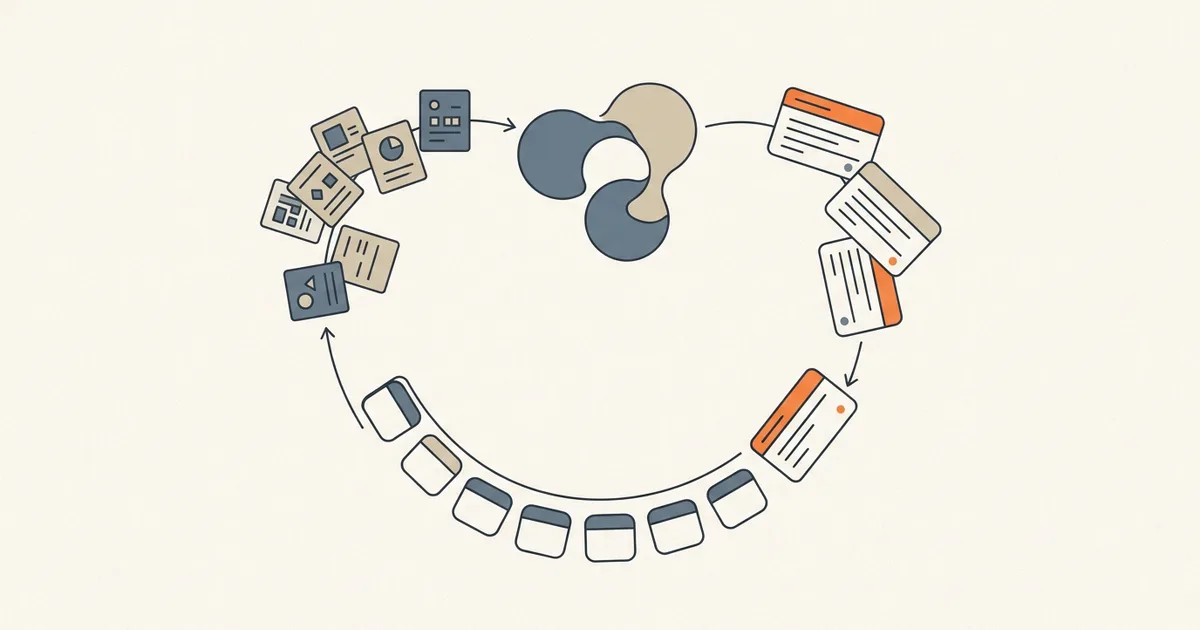
Turn one bounded work period into a testable learning loop
Use observed evidence to open a team conversation, preserve uncertainty, and choose a small change with owned follow-up. The structure supports learning; it does not replace the judgment and trust needed to facilitate the session.
Set the purpose, scope, and timebox
Name the team alias, iteration, session purpose, facilitator role, included work period, timebox, and follow-up date before collecting topics. In Scrum, the Sprint Retrospective has a defined purpose and sits inside the Sprint cadence; teams using another delivery approach should adapt the session to their context instead of treating this page as a universal process rule.
Sources: [retro-pack], [scrum-guide-2020]
Record observations with inspectable evidence
Invite broad prompts about what helped, hindered, surprised, or remains uncertain, then connect each neutral statement to counts, timestamps, queue snapshots, review notes, user observations, or another bounded source. Use role aliases where appropriate. Keep blame, personnel ratings, private biographical detail, and unsupported causation out of the learning record.
Sources: [retro-pack], [govuk-agile-tools]
Cluster reciprocal themes without erasing disagreement
Group observations only when their evidence supports a shared pattern. Link every observation to its theme and every theme back to its observations so an unsupported cluster fails validation. Preserve contradictory records and sample limitations. Inspection should make adaptation possible, not create a false consensus.
Sources: [retro-pack], [scrum-guide-2020]
Choose a small experiment with an owner and signals
Convert the most useful themes into one bounded action or experiment. State the hypothesis, owner role, start and review dates, observable success signal, and evidence that would cause the team to stop or adapt. GOV.UK guidance connects retrospective information to owned actions and treats frequent iteration as continuing work, but the team still decides what is proportionate.
Sources: [retro-pack], [govuk-agile-tools], [govuk-standard-8]
Schedule the follow-up before closing
Create a reciprocal follow-up for every experiment, name the owner role, list the evidence to bring, and set continue, adapt, or stop as explicit options. The included closed Draft 2020-12 schema and validator check the record graph; they cannot facilitate the conversation or prove that the experiment caused an outcome.
Sources: [retro-pack], [json-schema-2020]
The retrospective owner boundary
Use this template for one time-boxed team learning session about a bounded work period. It is an evidence and follow-up record, not an investigation, personnel system, delivery report, or approval gate.
Included
- Session identity, team alias, iteration, date, timebox, facilitator role, purpose, scope, lifecycle state, and follow-up boundary
- Role-alias participants plus helped, hindered, learned, and question observations with evidence and a bounded source window
- Reciprocal observation and theme links, theme owners, bounded experiments, hypotheses, actions, signals, and dates
- Owned follow-ups with evidence to bring and continue, adapt, or stop decisions
- Editable Markdown, fictional JSON, closed Draft 2020-12 schema, dependency-free validator, mutation tests, and reproducible ZIP
Not included
- Incident postmortem, root-cause analysis, outage timeline, corrective-action governance, safety investigation, or legal evidence preservation
- Individual performance review, compensation, promotion, disciplinary action, attendance judgment, blame, or ranking people
- Project status reporting, roadmap commitment, stakeholder approval, delivery forecast, sprint review, or a substitute for direct operational communication
- Universal Agile or Scrum-process claims, mandatory cadence outside the chosen framework, facilitation guarantees, policy decisions, production approval, or guaranteed improvement
DOWNLOADABLE RESOURCE
Download the sprint retrospective template pack
Use the Markdown file for facilitation notes, the fictional JSON for a controlled learning graph, the closed schema for structural tooling, and the validator for IDs, references, reciprocity, dates, ownership, decision options, blame language, and unsafe fields.
Sprint retrospective template pack
An original provider-neutral retrospective record connecting observed evidence to themes, bounded experiments, role-level owners, and scheduled follow-up.
Format: Editable Markdown, fictional JSON, closed JSON Schema, dependency-free validator, tests, and deterministic build script in one ZIP
Locally reproduced August 1, 2026. SHA-256: d0347206559ac63f3c3017936ed04e186375b3e20a316c51224346d146c1be3b
Included
- Editable human-review template plus a completed fictional four-participant, six-observation JSON retrospective
- Closed JSON Schema Draft 2020-12 contract with explicit session, participant, observation, theme, experiment, and follow-up shapes
- Dependency-free semantic validator and 32 positive and mutation tests for closed keys, IDs, references, reciprocal links, calendar dates, timebox, states, ownership, signals, decision options, blame language, credentials, malformed arrays, and em-dash prohibition
- Fixed-timestamp exact-eight-file ZIP builder with source-byte parity and cross-time-zone reproduction checks
Verification boundary
The exact eight-file archive allowlist, source-byte parity, UTC and Pacific/Auckland rebuild identity, clean extraction, closed object shapes, cross-family unique IDs, participant coverage, reciprocal observation-theme and experiment-follow-up links, theme experiment coverage, date ordering, role ownership, decision options, unsafe fields, blame language, credential patterns, malformed arrays, and em-dash prohibition were checked locally.
Four retrospective shapes for different learning questions
Reuse the evidence-to-follow-up structure, not the fictional observations or actions. The team should choose prompts, evidence, experiments, and privacy boundaries for its actual context.
Delivery-flow learning retrospective
Use when: A team needs to inspect queue movement, waiting, handoffs, review batch size, or blocked work across one iteration.
Bring bounded queue snapshots and elapsed-time evidence, cluster repeated friction, and test one small flow change with an exception rule and review date.
Structure
- Helped and hindered observations linked to counts, waits, queue snapshots, and a defined source window
- One flow experiment with an owner, success signal, stop-or-adapt signal, and scheduled evidence review
Watch for: A retrospective can surface a flow hypothesis, but it does not prove root cause, replace a status report, or commit another team to a delivery date.
Sources: [retro-pack], [govuk-agile-tools]
Quality and Definition of Done learning retrospective
Use when: A Scrum Team wants to inspect how its Definition of Done, review practice, tools, or interactions affected the last Sprint.
Connect observed quality gaps or helpful checks to the affected work, then choose one impactful adaptation and make its evidence boundary explicit.
Structure
- Observed outcomes and assumptions across work, interactions, processes, tools, and Definition of Done
- A bounded adaptation with an accountable role and evidence that will determine whether it continues
Watch for: The Scrum Guide defines the event inside Scrum; it does not endorse this template, prescribe these fields, or make them mandatory for teams using another framework.
Sources: [scrum-guide-2020], [retro-pack]
Cross-role handoff retrospective
Use when: Several roles need to learn why clarification, rework, or evidence gaps recur at one handoff.
Use role aliases, neutral statements, and specific handoff records to distinguish observed friction from personal judgment, then test one ownership or evidence change.
Structure
- Participant perspectives and reciprocal themes grounded in inspectable handoff evidence
- Role-level experiment owner plus a follow-up that brings waits, exceptions, and qualitative evidence
Watch for: Do not use the record to rate individuals, document disciplinary concerns, assign personal fault, or expose confidential personnel information.
Sources: [retro-pack], [govuk-agile-tools]
Continuous-improvement follow-up retrospective
Use when: A team needs to review whether prior experiments should continue, adapt, or stop before choosing more changes.
Bring the promised signals and limitations from earlier actions, close the reciprocal follow-up, and select only the next improvements the team can support.
Structure
- Previous experiment, review evidence, limitations, and explicit continue, adapt, or stop decision
- Capacity-aware next action tied to the most useful current theme rather than an accumulating wish list
Watch for: Frequent iteration still requires capacity, responsible owners, technical flexibility, and separate policy or production review where a change needs them.
Sources: [retro-pack], [govuk-standard-8], [json-schema-2020]
Decide whether the retrospective is ready for follow-up
The record is reviewable when observations, themes, experiments, and follow-up are connected. Structural completeness does not prove causation or guarantee that the team environment is safe and open.
An observation names a person, assigns fault, or lacks an inspectable source window.
Choose: Rewrite it as a neutral statement about work, interactions, conditions, or evidence, and move personnel concerns to the accountable confidential process.
Tradeoff: The note becomes less dramatic, but the team can inspect the system without turning a learning session into an individual verdict.
A theme has only one vague opinion or hides contradictory evidence.
Choose: Keep the theme provisional, add the linked observations and limitations, or record the unresolved question instead of forcing consensus.
Tradeoff: The session may close with uncertainty, but the next experiment is not built on a false shared conclusion.
An action has no owner, review date, success signal, or stop condition.
Choose: Do not call it an experiment yet. Assign a role-level owner, bound the trial, define evidence, and schedule continue, adapt, or stop follow-up.
Tradeoff: The team chooses fewer actions, but each selected change has a clear learning loop and does not disappear into an unowned list.
The discussion concerns a production incident, safety event, or legal obligation.
Choose: Use the accountable incident or investigation process for timeline, root cause, evidence preservation, corrective action, and approval; keep only non-sensitive team-learning observations here.
Tradeoff: Two records may be needed, but the retrospective does not weaken investigation rigor or expose protected evidence.
The team is following Scrum and considers removing or redefining the event.
Choose: Review the current Scrum Guide with the Scrum Team and accountable coaching owner. Adapt prompts and tactics without presenting this editorial template as the framework definition.
Tradeoff: The team preserves framework clarity while still choosing a facilitation format suited to its domain.
START WITH OBSERVED EVIDENCE
Download the retrospective pack and replace every fictional record
Adapt the session boundary, role aliases, observations, themes, experiments, owners, signals, and follow-up to evidence your team can inspect together.
Download the retrospective packThe ZIP is locally reproduced. Public availability, facilitation quality, real evidence, causation, improvement, policy, and production use remain unverified.
Keep delivery status in its separate reportUse the status-report owner when the job is to communicate current delivery health, milestones, risks, decisions, and forecast rather than inspect team learning.
Limits to review before adopting the pack
A strict record can expose broken links and unowned follow-up. It cannot create psychological safety, settle disputed evidence, or prove that a working change caused an outcome.
- The template is original editorial material and does not reproduce another publisher's proprietary retrospective format or claim endorsement by Scrum Guides or GOV.UK.
- The Scrum Guide defines the Sprint Retrospective inside Scrum. This page does not make Scrum events, this record shape, a 75-minute timebox, or any prompt set universal across teams or frameworks.
- GOV.UK guidance describes retrospective practices for its service-team context. Its examples do not certify this pack or guarantee that a specific facilitation technique fits another organization.
- The dependency-free validator checks the included structure, IDs, references, reciprocity, dates, timebox, states, ownership, selected language, and safety rules. It does not evaluate the truth or completeness of real evidence.
- A retrospective is not an incident postmortem, root-cause analysis, performance review, status report, legal record, policy decision, change approval, production certification, or evidence of business impact.
- This ordinary informational article does not grant AI signup credits. Any linked Playcode product page follows its own current eligibility policy.
Primary guidance and verification sources
The same-release pack is the direct source for its fictional records and tests. The current Scrum Guide, GOV.UK Service Manual, and JSON Schema sources support the purpose, facilitation, iteration, and structural boundaries without endorsing this template.
[retro-pack] Playcode:Sprint retrospective template pack
Checked August 1, 2026. Supports: The exact same-release archive containing the original Markdown template, completed fictional JSON, closed schema, record graph, validator, 32 positive and mutation tests, and deterministic builder.
[scrum-guide-2020] Ken Schwaber and Jeff Sutherland:The 2020 Scrum Guide
Checked August 1, 2026. Supports: The Sprint Retrospective purpose, inspection subjects, selection of helpful changes, Scrum-specific placement, and maximum timebox for a one-month Sprint. It does not prescribe this template.
[govuk-agile-tools] United Kingdom Government Digital Service:Agile tools and techniques
Checked August 1, 2026. Supports: Current Service Manual guidance on open retrospective conversations, broad prompts, team participation, actions, owners, and remote or hybrid inclusion. The page was last updated 31 March 2026.
[govuk-standard-8] United Kingdom Government Digital Service:Service Standard point 8: Iterate and improve frequently
Checked August 1, 2026. Supports: The need for capacity, resources, technical flexibility, and continued focus on valuable improvement across a service lifecycle. It does not require this retrospective record.
[json-schema-2020] JSON Schema:JSON Schema Draft 2020-12
Checked August 1, 2026. Supports: The declared dialect and structural validation vocabulary used by the included closed JSON Schema. The dependency-free validator adds pack-specific reference, reciprocity, date, ownership, and safety rules.
Sprint retrospective template questions
What is a sprint retrospective?
In Scrum, the Sprint Retrospective is the event used to plan ways to increase quality and effectiveness after inspecting the last Sprint. Teams using other delivery approaches also run retrospectives, but their cadence and format may differ. This template records one bounded learning session and its follow-up.
What should a sprint retrospective template include?
Include the session purpose, scope, date, timebox, facilitator role, participant role aliases, neutral observations with evidence, reciprocal themes, and a small number of experiments or actions. Every experiment should have an owner, dates, success and stop-or-adapt signals, evidence to bring, and a scheduled decision.
How is a retrospective different from an incident postmortem?
A retrospective inspects a bounded team work period to support learning and adaptation. An incident postmortem may require a controlled timeline, impact analysis, root-cause method, evidence preservation, corrective-action governance, legal or safety review, and formal approvals. Use the accountable incident process for those duties.
How can a team keep retrospective notes blameless?
Describe observed work, interactions, conditions, and evidence rather than labeling people. Use role aliases where appropriate, preserve uncertainty, prohibit personnel ratings and private details, and route individual performance or conduct concerns to the accountable confidential process instead of recording them as team themes.
How many retrospective actions should a team choose?
Choose only as many bounded experiments as the team can own and review. The exact number depends on capacity and context. A small action with an owner, evidence, review date, and stop condition is more reviewable than a long list of unowned improvements.
Is a retrospective mandatory after every sprint?
For a team using Scrum as defined in the 2020 Scrum Guide, the Sprint Retrospective is one of the framework events and concludes the Sprint. That does not make this editorial template or its fields mandatory. Teams outside Scrum should select a learning cadence appropriate to their work and obligations.
Does this sprint retrospective template grant Playcode AI credits?
No. This is an ordinary informational resource and does not grant AI signup credits. Downloading or adapting it also does not facilitate a real session, evaluate a person, investigate an incident, approve a change, create a Playcode project, or guarantee an improvement.
BUILD FROM REVIEWED TEAM LEARNING
Turn an accepted experiment into a working internal tool
Give Playcode the reviewed workflow, roles, records, states, evidence fields, and acceptance boundary after accountable owners resolve real personnel, policy, security, privacy, legal, and production decisions.
Explore internal tool buildingThis informational article does not grant AI signup credits. Playcode does not facilitate, investigate, approve, or guarantee the safety, delivery, team, or business outcome of your retrospective actions.