QUICK ANSWER
What is the difference between a BRD and a PRD?
A BRD defines why an organization needs change: business outcomes, stakeholders, operating scope, constraints, and business acceptance. A PRD defines what a product must enable for users: the problem, behavior, priority, measurable product outcome, dependencies, acceptance, and release decisions. Use both when a substantial business decision must remain traceable to a separately maintained product contract; link stable IDs and exact revisions rather than duplicating content.
A business requirements document and a product requirements document can describe the same initiative without owning the same decision. The BRD keeps the organization-level need, outcomes, stakeholders, operating scope, constraints, and business acceptance reviewable. The PRD turns an accepted product direction into a user problem, behavior, prioritization, measurable product outcome, dependencies, acceptance, and delivery-decision contract.
Neither is automatically a longer or more senior version of the other, and the labels vary across organizations. The useful pattern is to define the local contract, link exact revisions, and trace accepted business and stakeholder needs into product requirements without copying every field. This guide applies both records to one fictional equipment-request initiative and shows when one document, both documents, or a different owner is the better choice.
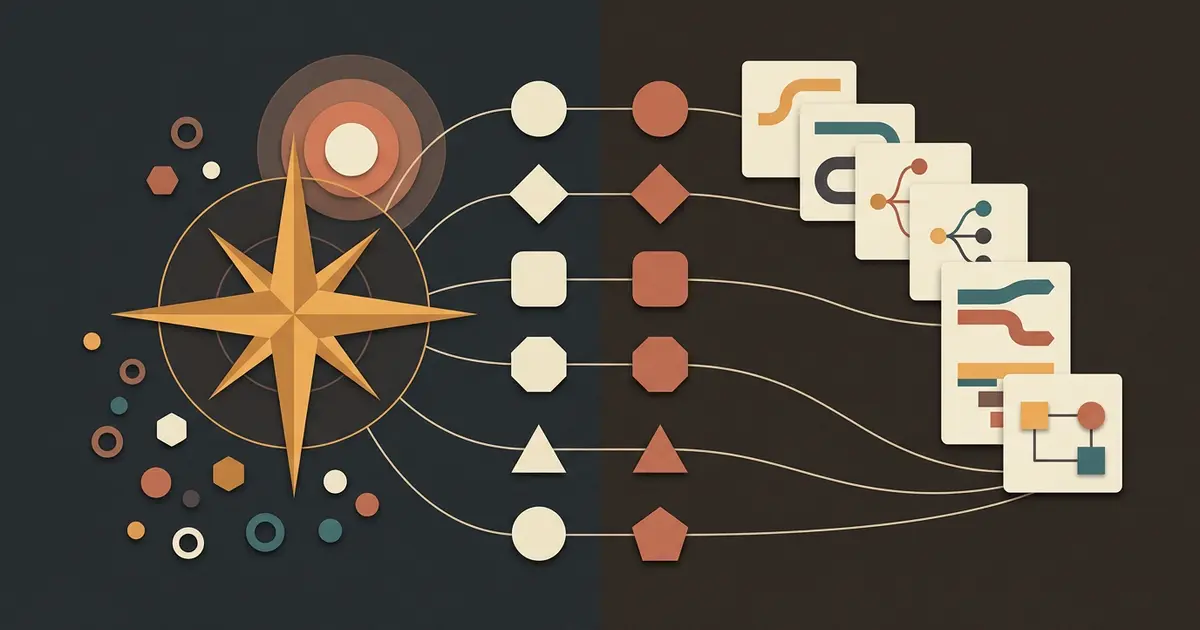
Compare the decision lifecycle before comparing section names
Organizations use BRD and PRD labels differently. These five passes define a local contract that stays useful even when a team combines the records or calls them something else.
Name the organizational need before the proposed product
Record the change, need, value, stakeholder, context, current evidence, constraints, and desired organizational outcome without treating one proposed interface as inevitable. Use the BRD side to preserve why the initiative exists and which business decision is being requested.
Sources: [iiba-requirements], [govuk-business-case]
Freeze the accepted business and stakeholder boundary
Give business goals, stakeholder needs, operating scope, policy or budget constraints, success measures, assumptions, exclusions, and business acceptance owners stable IDs and a reviewed revision. Keep project authorization and investment appraisal in their adjacent owners.
Sources: [iiba-requirements], [va-brd-example], [pmi-project-charter], [govuk-business-case]
Translate only the accepted product direction into behavior
Use the PRD side to name the user problem and evidence, product objective, priority, first scope, non-goals, records, states, observable behavior, dependencies, product signals, acceptance criteria, release gates, and open decisions. Do not copy every stakeholder note or business-case calculation into the product contract.
Sources: [govuk-user-needs], [atlassian-prd], [iso-29148]
Trace both ways without forcing a one-to-one map
Link each PRD requirement to the business or stakeholder requirement it advances, then map product acceptance and tests forward. One business requirement may need several product requirements, and one shared product capability may support several accepted business needs.
Sources: [nasa-requirements-management], [iso-29148]
Review each record on its own change trigger
Revisit the BRD when the organizational need, stakeholder boundary, constraints, expected value, or business acceptance changes. Revisit the PRD when user evidence, product behavior, priority, acceptance, dependencies, or release decisions change. Reconcile affected links and preserve prior approved revisions.
Sources: [iiba-requirements], [nasa-requirements-management], [atlassian-prd]
The owner boundary for this comparison
This page owns the decision between a BRD, a PRD, or linked coexistence. The template and adjacent planning owners keep their own artifacts, approvals, and download intent.
Included
- A criterion-by-criterion comparison of ownership, evidence, scope, requirement level, success, constraints, change control, and traceability
- One paired fictional equipment-request initiative with separate BRD and PRD decisions, stable IDs, version references, handoff, and gaps
- Rules for choosing the BRD, the PRD, both, neither, or a combined local record with explicit sections and owners
- A two-way template-link contract: this comparison links both template owners, while each template should point its concise difference FAQ back to this full guide
Not included
- The editable BRD pack and download intent owned by /blog/business-requirements-document-template
- The editable PRD pack and download intent owned by /blog/product-requirements-document-template
- Business-case investment appraisal, project-charter authorization, project-scope control, roadmap priority, or portfolio funding approval
- The software requirements specification and its detailed system, software, interface, quality, and verification information-item contract
- A universal claim about document names, required sequence, role titles, methodology, legal sufficiency, approval, delivery, product success, or business value
Ten criteria for choosing a BRD, PRD, or linked pair
Apply every criterion to the same initiative. Similar section names do not make the records interchangeable when their evidence, decision owner, maintenance trigger, and acceptance boundary differ.
Decision owned
Prevents an organization-level change decision and a product-behavior decision from collapsing into one ambiguous approval.
Primary audience and owner
Shows who supplies evidence, who maintains the record, and whose approval can actually change the next step.
Problem and evidence
Keeps organizational need and value evidence distinct from evidence about one user problem and product hypothesis.
Scope and non-goals
Separates the operating change and stakeholder boundary from the first product slice and behavior it will deliver.
Requirements level
Distinguishes business and stakeholder outcomes from observable product behavior without pretending the labels are universal.
Success and acceptance
Prevents a product test from masquerading as proof of business value or a business target from substituting for product acceptance.
Constraints and dependencies
Keeps organization, policy, budget, and operating constraints visible while assigning product and technical dependencies downstream.
Change and review trigger
Allows either record to evolve without silently overwriting the accepted business boundary or the current product contract.
Traceability and handoff
Makes the relationship many-to-many and versioned instead of copying one document into another or relying on matching titles.
Paired fictional initiative
Shows how the same initiative can need both records while each keeps a different approval, evidence, and maintenance lifecycle.
BRD and PRD decision matrix
Use the BRD to preserve the organization-level reason and boundary for change. Use the PRD to preserve the product-level behavior and delivery decision. Keep both when those records need independent ownership and revision.
Business requirements document (BRD)
Best for: A reviewable organization or business change decision whose needs, stakeholders, outcomes, scope, constraints, and acceptance must stay stable before or alongside product definition.
Use a BRD to represent why change is needed, which organizational outcomes matter, who is affected, which operating boundaries apply, and what evidence supports business acceptance. Keep the solution at the level needed for the business decision rather than specifying every product state.
| Criterion | Finding |
|---|---|
| Decision owned | Own whether and why the organization should pursue a bounded change, which business outcomes and stakeholder needs authorize downstream definition, and what remains unresolved. Sources: [iiba-requirements], [govuk-business-case] |
| Primary audience and owner | Serve sponsors, business owners, domain experts, affected operations, governance reviewers, and downstream product owners. Name one maintainer and the people authorized to accept the business boundary. Sources: [iiba-requirements] |
| Problem and evidence | Start from organizational need, current operating evidence, stakeholder context, expected value, assumptions, and missing evidence. A preferred product is an option, not proof of the need. Sources: [iiba-requirements], [govuk-business-case] |
| Scope and non-goals | Define affected business areas, stakeholders, capabilities, processes, records, policies, geographic or operating limits, exclusions, and the boundary of the requested business decision. Sources: [iiba-requirements], [va-brd-example] |
| Requirements level | Represent goals, objectives, outcomes, and stakeholder needs that explain why the change exists. Link solution or product requirements downstream instead of silently turning the BRD into an interface specification. Sources: [iiba-requirements], [iso-29148] |
| Success and acceptance | Own organizational outcome measures, business acceptance conditions, accountable reviewers, evidence limits, and revisit points. Product tests can support this review but do not prove realized business value. Sources: [iiba-requirements], [govuk-business-case] |
| Constraints and dependencies | Capture organization policy, budget, procurement, timing, operating capacity, stakeholder, transition, data, risk, and other constraints only to the depth the business decision needs. Sources: [iiba-requirements], [va-brd-example], [govuk-business-case] |
| Change and review trigger | Review when the need, value, stakeholder boundary, operating model, constraint, expected outcome, assumption, or business acceptance authority changes. Preserve the previous accepted revision. Sources: [iiba-requirements], [nasa-requirements-management] |
| Traceability and handoff | Give business and stakeholder requirements stable IDs, then link exact PRD requirements and acceptance owners back to them. Allow one need to produce several product requirements and process changes. Sources: [nasa-requirements-management], [iiba-requirements] |
| Paired fictional initiative | For fictional equipment.example.test, BRD-REQ-001 requires every branch equipment request to have a visible accountable owner; BRD-REQ-002 defines organization-wide status visibility; and BRD-OUTCOME-001 measures time-to-owner and unresolved-request age after collecting a real baseline. It does not select screens or promise improvement. Sources: [iiba-requirements], [nasa-requirements-management] |
Tradeoffs
- An upstream business contract exposes weak value, scope, and ownership assumptions, but it adds ceremony when the change is genuinely small, reversible, and owned by one product team.
- A BRD can guide several product or process changes, while excessive product detail makes it harder to maintain when implementation choices change.
Product requirements document (PRD)
Best for: A reviewable product decision whose user problem, behavior, priority, measurable outcome, dependencies, acceptance, and release boundary must guide design and delivery.
Use a PRD to translate an accepted product direction into the smallest product behavior that can be built and evaluated. Keep user evidence, scope, non-goals, records, states, dependencies, acceptance, product signals, release gates, and open decisions current without absorbing the investment case.
| Criterion | Finding |
|---|---|
| Decision owned | Own what bounded product behavior should be built or changed for a defined user problem, how it will be evaluated, and which product or release decisions remain open. Sources: [atlassian-prd], [govuk-user-needs] |
| Primary audience and owner | Serve product, design, engineering, research, data, operations, security, privacy, accessibility, and release reviewers whose work or decision changes the product slice. Name one product maintainer. Sources: [atlassian-prd] |
| Problem and evidence | Start from a defined user and observed problem, separate evidence from stakeholder opinion, state the product hypothesis and missing evidence, and focus on the need rather than prematurely fixing one solution. Sources: [govuk-user-needs], [atlassian-prd] |
| Scope and non-goals | Define the product or feature, target users, first outcome, in-scope behavior, explicit non-goals, supported states, and release boundary. Link the larger business or service scope instead of restating it. Sources: [atlassian-prd], [govuk-user-needs] |
| Requirements level | Represent product purpose, features, functionality, observable behavior, user needs, success criteria, and acceptance. Use an SRS when detailed system and software information-item rigor is the actual job. Sources: [atlassian-prd], [iso-29148], [nasa-srs] |
| Success and acceptance | Own product outcome signals, measurement rules, acceptance criteria, test identities, release gates, observation boundaries, and product decision owners. Passing acceptance does not prove the organization realized value. Sources: [atlassian-prd], [govuk-user-needs] |
| Constraints and dependencies | Translate accepted business constraints into product non-goals, data and access boundaries, dependencies, failure behavior, release conditions, and explicitly unresolved technical or provider decisions. Sources: [atlassian-prd], [iso-29148] |
| Change and review trigger | Review when user evidence, product objective, priority, scope, non-goal, behavior, record state, dependency, acceptance, product metric, or release decision changes. Link the reason and affected upstream requirement. Sources: [atlassian-prd], [nasa-requirements-management] |
| Traceability and handoff | Link each product requirement to every business or stakeholder requirement it advances and forward to acceptance and tests. Preserve explicit gaps rather than inventing coverage from similar wording. Sources: [nasa-requirements-management], [iso-29148] |
| Paired fictional initiative | For the same fictional initiative, PRD-REQ-001 lets a branch coordinator submit one idempotent equipment request; PRD-REQ-002 gives authorized operations staff assignment and status behavior; and PRD-SIGNAL-001 observes time-to-first-owner without promising it will improve. Each requirement links to the relevant BRD IDs and test evidence remains separate. Sources: [govuk-user-needs], [atlassian-prd], [nasa-requirements-management] |
Tradeoffs
- A product contract reduces policy invention during design and delivery, but it can create false confidence when the upstream organizational need or product-user evidence remains weak.
- A concise living PRD adapts as the product learns, while unversioned edits can break traceability to the business decision, acceptance, tests, and release evidence.
Choose a BRD, PRD, both, or a different owner
Start from the unresolved decision and the people who can accept it. Do not create two documents merely because a template says both should exist.
The organizational need, stakeholder outcome, operating scope, constraint, expected value, or business acceptance is disputed.
Choose: Use the BRD and stop before detailed product behavior becomes an accidental business approval.
Tradeoff: Product definition waits, while the organization avoids polishing one solution before the change boundary is reviewable.
The business direction is accepted, but the user problem, first product slice, behavior, priority, acceptance, or release decision remains unclear.
Choose: Use the PRD and link its exact version to the accepted business and stakeholder requirements.
Tradeoff: The team adds a maintained product contract, but design and delivery no longer need to invent policy from a broad business statement.
A substantial organization-level decision and a separately maintained product decision both need approval and may change independently.
Choose: Keep BRD and PRD as linked versioned records with bidirectional requirement, acceptance, and gap traces.
Tradeoff: Two records require reconciliation, while reviewers can see whether the business intent or product contract actually changed.
One small team owns a low-risk reversible change and the same reviewers can accept both the business and product boundary.
Choose: Use one combined brief with explicit Business decision and Product contract sections, separate IDs, and separate acceptance fields.
Tradeoff: The record stays lightweight, but the team must preserve the distinction instead of treating one approval as proof of every outcome.
The unresolved question is investment justification, project authorization, system specification, roadmap priority, test execution, or release readiness.
Choose: Use the business case, project charter, SRS, roadmap, test, or readiness owner and link the affected BRD or PRD revision.
Tradeoff: The initiative may maintain more references, while each approval remains inside the evidence boundary that can support it.
CHOOSE THE RECORD BEFORE THE TEMPLATE
Keep business and product decisions linked without duplication
Open the template that owns the current uncertainty, then link exact versions when both organization and product decisions need independent review.
Start with the BRD templateUse the PRD template when the business direction is accepted and the product behavior is the unresolved decision.
Open the product requirements document templateUse it for the user problem, product behavior, scope, records, acceptance, dependencies, product signals, and release decisions.
Limits of the BRD and PRD comparison
BRD and PRD are organizational conventions, not universally standardized document names. This guide defines a reviewable local contract and does not require a sequence, methodology, or role model.
- A BRD can contain product detail and a PRD can include business context. Content alone does not determine the decision owner, approval boundary, or maintenance lifecycle.
- A linked requirement graph exposes relationships but does not prove the upstream need, downstream coverage, implementation, test result, business value, or product success.
- The fictional equipment-request initiative has no real users, organization, service, baseline, authorization model, accessibility review, provider integration, security assessment, or deployed behavior.
- A business case compares rationale, options, costs, benefits, risks, affordability, and value. A project charter authorizes a project. Neither job is replaced by calling a BRD approved.
- An SRS can require detailed system and software requirements-engineering information items. A PRD does not become an SRS merely because it contains functional or non-functional requirements.
- Legal, regulatory, safety, accessibility, security, privacy, financial, employment, procurement, and sector-specific decisions require accountable review outside this general comparison.
- This ordinary informational article does not grant AI signup credits. The linked product page follows its own current eligibility rules.
Official sources and verification record
These sources were checked on August 1, 2026. They support the requirement levels, user and organizational boundaries, traceability, and adjacent-document distinctions. The exact BRD-versus-PRD matrix and paired fictional example remain Playcode editorial synthesis.
[iiba-requirements] International Institute of Business Analysis:Understanding Requirements and Designs
Checked August 1, 2026. Supports: Requirements as usable representations of needs; business requirements as goals, objectives, and outcomes; stakeholder requirements as needs that bridge business and solution requirements. It does not prescribe a universal BRD file.
[va-brd-example] U.S. Department of Veterans Affairs:Medical Appointment Scheduling System Business Requirements Document
Checked August 1, 2026. Supports: A direct government BRD example covering scope, stakeholders, goals and outcome measures, enterprise need, business requirements, interfaces, assumptions, dependencies, constraints, risks, users, and approvals. This 2014 healthcare artifact is not a universal template or healthcare policy.
[nasa-requirements-management] NASA:Requirements Management
Checked August 1, 2026. Supports: Controlled requirement baselines, bidirectional traceability from stakeholder expectations through product requirements and verification, change evaluation, and removal of unsupported duplication. NASA systems-engineering practice is not a general product process.
[govuk-user-needs] GOV.UK Service Manual:Learning About Users and Their Needs
Checked August 1, 2026. Supports: Evidence-led user problems rather than assumed solutions, continuing validation, and traceability from stable user needs to more constrained product stories and acceptance context.
[atlassian-prd] Atlassian:How to Create a Product Requirements Document
Checked August 1, 2026. Supports: A PRD as a shared product record for purpose, user needs, features, functionality, behavior, goals, success criteria, assumptions, user stories, design, and out-of-scope work. It is one product-company practice, not a standard.
[govuk-business-case] HM Treasury:Guidance on Developing Business Cases
Checked August 1, 2026. Supports: The separate business-case job of appraising rationale, objectives, options, costs, benefits, risks, affordability, value, and delivery arrangements. UK public-sector guidance is not universal investment policy.
[pmi-project-charter] Project Management Institute:The Charter: Selling Your Project
Checked August 1, 2026. Supports: The project charter as sponsor-issued project authorization and authority to apply resources, with business needs and requirements referenced at a high level. The article reflects an older PMBOK edition and is used only for this durable authorization boundary.
[iso-29148] International Organization for Standardization:ISO/IEC/IEEE 29148:2018 Requirements Engineering
Checked August 1, 2026. Supports: Requirements-engineering processes and required information items for systems and software across the life cycle. The abstract bounds SRS rigor but does not certify this comparison or expose the full paid standard.
[nasa-srs] NASA Software Engineering Handbook:SWE-109 Software Requirements Specification
Checked August 1, 2026. Supports: An SRS boundary covering software performance, interfaces, operational behavior, quality requirements, states, data, design constraints, verification, rationale, allocation, and bidirectional traceability. NASA rigor is not mandatory for every commercial product.
BRD and PRD questions
What is the main difference between a BRD and a PRD?
A BRD owns the organization-level need, desired outcomes, stakeholders, operating scope, constraints, and business acceptance. A PRD owns the product-level user problem, behavior, priority, product signals, dependencies, acceptance, and release decisions. Define those owners locally because document names vary.
Which comes first, the BRD or the PRD?
Start with the unresolved decision, not a mandatory sequence. When the business need or scope is disputed, establish that boundary before detailed product behavior. When an accepted direction already exists, begin the PRD and link its source. Small teams may maintain both sections in one versioned brief.
Can a PRD replace a BRD?
Only when the organization deliberately combines the jobs and the same record clearly separates business evidence, stakeholders, outcomes, constraints, and acceptance from product-user evidence, behavior, priority, acceptance, and release decisions. A product section alone should not silently approve the organization-level change.
When should an initiative use both a BRD and a PRD?
Use both when a substantial business decision and a separately maintained product decision need different owners, evidence, acceptance, or change cycles. Link exact revisions and stable requirement IDs in both directions, then preserve gaps when the PRD does not yet cover an accepted business need.
Who owns a BRD and who owns a PRD?
Name one maintainer for each local record. A BRD is often maintained through business analysis or an accountable business owner with affected stakeholders. A PRD is often maintained by a product owner with design, engineering, research, operations, and risk reviewers. Titles matter less than explicit decision authority.
Is a BRD the same as a business case?
No. A BRD represents the organization-level need, stakeholders, requirements, constraints, outcomes, and business acceptance. A business case evaluates the rationale, options, costs, benefits, risks, affordability, value, and delivery arrangements needed for an investment decision. Link them without copying the full appraisal.
Is a BRD or PRD the same as a project charter?
No. A project charter formally authorizes the project and the authority to apply resources. It may reference the business case, needs, requirements, objectives, scope, risks, milestones, and sponsor. The BRD and PRD retain their detailed business and product decisions whether created before, after, or alongside that authorization.
Is a PRD the same as a software requirements specification?
Not automatically. A PRD guides a product decision through user needs, product behavior, priority, outcomes, acceptance, and release boundaries. An SRS can own the more rigorous system and software requirements-engineering information items, including interfaces, quality requirements, constraints, and verification. Link them when both are useful.
Can Playcode build an app from a BRD and PRD?
Playcode can help build a bounded web app from reviewed business and product requirements. Before operational use, verify roles, records, states, authorization, validation, concurrency, audit, provider boundaries, failure recovery, accessibility, monitoring, backup, deployment, and acceptance in the real target. The article does not approve either document or prove the result.
BUILD FROM THE REVIEWED HANDOFF
Turn linked business and product requirements into a bounded app
Give Playcode the accepted business boundary and current product contract. Keep stable requirement IDs, explicit gaps, records, roles, states, acceptance, and release conditions visible while you build and verify the first slice.
Explore the AI app builderThis informational article does not grant AI signup credits. Playcode does not approve business value, requirements completeness, project authorization, delivery, product success, security, compliance, or external obligations.