QUICK ANSWER
What questions should a product feedback survey ask?
Ask about the recent product task, intended outcome, self-reported completion, task ease, friction point, satisfaction with the named experience, optional open evidence, one improvement, optional follow-up permission, and only necessary coarse segments. Give every question a purpose and human decision use, preserve missing answers, and keep direct identifiers outside the survey record.
Good product feedback survey questions start with one recent product experience and one decision a human team can make next. They capture trigger and context, intended outcome, self-reported completion, ease, friction, satisfaction, and optional open evidence without pretending that a questionnaire proves behavior, causation, demand, or priority.
This original pack turns that boundary into eleven versioned questions, anchored scales, optional follow-up, coarse segmentation, privacy placeholders, response-quality controls, five analysis handoffs, a closed schema, a dependency-free validator, 75 tests, and a deterministic ZIP. It contains no respondent data, direct identifier, upload, hosted collection flow, automatic exclusion, scoring benchmark, or product decision.
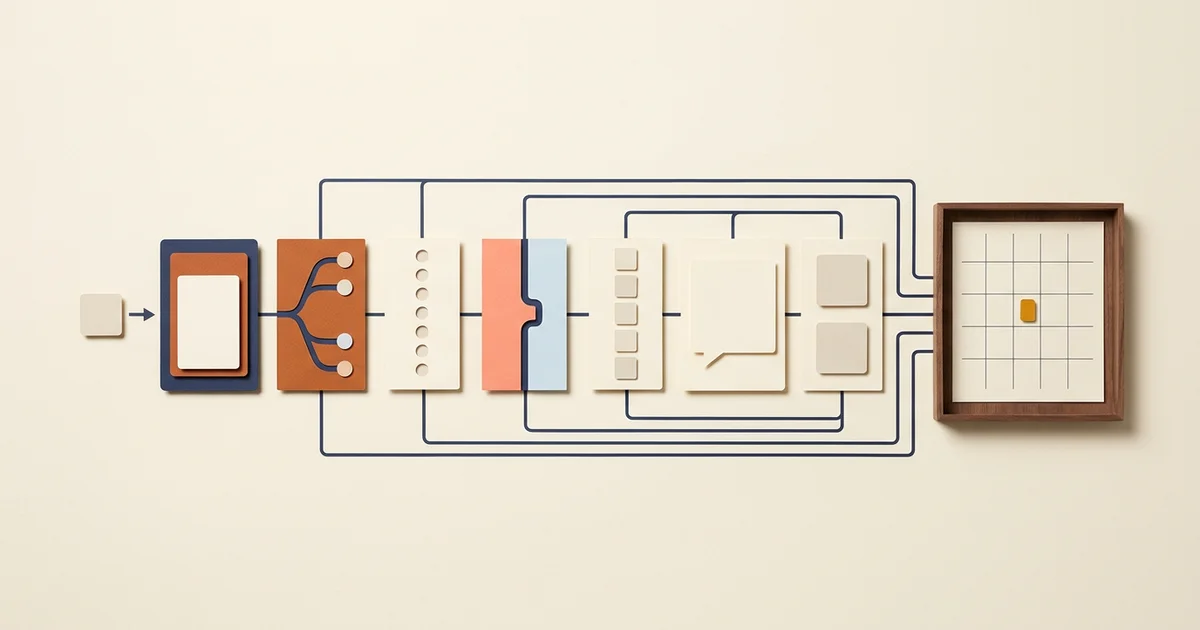
Design each question around evidence a human can use
Start with the decision, then work backward to a recent product experience, the minimum questions needed to describe it, and a documented analysis handoff. Keep survey evidence in its proper lane.
Define the research question and decision before drafting prompts
AAPOR recommends specifying objectives and deciding whether a survey is the right method before collecting data. GOV.UK likewise frames research questions around what a team needs to learn and how findings will support a decision. The pack therefore records one research question, intended use, product decision owner, and prohibited uses before the first product-feedback prompt.
Sources: [aapor], [gov-plan], [feedback-pack]
Anchor answers to a recent product task and eligible audience
A product-feedback answer is more interpretable when it names the task, trigger, recall window, eligible audience, and excluded audience. The fictional example uses people who attempted one prototype task, not all users or the market, and makes no representative-sample claim. Change those fields before adapting any question wording.
Sources: [aapor], [feedback-pack]
Use neutral wording and answer choices that fit the question
Pew documents how wording, question order, and response order can change measurement and describes iterative testing before fielding. AAPOR recommends short, audience-appropriate questions, one concept at a time, logical flow, and skip or do-not-know choices where appropriate. Keep ordinal scales ordered; randomize only choices whose order has no meaning.
Sources: [pew], [aapor], [feedback-pack]
Pair outcome with one post-task ease measure and friction context
Sauro and Dumas compared three one-question post-task usability measures and found a single ease or difficulty question useful as a quick diagnostic in their study. This pack uses a neutral seven-point difficult-to-easy item beside self-reported outcome and friction stage. Report its distribution and context; do not advertise a universal benchmark or observed task success.
Sources: [sauro-dumas], [pew], [feedback-pack]
Minimize data and separate optional follow-up identity
GOV.UK user-research guidance emphasizes explaining purpose and use, recording participation consent, restricting access, setting retention and deletion, and anonymizing shared outputs. ICO principles include purpose limitation, data minimisation, storage limitation, security, and accountability. The public pack starts anonymous, disables identifiers and uploads, warns about free text, and keeps any follow-up identity in a separate reviewed store. Local privacy and legal owners must decide the applicable basis and rules.
Sources: [gov-privacy], [gov-consent], [ico-principles], [feedback-pack]
Treat quality signals as prompts for review, not deletion rules
Pretest the instrument with intended respondents, show missing denominators, and document how partial answers are handled. Duplicate, speed, or bot signals can be useful for investigation, but this pack requires human review and forbids automatic exclusion. It also keeps substantive questions optional and records that its fictional wording has not been pretested.
Sources: [aapor], [pew], [feedback-pack]
Map every answer to descriptive analysis and a human handoff
Counts, valid-answer denominators, ordinal distributions, medians with context, and documented human coding can describe what this survey received. Open text stays subject to redaction and human review; missing and contradictory evidence remain visible. No score, theme, or segment automatically approves a fix, ranks a roadmap, establishes prevalence, or proves a cause.
Sources: [aapor], [gov-plan], [feedback-pack]
Validate the record shape, then test the real survey separately
JSON Schema Draft 2020-12 supplies the closed machine-readable vocabulary. OWASP recommends allowlisted syntactic and semantic validation with server-side enforcement for a future live product. The dependency-free validator adds cross-record, parity, safe-fiction, and version rules, but the downloaded pack does not implement collection, authentication, storage, accessibility, abuse controls, retention, deletion, or failure recovery.
Sources: [json-schema], [owasp-input], [feedback-pack]
What this product feedback survey owner covers
Use these questions when people recently attempted a bounded task in an existing product or feature. Keep other audiences, research methods, benchmarks, and operational systems with their own owners.
Included
- Recent-use trigger, eligible audience, product task, intended outcome, self-reported completion, ease, friction, and experience satisfaction
- Optional open evidence, one-improvement prompt, optional follow-up invitation, coarse authorized segmentation, and prefer-not choices
- Question purpose, stable IDs and versions, response types, anchored scales, ordering policy, privacy class, evidence cautions, and human analysis mapping
- Original Markdown, JSON, two CSV projections, closed Draft 2020-12 schema, dependency-free validator, 75 tests, and deterministic exact-allowlist ZIP
Not included
- Attendee, speaker, sponsor, venue, session, staff, and event-operations feedback owned by post-event survey questions
- Moderated or unmoderated test scenarios, think-aloud tasks, observation, task time, errors, notes, findings, and synthesis owned by a usability-testing template
- Standalone CSAT or NPS scoring, loyalty benchmarking, trend program governance, response-rate claims, and certified benchmark interpretation
- Population, sampling, demand, category, competitor, concept, and representative findings decisions owned by a market research template
- Recruitment, session plan, interview guide, transcript, qualitative synthesis, and the broader user-research plan
- Live survey UI, submission endpoint, authentication, persistence, notifications, access control, abuse prevention, retention, deletion, and operational monitoring
- Raw responses, direct identifiers, sensitive demographics, private customer records, credentials, payment data, health data, legal matters, files, or uploads
- Automatic exclusion, sentiment, feature ranking, roadmap priority, recommendation, approval, causal inference, product-success claims, or representative-sample claims
DOWNLOADABLE RESOURCE
Download the versioned product-feedback question bank
Use the Markdown guide to adapt the instrument, JSON as the canonical question record, and the CSV projections for human review. The prototype-task example is fictional, has no answers or identifiers, and remains in design review.
Product feedback survey question bank
An original provider-neutral bank of eleven bounded product feedback survey questions with privacy, quality, descriptive analysis, and human decision handoffs.
Format: Markdown guide, fictional versioned JSON bank, question and analysis CSVs, closed Draft 2020-12 schema, dependency-free validator, tests, and package scripts in one ZIP
Locally reproduced August 1, 2026. SHA-256: 06326ce5cb0f551e1a971ea71256b49d579962649b1e209e617f82258e713ec8
Included
- Eleven editable questions across trigger and context, task outcome, ease and friction, satisfaction, open evidence, follow-up, and coarse segmentation
- Canonical versioned fictional JSON with five descriptive analysis maps and separate survey, analysis, privacy, and product decision roles
- Question and analysis CSV projections kept in exact parity with the JSON bank and checked for spreadsheet formula prefixes
- Closed schema and validator with 75 positive, mutation, drift, reference, version, privacy, safe-fiction, and security tests
Verification boundary
After extraction, run npm run check. It validates the fictional bank plus schema, Markdown, question CSV, and analysis CSV parity. Rebuilding the repository source pack in different time zones must reproduce the locked SHA-256. Passing is structural evidence only.
Four bounded product-feedback survey patterns
Each pattern starts with a recent product experience and ends with a named human review. Replace the fictional product context, choices, notice, owners, and analysis rules before fielding.
Post-task completion and ease pulse
Use when: A person has just attempted one named product task and the team needs a short diagnostic signal.
Ask for intended outcome, self-reported completion, one anchored ease rating, one friction location, and optional explanatory evidence. Keep the trigger close to the attempt, preserve missing answers, and compare the signals before deciding whether a usability study or instrumentation review is warranted.
Structure
- Task and recent-use trigger, intended outcome, self-reported outcome, seven-point ease item, friction stage, and optional open evidence
- Valid-answer denominators, ordered distribution, human evidence review, explicit no-benchmark and no-causation boundary
Watch for: Do not call a self-reported outcome observed task success or replace a usability test with this pulse.
Sources: [sauro-dumas], [pew], [feedback-pack]
Feature adoption and friction checkpoint
Use when: People have used an existing feature and a product owner needs evidence about one bounded experience.
Name the feature task, ask what outcome people sought, whether they reached it, where friction occurred, and what one improvement would help. Compare only authorized coarse use-frequency or task-role segments and route the pattern to discovery instead of ranking ideas by mentions.
Structure
- Bounded feature context, outcome and friction choices, optional improvement evidence, coarse segment with prefer-not option
- Descriptive counts, missingness, small-cell review, human theme coding, and product discovery handoff
Watch for: Mention frequency is not market prevalence, causal proof, feasibility evidence, or roadmap priority.
Sources: [aapor], [gov-plan], [feedback-pack]
Periodic product experience review
Use when: A team wants a recurring view of one stable product experience rather than a loyalty benchmark.
Keep the audience, recall window, wording, response options, and version history stable enough to interpret change, while recording every material edit. Review the full satisfaction and ease distributions with task outcome and missingness; do not relabel the result NPS, a certified CSAT benchmark, or representative market sentiment.
Structure
- Stable versioned prompts, consistent recent-use eligibility, anchored ordered scales, and documented wording revisions
- Distribution-first analysis, denominator and missingness disclosure, context review, and no-loyalty-benchmark boundary
Watch for: A trend can change because of audience, trigger, wording, response order, season, or product context, not only the experience itself.
Sources: [pew], [aapor], [feedback-pack]
Optional follow-up recruitment handoff
Use when: Survey evidence raises a question that a separate, consented research conversation could investigate.
Ask one optional yes-or-no invitation question. Keep the identity needed to send that invitation outside the survey response, restrict its access and purpose, provide withdrawal, and route the handoff through the privacy reviewer. A yes answer cannot authorize unrelated outreach.
Structure
- Optional invitation choice in the survey, separate reviewed identity store, explicit purpose and withdrawal path
- Privacy-owner review, limited access and retention, human recruitment decision, and no unrelated-use boundary
Watch for: Local privacy and legal owners must define the applicable notice, legal basis, retention, deletion, access, and withdrawal process.
Sources: [gov-privacy], [gov-consent], [ico-principles], [feedback-pack]
Choose the survey owner from the evidence job
Several research artifacts contain questions, but they differ in audience, method, evidence, and decision rights. Route the job before adapting the wording.
People recently attempted a bounded task in an existing product and you need self-administered diagnostic feedback.
Choose: Use this product feedback survey question bank.
Tradeoff: It scales consistent self-reporting but cannot observe behavior, establish root cause, or replace deeper research.
The audience is event attendees, speakers, sponsors, vendors, staff, or venue stakeholders.
Choose: Use post-event survey questions.
Tradeoff: The event owner captures session and operations context that would distort a product-task survey.
A researcher needs tasks, think-aloud instructions, observation, errors, task time, notes, and synthesis.
Choose: Use a usability-testing template.
Tradeoff: Observed sessions provide richer behavior evidence with lower scale and a materially different facilitation and consent model.
The primary job is a governed relationship benchmark such as NPS or a standardized CSAT program.
Choose: Use the dedicated benchmark owner and method.
Tradeoff: Benchmark consistency and disclosure matter more than the task-specific diagnostics owned here.
The decision concerns a population, market demand, category, competitor, concept, or representative claim.
Choose: Use a market research template and reviewed sampling plan.
Tradeoff: Market inference requires population, recruitment, sampling, weighting, and disclosure decisions this pack does not make.
The team needs recruitment, interview prompts, sessions, transcripts, notes, and qualitative synthesis.
Choose: Use a user-interview guide and broader research plan.
Tradeoff: An interview can explore why and adapt in the moment, but it is not a self-administered product-feedback questionnaire.
START WITH ONE BOUNDED PRODUCT TASK
Adapt the question bank before you field it
Download the versioned pack, replace the fictional task and choices, remove unnecessary questions, name the owners, pretest the wording, and preserve the privacy, analysis, and adjacent-owner boundaries.
Download the product feedback packThe pack is informational and provider-neutral. Passing structural checks does not validate an adapted survey or its conclusions.
What the questions and validator cannot establish
A well-bounded question bank improves consistency and reviewability. It does not make the responses representative, causal, or decision-ready by itself.
- The prototype-task context, choices, roles, and version history are fictional. The bank contains no respondent, response, product telemetry, customer record, or research result.
- The wording is marked not pretested. An adapted instrument needs cognitive review, audience testing, functional verification, accessibility testing, and a recorded revision before fielding.
- The validator checks selected shape, reference, scale, version, parity, obvious secret, personal-data, URL, and spreadsheet patterns. It is not a complete privacy, security, PII, consent, accessibility, fraud, or content scanner.
- Self-reported completion, ease, friction, satisfaction, and open evidence do not prove observed behavior, root cause, prevalence, loyalty, retention, demand, product quality, or future action.
- Descriptive distributions and human-coded themes can inform discovery. They cannot automatically exclude responses, rank features, set roadmap priority, approve a change, or establish causation.
- Privacy and survey guidance changes by jurisdiction and context. Recheck purpose, legal basis, notice, minimization, access, retention, deletion, withdrawal, sharing, sampling, and reporting with accountable owners.
Primary sources and same-release pack evidence
These official, professional, standards, and primary-research sources were checked on August 1, 2026. They informed the original field model and boundaries; their downloadable templates and copy were not reused.
[feedback-pack] Playcode:Same-release product feedback question bank
Checked August 1, 2026. Supports: The exact fictional question IDs, prompts, options, scales, privacy flags, quality controls, analysis maps, revision history, validator rules, tests, and deterministic archive described here.
[aapor] American Association for Public Opinion Research:Best Practices for Survey Research
Checked August 1, 2026. Supports: Objective definition, method fit, short single-concept questions, audience language, logical ordering, low burden, skip choices, pretesting, nonresponse limits, analysis, and contextual reporting.
[pew] Pew Research Center:Writing Survey Questions
Checked August 1, 2026. Supports: Iterative wording and pretesting, question and response-order effects, randomization of unordered options, logically ordered ordinal scales, and measurement effects from wording changes.
[gov-plan] GOV.UK Service Manual:Plan user research for your service
Checked August 1, 2026. Supports: Actionable research questions, relevant user groups, method choice based on the decision, and sharing findings with the team that owns the next action.
[gov-privacy] GOV.UK Service Manual:Managing user research data and participant privacy
Checked August 1, 2026. Supports: Purpose explanation, data minimization, secure restricted access, retention, deletion, anonymized outputs, and accountable data-protection review for user research.
[gov-consent] GOV.UK Service Manual:Getting informed consent for user research
Checked August 1, 2026. Supports: Explaining purpose, collection, use, and sharing; recording research participation consent; and providing a withdrawal path in the described government research context.
[ico-principles] UK Information Commissioner's Office:A guide to the data protection principles
Checked August 1, 2026. Supports: Purpose limitation, data minimisation, accuracy, storage limitation, integrity and confidentiality, and accountability. The page notes that current guidance is under review after UK legislation changed.
[sauro-dumas] ACM CHI 2009:Comparison of three one-question, post-task usability questionnaires
Checked August 1, 2026. Supports: Primary research comparing three single-item post-task usability questionnaires, including a seven-point difficult-to-easy item, as quick diagnostic measures in that study.
[owasp-input] OWASP Cheat Sheet Series:Input Validation Cheat Sheet
Checked August 1, 2026. Supports: Allowlist-oriented syntactic and semantic validation, exact choices for fixed fields, and server-side enforcement for a future live survey product.
[json-schema] JSON Schema:JSON Schema Draft 2020-12
Checked August 1, 2026. Supports: The schema draft and vocabulary used to express the closed machine-readable question-bank shape in the downloadable pack.
Product feedback survey questions FAQ
How many questions should a product feedback survey include?
Use the fewest questions needed for the named decision and audience. The pack offers eleven modules, not a rule that every respondent must see all eleven. Start with task outcome, ease or friction, and one optional evidence prompt; add satisfaction, follow-up, or coarse segmentation only when the purpose and analysis plan justify their burden.
What is a good first product feedback survey question?
First confirm the recent task or product context. Then ask what outcome the person was trying to reach. That order keeps later completion, ease, friction, and satisfaction answers tied to an experience instead of asking for a vague opinion about the whole product.
Should product feedback surveys ask NPS?
Only when a separately governed NPS program owns loyalty measurement, audience, timing, trend consistency, disclosure, and interpretation. This task-specific bank does not include a recommendation question, calculate NPS, or claim a benchmark. It uses bounded outcome, ease, friction, satisfaction, and open evidence for product discovery.
Is a product feedback survey the same as usability testing?
No. A survey collects structured self-report from people after a product experience. A usability test owns task scenarios, facilitation or unmoderated instructions, observed behavior, errors, timing, session notes, findings, and synthesis. A survey pattern may justify a usability study, but it does not replace one.
How should open product feedback be analyzed?
Define a human coding guide, preserve uncoded and ambiguous answers, redact accidental sensitive detail, record the denominator, inspect contradictory or minority evidence, and connect themes to the original task context. Do not treat automated sentiment, theme frequency, or a vivid quote as prevalence, cause, priority, or approval.
Can a product feedback survey collect an email for follow-up?
A reviewed survey system may support optional follow-up, but keep the identifier outside the feedback response, state the exact purpose, restrict access and retention, and provide withdrawal. Local privacy and legal owners must decide the applicable notice and basis. This public pack stores only an optional yes-or-no invitation choice.
How should incomplete or suspicious responses be handled?
Keep missing denominators visible and document partial-response rules before analysis. Treat duplicate, speed, and bot signals as reasons for human review, not automatic deletion. Investigate whether the flag is reliable in the real collection system and disclose material exclusions and limitations in any report.
Does passing the validator mean the survey is ready to launch?
No. Passing proves that the original fictional files satisfy selected structural, reference, parity, version, privacy-flag, and obvious safety rules. An adapted survey still needs wording pretests, functional and accessibility testing, local privacy and legal review, a sampling decision, server-side controls, storage and deletion design, and accountable analysis review.
BUILD THE REVIEWED SURVEY EXPERIENCE
Turn the bounded questions into a product feedback form
Describe the trigger, audience, questions, branching, consent boundary, access, retention, analysis handoff, accessibility, abuse controls, and failure recovery you need.
Build a product feedback formThis informational article does not grant signup AI credits. The linked product page follows its own current eligibility rules.