QUICK ANSWER
What should a project closure report template include?
A project closure report template should identify the final revision, closure type, evidence cutoff, authorized scope, schedule, budget and benefit baselines, final variances and observations, deliverable acceptance references, custody handovers, transferred obligations, continuing benefit owners, administrative and records evidence, limitations, and a named human decision maker with authority, date, rationale, conditions, and decision evidence.
A project closure report is the versioned final decision packet for a completed, cancelled, suspended, or phase-closed project. It reconciles authorized scope, schedule, and budget baselines to final observations, references authoritative acceptance, records custody handover, transfers open obligations and benefits monitoring, and preserves the evidence behind a named human closure decision.
The downloadable pack includes an editable worksheet, a validator-clean draft with explicit unknowns, a fictional completed example with transferred obligations, a closed JSON Schema, a dependency-free semantic validator, 56 positive and mutation tests, and an exact-allowlist ZIP builder. It checks internal consistency, not truth, authority, audit conclusions, retention rules, compliance, or benefit realization.
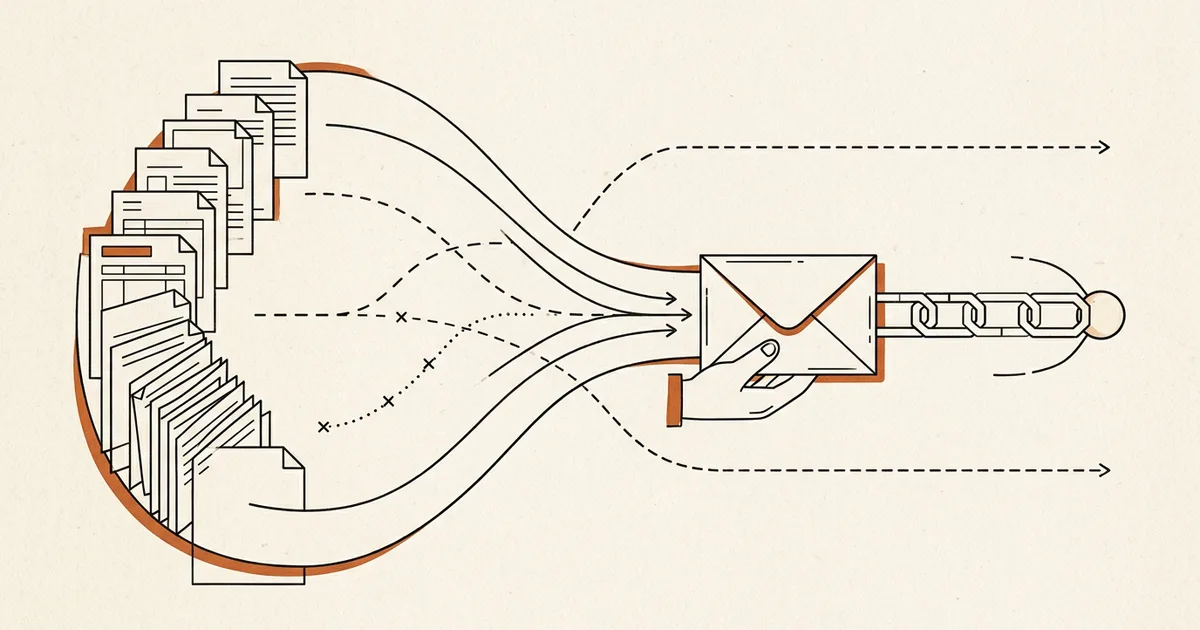
Assemble a decision packet without stealing adjacent jobs
Begin only when a phase or project has reached a closure decision point. Link the authoritative records, preserve uncertainty, and transfer anything that continues after the project instead of presenting closure as the disappearance of responsibility.
Freeze the closure type, revision, and evidence cutoff
Identify whether the packet closes a completed, cancelled, suspended, or phase-complete project. Record one revision and evidence cutoff. California treats closing as appropriate after product acceptance and support transfer or after a suspend or cancel decision; late evidence belongs in a later revision, not a silent rewrite.
Sources: [ca-closing], [oregon-templates]
Reconcile authorized baselines to final observations
Reference the approved scope, schedule, budget, and benefit baseline revisions. Recompute calendar-day and financial variances from source values, describe final scope and outcome observations, and carry limitations beside the conclusion. Do not turn the report into a new plan or recurring status update.
Sources: [report-pack], [oregon-templates], [ca-closing]
Reference acceptance and record custody separately
For each final deliverable, cite the acceptance state, accountable authority role, evidence reference, and date from its source record. Then record a separate accepted handover with the receiving custody role. The closure report can reference acceptance and transfer; it cannot grant either one.
Sources: [report-pack], [ca-closing]
Transfer open obligations instead of declaring them finished
Give every continuing obligation a stable ID, source reference, receiving owner role, due date, and transfer evidence. A closed packet contains no ownerless or merely open obligation, but transfer does not mean the obligation itself is complete.
Sources: [report-pack], [ca-closing]
Keep benefits monitoring alive after project closure
Link each benefit to the authorized baseline, retain the measure, observation, evidence, limitations, monitoring owner, next review, and transfer evidence. Australian Government guidance says benefits are owned by business units, not by the project, and treats them as continuing beyond integration into business as usual. Closure cannot manufacture realization from a short observation window.
Sources: [dta-benefits], [report-pack]
Reference administrative, financial, and records closeout
Cite financial reconciliation, procurement closeout, access handoff, resource release, records custody, and the applicable records-schedule authority. NARA explains that a records schedule is the disposition authority; this report records the approved reference and must not invent a retention or destruction decision.
Sources: [ca-closing], [nara-schedules]
Minimize public data and require a named human decision
Keep source detail in controlled systems, publish only the minimum necessary references, and use reserved .test domains in fictional material. A validator may reject contradictions, but a named human with the recorded authority role, decision date, rationale, conditions, and evidence must decide whether the exact revision closes.
Sources: [ico-minimisation], [json-schema-2020-12], [rfc-2606], [report-pack]
The project closure report ownership boundary
This owner covers one final governance packet at completion, cancellation, suspension, or phase close. It reconciles and references authoritative records without becoming the place where those records are created.
Included
- Final report identity, revision, closure type, evidence cutoff, project roles, and authorized scope, schedule, budget, and benefit baseline references
- Final scope and outcome observations, calendar-day schedule variance, one-currency budget arithmetic, evidence references, and visible limitations
- Deliverable disposition with authoritative acceptance references, acceptance authority roles, dates, custody handovers, and disposition evidence
- Transferred or separately closed obligations, continuing benefits monitoring, receiving owners, due or review dates, and transfer evidence
- References to financial, procurement, access, resource, records-schedule, records-custody, and administrative closeout evidence
- A named human closure decision with authority role, date, rationale, conditions, and evidence for the exact revision
- Editable worksheet, draft starter, fictional worked example, closed schema, validator, mutation tests, README, deterministic builder, and exact eight-file ZIP
Not included
- Project authorization, business-case recommendation, planning, work breakdown, implementation sequencing, execution, milestone control, or remaining-work ownership
- Recurring status reporting, progress forecasting, issue and risk management, change requests, change-adoption authorization, or release readiness
- Deliverable acceptance grants, test signoff, operational acceptance, supplier acceptance, legal approval, compliance approval, or audit opinion
- Lessons collection, retrospectives, causal analysis, post-event reporting, event debriefs, release notes, changelog publishing, or communications planning
- Choosing a retention period, authorizing records destruction, replacing a records schedule, performing records disposal, or transferring legal custody without authoritative evidence
- Certifying benefits, outcomes, savings, schedule feasibility, privacy compliance, security, accessibility, legality, or successful adoption
DOWNLOADABLE RESOURCE
Download the project closure report template pack
Start with the worksheet or the validator-clean draft. Keep every unknown visible until its authoritative source is available, then compare your adapted record with the fictional completed example and run the included checks.
Project closure report template pack
An eight-file final-decision packet for baseline reconciliation, acceptance references, custody, transferred obligations, continuing benefits, administrative evidence, records authority, and human closure.
Format: Markdown, JSON, JSON Schema, dependency-free Node.js validator/tests, and deterministic ZIP builder
Locally reproduced August 1, 2026. SHA-256: 48e065925d105a6edada8485716c1d7a4cb6f5a82d6aeb21175cdced077f32f0
Included
- Editable closure worksheet covering identity, baselines, final observations, acceptance, custody, obligations, benefits, administration, records, and human decision
- Validator-clean draft starter whose explicit unknown values cannot pass the closed-state gates
- Fictional completed example with two accepted deliverables, one custody handover, two transferred obligations, and continuing benefits monitoring
- Closed JSON Schema Draft 2020-12 contract and dependency-free semantic validator
- Fifty-six tests for shape, IDs, references, calendar dates, currencies, arithmetic, authority, custody, obligations, benefits, administration, records, privacy, and overclaims
- README and exact eight-file allowlist with a fixed-time builder for reproducible ZIP bytes
Verification boundary
Validated both fictional records, ran 56 tests, inspected the closed schema, checked exact source-to-public and archive byte parity, rebuilt the ZIP across time zones, and locked the archive and hero hashes. This verification does not authenticate external evidence or authorize closure.
Three closure decision shapes with one final-packet job
The closure type changes the allowable final disposition, not the ownership boundary. Each shape reconciles authorized records, transfers continuing responsibility, and ends with a separately evidenced human decision.
Completed project with transferred obligations
Use when: Authorized deliverables have acceptance references and custody transfer, while operational obligations or benefits monitoring continue after the project team ends.
Reconcile final scope, schedule, and budget; reference acceptance; record custody; transfer every continuing obligation and benefit measure; reference administrative and records closeout; then record the named human decision.
Structure
- Accepted or transferred deliverables with authority, evidence, dates, and one accepted custody handover
- No open ownerless obligation, with benefits monitoring assigned beyond the decision date
- Final arithmetic, administrative evidence, records authority, limitations, and signed decision reference
Watch for: Transferred does not mean completed, and an observed benefit does not mean realized or caused by the project.
Sources: [report-pack], [ca-closing], [dta-benefits]
Cancelled project final packet
Use when: An accountable authority ends the project before all planned deliverables are accepted and needs a final disposition, custody, obligation, financial, and records decision trail.
Use cancelled or incomplete dispositions with authoritative evidence, preserve the final baseline variance and limitations, transfer any surviving obligations or assets, and record the separate human cancel-and-close decision.
Structure
- Final disposition evidence for incomplete or cancelled deliverables without manufacturing acceptance
- Custody and records transfer for existing assets, preserved financial reconciliation, and explicit surviving obligations
Watch for: Do not rewrite a cancellation as delivery success, acceptance, a retrospective, or an audit finding.
Sources: [ca-closing], [oregon-templates], [nara-schedules]
Phase-close packet with benefits still unobserved
Use when: One authorized phase ends and its accepted outputs transfer to the next phase or operating owner, while outcome evidence is not yet mature.
Name the exact phase boundary, link its baseline and acceptance records, transfer custody and obligations, leave immature outcome observations qualified, and assign the benefit owner and next review after closure.
Structure
- Phase-specific final baseline references and acceptance evidence without closing the entire program
- Data-minimized source references, continuing benefit custody, records schedule references, and a named decision maker
Watch for: A phase-close decision does not authorize the next phase, approve adoption, publish release notes, or prove the intended benefit.
Sources: [dta-benefits], [ico-minimisation], [json-schema-2020-12], [rfc-2606]
Route each closeout question to the record that owns it
A closure report stays credible when it cites the source of authority and refuses to become a catch-all end-of-project document.
A deliverable still needs someone to decide whether it is accepted.
Choose: Keep acceptance in the authoritative acceptance or signoff record. Reference its state, authority role, evidence, and date only after that decision exists.
Tradeoff: Closure may wait or use a cancellation or suspension disposition, but the report does not acquire acceptance authority.
Work, an issue, a warranty, or a benefit measure continues after closure.
Choose: Transfer it to an accountable receiving role with its source record, due or review date, and transfer evidence before approving the packet.
Tradeoff: The project can close while responsibility remains visible, rather than implying that closure erased unfinished obligations.
The team wants to add lessons, causes, adoption actions, or release communication.
Choose: Link the lessons, retrospective, causal-analysis, change-management, or release-note owner and keep only the final reference needed for the decision.
Tradeoff: Reviewers may follow several bounded records, but each conclusion keeps its proper evidence and authority.
Someone proposes a retention period or disposal action inside the packet.
Choose: Reference the current approved records schedule and custody evidence. Route any schedule or disposal decision to the accountable records process.
Tradeoff: The packet cannot choose a convenient retention rule, reducing the risk of unauthorized destruction or indefinite retention.
START FROM THE UNKNOWN STATE
Download the final-packet template and inspect every gate
Use the worksheet, keep missing authority and evidence marked unknown, compare the fictional transfer example, and run the validator before a human closure review.
Download the closure report packThe pack is a fictional editorial resource. A validation pass does not grant acceptance, authority, closure, audit, retention, compliance, or outcome status.
Define the authorized boundary with the project scope statement templateClosure reconciles the final result to an authorized baseline. It does not create that baseline.
What the template and validator cannot establish
Deterministic consistency checks are narrower than evidence truth, human authority, professional judgment, legal requirements, operational custody, and realized outcomes.
- The validator checks exact keys, IDs, references, calendar dates, one currency, arithmetic, states, custody coverage, transfer gates, administrative references, privacy hazards, and overclaim phrases. It does not authenticate a linked source.
- Acceptance remains with the named authority and its source record. Copying an acceptance reference into this packet does not grant or expand acceptance.
- A transfer record identifies continuing responsibility. It does not prove that an obligation is complete, a handover is effective, or a receiving team has capacity.
- Benefit observations require their own measure, baseline, evidence, limitations, owner, and review. Closure does not prove realization, attribution, causation, or lasting value.
- Records schedules and accountable records owners determine retention and disposition. This packet does not choose a period, authorize destruction, or perform transfer by itself.
- Data minimisation depends on purpose and context. The pack blocks common public-data hazards but does not provide legal, privacy, security, accessibility, procurement, finance, audit, or records-management advice.
- The fictional names, roles, records, amounts, dates, evidence URLs, and observations are teaching fixtures, not benchmarks, official templates, or recommendations for a real organization.
- This ordinary informational article does not grant AI signup credits. The linked product flow follows its own current eligibility rules.
Sources and local review record
Government and standards sources support the closure, benefits, records, privacy, schema, and fictional-domain boundaries. They do not endorse this Playcode synthesis or approve any adapted packet.
[report-pack] Playcode:Fictional completed project closure report
Checked August 1, 2026. Supports: The locally reviewed fictional model, closed keys, reference graph, arithmetic, transfer state, human-decision gate, privacy checks, and deterministic tests. Public availability remains unverified until deployment.
[ca-closing] California Department of Technology:California Project Management Framework: Closing
Checked August 1, 2026. Supports: Closing after acceptance and support transfer or after a suspend or cancel decision, custody of products and records, open-issue transfer, and a final closeout report.
[oregon-templates] State of Oregon Department of Administrative Services:Project management templates: Closeout Report
Checked August 1, 2026. Supports: The distinction between a recurring project status report and a final closeout report tied back to the project charter, deliverables, acceptance, performance, and recommendations.
[dta-benefits] Australian Government Digital Transformation Agency:Benefits Management Policy introduction
Checked August 1, 2026. Supports: Benefits managed through and beyond integration into business as usual, measurable and evidence-based benefits, integration with governance and performance management, and ownership by business units rather than projects.
[nara-schedules] U.S. National Archives and Records Administration:Scheduling Records
Checked August 1, 2026. Supports: The role of an approved records schedule as disposition authority, the need for clear scope and instructions, and the boundary against unauthorized records destruction.
[ico-minimisation] UK Information Commissioner's Office:Principle (c): Data minimisation
Checked August 1, 2026. Supports: The purpose-bound principle that personal data should be adequate, relevant, and limited to what is necessary, with periodic review of continued need.
[json-schema-2020-12] JSON Schema:JSON Schema Draft 2020-12
Checked August 1, 2026. Supports: The schema dialect declared by the downloadable closed JSON Schema.
[rfc-2606] RFC Editor:RFC 2606 Reserved Top Level DNS Names
Checked August 1, 2026. Supports: Use of reserved .test domains for fictional evidence and record references.
Project closure report questions
Is a project closure report the same as a final status report?
No. A status report communicates progress and forecast during delivery. A closure report is a versioned final decision packet that reconciles authorized baselines, references acceptance and custody, transfers continuing obligations and benefits, and records a human closure decision.
Can a project close with open obligations?
It can close with obligations that continue only when each one is transferred or separately closed in its authoritative owner system. Record the source, receiving role, due date, and transfer evidence. Do not leave an ownerless open item or call transfer completion.
Does the closure report approve deliverables?
No. The report references the authoritative acceptance status, authority role, evidence, and date. Acceptance stays with the accountable source process. The packet should fail the completion gate when required acceptance evidence is unknown.
What happens to benefits after project closure?
Benefits may remain under observation or active monitoring after the project team ends. Preserve the authorized baseline, measure, observation, limitations, owner, next review date, and transfer evidence rather than declaring the intended benefit realized.
Should a closure report set records retention periods?
No. Reference the current approved records schedule, schedule item, custody owner, location, and transfer evidence. The accountable records process determines retention and disposition. A project closure report must not invent a period or authorize destruction.
Can the validator decide that a project is closed?
No. It can reject structural contradictions and missing gates. A named human with the recorded authority role must decide the exact revision and preserve the date, rationale, conditions, and evidence. Machine validation is not authority.
TURN THE FINAL WORKFLOW INTO A REVIEWABLE APP
Build the handoff system behind the closure packet
Describe the private records, roles, evidence links, decision gates, and post-closure monitoring your team needs. Playcode can help build the workflow while accountable humans keep authority.
Start BuildingNo credit card required. This informational article itself does not grant AI signup credits or change route eligibility.