QUICK ANSWER
What is the difference between an API and an SDK?
An API is an interface contract for interacting with a service or component. An SDK is a language- or runtime-specific toolkit that may wrap an API with methods, types, auth helpers, pagination, retries, and errors. Use raw HTTP for portability and explicit control; use an SDK for reviewed convenience when its coverage, versions, maintenance, and failure behavior fit.
SAME SERVICE, TWO CLIENT LAYERS
One fictional read, shown both ways
Both snippets target GEThttps://api.cedar.example.test/v1/widgets?limit=2, use the same bearer credential, and apply the same client deadline. The SDK version is shorter because the fictional wrapper owns request construction, not because the remote service changed.
Raw HTTP API call
The application names the method, URL, headers, deadline, status check, and response parsing directly.
const baseUrl = 'https://api.cedar.example.test'
const token = process.env.CEDAR_CATALOG_TOKEN
if (!token) throw new Error('Missing server-only Cedar token')

const response = await fetch(
  new URL('/v1/widgets?limit=2', baseUrl),
  {
    method: 'GET',
    headers: {
      accept: 'application/json',
      authorization: `Bearer ${token}`,
    },
    signal: AbortSignal.timeout(3000),
  },
)

if (!response.ok) {
  throw new Error(`Cedar API returned HTTP ${response.status}`)
}

const page = await response.json()
SDK wrapper call
The application calls a language-specific method, while the fictional client is responsible for producing the same request and surfacing its result or failure.
const token = process.env.CEDAR_CATALOG_TOKEN
if (!token) throw new Error('Missing server-only Cedar token')

const client = new CedarCatalogClient({
  baseUrl: 'https://api.cedar.example.test',
  token,
  timeoutMs: 3000,
})

// Wraps GET /v1/widgets?limit=2 against the same service.
const page = await client.widgets.list({ limit: 2 })- Same success
- The service returns the same widget page for the same authorized request.
- Same remote failures
- The service can still reject authentication, rate-limit, return an error status, time out, or return an unexpected payload.
Prerequisites
- A server runtime with fetch and AbortSignal.timeout support for the raw example, or an equivalent reviewed cancellation mechanism
- A fictional CedarCatalogClient package for the SDK example; it is illustrative and cannot be installed
- A server-only CEDAR_CATALOG_TOKEN fixture; never expose a real service credential in browser code, source, logs, URLs, screenshots, or prompts
- The current provider contract for the real service you substitute, including endpoint, authentication, permissions, version, limits, response schema, and error behavior
Limitations
- The snippets perform no network request in this article and prove no provider availability or authorization.
- The SDK method is assumed to serialize the same GET request. A real SDK must be checked against its current source, package version, and wire behavior.
- The examples intentionally omit pagination, retry, caching, response-schema validation, telemetry, and recovery so those policies are not guessed.
API and SDK are related terms, not interchangeable products. For an HTTP service, the API is the remote contract: operations, request and response shapes, authentication, versions, and failure semantics. An SDK is a distributed toolkit for a particular language or runtime. It may wrap that API with methods, types, credential helpers, pagination, retries, and error objects.
The service does not become safer or more available because an SDK is present. The application still needs authorized credentials, a compatible API and package version, bounded failure policy, response validation, observability, and recovery. The useful comparison is therefore not shorter code versus longer code. It is which layer owns each behavior and how the team proves that ownership.
The neutral example below sends one fictional read to one fictional service in two forms. The raw HTTP version exposes the wire choices. The SDK version assumes a wrapper produces the identical request. Neither example claims a real provider connection, a native Playcode connector, or production readiness.
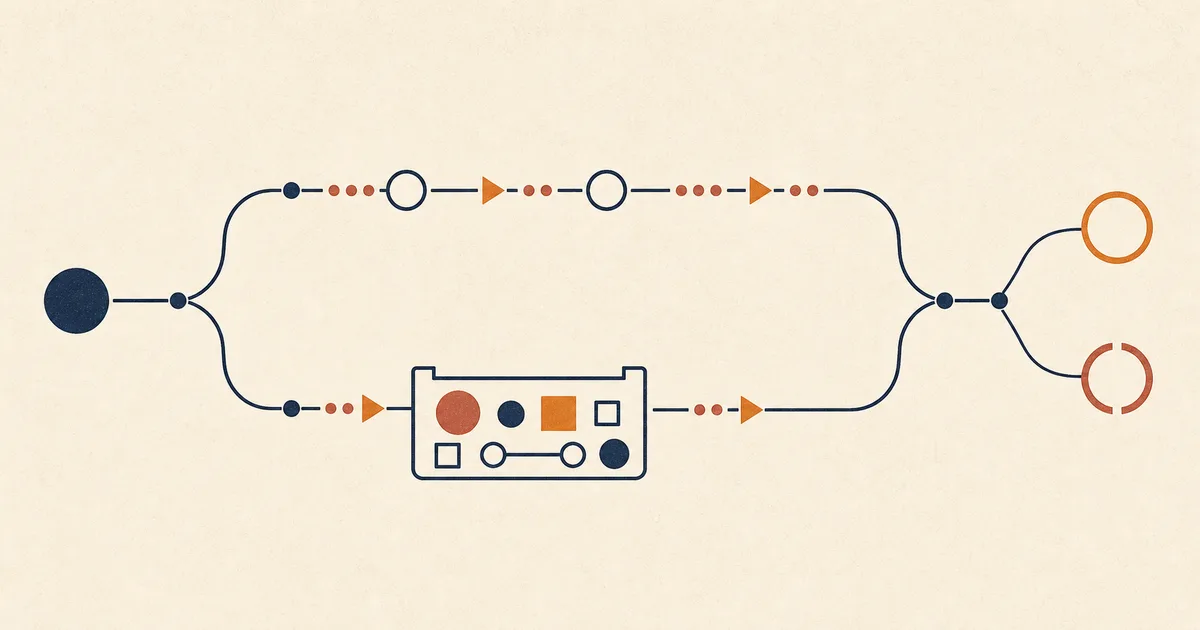
Compare the wire contract before the convenience layer
Use one real operation from the current provider documentation. Observe the same behavior through raw HTTP and the candidate SDK, then select the smallest access layer whose ownership and maintenance contract your team can operate.
Freeze one API operation and its service contract
Record the server, method, path, parameters, request and response media types, authentication, permissions, API version, success status, error statuses, rate-limit signals, timeout policy, and idempotency or reconciliation boundary. An OpenAPI description can make this contract machine-readable, but the deployed service behavior still needs a target-environment check.
Sources: [openapi-3-2], [rfc9110], [github-auth], [github-api-versions]
Inventory what the SDK adds and what it hides
Record the package and major version, supported language and runtimes, install source, generated versus handwritten surface, operation coverage, credential resolution, serialization, pagination, retries, timeouts, error types, telemetry, and access to request IDs or raw responses. Treat every convenience as provider-specific until its current documentation and behavior prove it.
Sources: [aws-sdk-js], [aws-sdk-setup], [stripe-node]
Run one contract test through both paths
Against a test account or deterministic fake, send the same authorized operation by raw HTTP and by the SDK. Compare method, URL, headers, body, status, decoded data, request identity, timeout, retry count, rate-limit handling, and error classification. Keep secrets out of captures and logs.
Sources: [rfc9110], [github-auth], [github-rate-limits], [stripe-node]
Choose an owner, upgrade policy, and escape hatch
Name who reviews provider changes, SDK releases, runtime support, transitive dependencies, contract tests, observability, and incidents. Preserve enough wire-level evidence or a thin local adapter to debug the service when the wrapper is incomplete, stale, or behaves differently from the application requirement.
Sources: [github-api-versions], [aws-sdk-js], [stripe-node]
What this API vs SDK comparison covers
The matrix focuses on consuming an existing HTTP API either directly or through a maintained language-specific SDK. It compares responsibilities, not provider popularity.
Included
- Terminology, remote-service ownership, protocol-client ownership, and application responsibility
- Distribution, installation, runtime support, authentication input, API versions, package versions, and compatibility
- Generated clients and types, operation coverage, request control, retries, timeouts, error mapping, observability, and maintenance
- A neutral fictional GET request shown through raw HTTP and an SDK wrapper with the same underlying service behavior
- Decision rules for raw HTTP, a provider SDK, and a thin local adapter around either choice
Not included
- A provider or SDK ranking, benchmark, endorsement, purchasing recommendation, or claim that one approach is universally better
- Designing or exposing a REST API, which belongs to the separate REST API construction guide
- A production integration cookbook, credential flow, retry implementation, or recovery system, which belongs to the API integration examples guide
- A claim that Playcode supplies native, built-in, or one-click connectors for the representative services
- Guaranteed compatibility, security, uptime, delivery, retry safety, provider availability, or business outcomes
Ten criteria that expose the real API and SDK boundary
Read both columns for every criterion. The options can coexist: many applications use an SDK for common operations and preserve a reviewed raw HTTP path or local adapter for missing features and diagnosis.
Terminology and core role
Separates the service interface from a developer toolkit that may wrap that interface.
Responsibility boundary
Shows which behavior belongs to the remote service, the protocol client, the SDK, and the application.
Distribution and installation
Makes package acquisition, dependency review, runtime support, and release ownership visible.
Language and runtime specificity
Determines whether the access layer travels across runtimes or is coupled to one language ecosystem.
Request and control surface
Clarifies who chooses methods, headers, serialization, deadlines, transport options, and observability hooks.
Authentication and secret boundary
Prevents a helper library from being mistaken for authorization or safe credential storage.
Versioning and compatibility
Keeps the remote API version, SDK package version, runtime version, and application release from drifting silently.
Generated clients, types, and coverage
Tests whether generated or handwritten conveniences actually cover the operations and shapes the application uses.
Failure behavior
Exposes status codes, SDK error mapping, retries, rate limits, timeouts, partial results, and ambiguous outcomes.
Maintenance and selection
Balances implementation effort against dependency upkeep, portability, debugging, and an escape hatch to the wire contract.
Raw HTTP API vs SDK Comparison Matrix
Both options call the same remote service. The difference is the client-side layer that constructs requests, translates responses, and receives maintenance work.
Raw HTTP API call
Best for: Stable, well-documented HTTP operations where portability, exact wire control, small dependency surface, or unsupported runtime access matters more than provider-specific convenience.
The application uses its runtime HTTP client to construct requests against the documented API. It owns the client-side serialization, headers, deadlines, response parsing, status handling, retry policy, and observability that an SDK might otherwise provide.
| Criterion | Finding |
|---|---|
| Terminology and core role | Calls the service interface directly. OpenAPI describes a language-agnostic interface to HTTP APIs; HTTP defines request methods, fields, status codes, and response semantics used by that interface. Sources: [openapi-3-2], [rfc9110] |
| Responsibility boundary | The provider owns the remote operation and service behavior. The application owns constructing the request, interpreting the response, and deciding what a failure means for local state. Sources: [openapi-3-2], [rfc9110] |
| Distribution and installation | Needs an HTTP client available in the selected runtime rather than a provider SDK package. The application still distributes its adapter, schemas, tests, and policy with its own release. Sources: [rfc9110], [aws-sdk-setup] |
| Language and runtime specificity | The HTTP and OpenAPI contract is language-agnostic, while each application implementation uses the HTTP, URL, cancellation, and serialization capabilities of its runtime. Sources: [openapi-3-2], [rfc9110] |
| Request and control surface | Exposes the method, target URI, headers, body, deadline, redirect policy, response status, and parsing choices directly. That control also makes the application responsible for correct semantics. Sources: [rfc9110] |
| Authentication and secret boundary | Adds the exact credential and version headers required by the provider. A valid token still needs the correct permissions, secure storage, and server-side use where the credential must remain secret. Sources: [github-auth], [github-api-versions] |
| Versioning and compatibility | Pins or negotiates the API version according to the provider contract and tests application code against it. GitHub, for example, documents an explicit REST version header and migration work for a new version. Sources: [github-api-versions] |
| Generated clients, types, and coverage | Can use schemas or a generated client without accepting a full provider SDK. OpenAPI descriptions can drive client generation, but generated code and schemas remain artifacts that need review and conformance tests. Sources: [openapi-3-2] |
| Failure behavior | Receives HTTP statuses, fields, and bytes directly. The application must map provider-specific errors, honor rate-limit and retry signals, bound attempts, and preserve ambiguous outcomes when a response is missing. Sources: [rfc9110], [github-rate-limits] |
| Maintenance and selection | Avoids an SDK dependency and can simplify unsupported-language access, but the team owns more client behavior. Choose it when the reviewed operation set is small and wire-level control is an explicit capability. Sources: [openapi-3-2], [aws-sdk-setup] |
Tradeoffs
- The wire contract stays visible and the implementation can travel across languages, but each runtime needs its own safe client policy and tests.
- There is no additional provider package to upgrade, yet API changes, authentication details, pagination, retries, error translation, and generated types still require maintenance.
Language-specific SDK wrapper
Best for: Actively maintained provider ecosystems where the SDK supports the required runtime and operations, and its types, credential flow, pagination, retries, errors, and observability match the application contract.
The application installs a toolkit and calls its language-level methods. The SDK may construct HTTP requests, serialize parameters, resolve credentials, deserialize responses, paginate, retry, and expose errors or request metadata. The underlying API and service remain the authority.
| Criterion | Finding |
|---|---|
| Terminology and core role | Adds a developer toolkit above the service interface. AWS describes its JavaScript SDK as a JavaScript API for AWS services; Stripe describes stripe-node as a server-side JavaScript library providing access to the Stripe API. Sources: [aws-sdk-js], [stripe-node] |
| Responsibility boundary | The SDK owns only its documented client behavior. The remote provider still owns service authorization, data, availability, versions, limits, and responses; the application still owns business state and recovery. Sources: [aws-sdk-js], [stripe-node], [github-auth] |
| Distribution and installation | Arrives as one or more packages and releases. AWS v3 uses separate npm client packages for services, while stripe-node is installed as the stripe package. Exact package origin and version require review. Sources: [aws-sdk-setup], [stripe-node] |
| Language and runtime specificity | Targets a language and supported environments. AWS distinguishes Node.js and browser usage for its JavaScript SDK, and Stripe documents supported Node.js LTS versions for stripe-node. Sources: [aws-sdk-js], [stripe-node] |
| Request and control surface | Exposes a higher-level method and documented configuration instead of every wire detail at the call site. Some SDKs provide middleware, timeouts, request events, custom hosts, or raw response metadata, but those capabilities are specific to that SDK. Sources: [aws-sdk-js], [stripe-node] |
| Authentication and secret boundary | May resolve or attach credentials, but the application must still provide an authorized identity and protect secrets. AWS requires authentication configuration; stripe-node requires the account secret key for server-side use. Sources: [aws-sdk-js], [stripe-node] |
| Versioning and compatibility | Adds an SDK package version beside the API version and runtime version. Stripe documents a provider-specific relationship between breaking API changes and stripe-node majors; that relationship must not be assumed for other SDKs. Sources: [stripe-node], [github-api-versions] |
| Generated clients, types, and coverage | May include generated clients and types. AWS v3 documents generated packages, and stripe-node documents TypeScript types tied to the latest API shape. Generated status does not prove every operation or selected API version matches. Sources: [aws-sdk-js], [stripe-node], [openapi-3-2] |
| Failure behavior | May map HTTP failures into language errors and may retry selected requests. Stripe documents configurable timeouts, one default safe retry, request and response events, and lastResponse metadata; another SDK can behave differently. Sources: [stripe-node], [github-rate-limits] |
| Maintenance and selection | Can shift repeated protocol work to a maintained package, while adding upgrades and support windows. Stripe states that older majors remain available but do not receive updates; AWS links SDK major-version maintenance policy. Sources: [stripe-node], [aws-sdk-js] |
Tradeoffs
- The application can gain maintained ergonomics and provider-specific behavior, but it adds package, runtime, support-window, transitive-dependency, and upgrade surfaces.
- Abstraction can reduce repetitive code while hiding wire choices. Contract tests and access to request metadata or raw responses remain useful for unsupported operations and incidents.
Choose the thinnest layer that preserves operational evidence
The answer can differ by operation. Make the decision from contract coverage, failure behavior, maintenance ownership, and runtime constraints rather than code length alone.
The provider maintains an SDK for your runtime and it covers the exact operations, API version, auth flow, pagination, errors, and observability you need.
Choose: Use the SDK behind a thin local adapter, pin its reviewed version, and keep contract tests plus request identifiers or raw response evidence for incidents.
Tradeoff: You gain provider-specific ergonomics while accepting package upgrades, runtime support windows, and abstraction behavior as operating dependencies.
The operation set is small, stable, and well documented, or the provider has no maintained SDK for the selected runtime.
Choose: Use a narrow raw HTTP adapter with explicit schemas, credentials, deadlines, status mapping, rate-limit policy, logs, tests, and a named contract owner.
Tradeoff: The dependency surface is smaller and wire behavior is visible, but the application team owns more protocol and provider-specific maintenance.
The SDK covers common reads but lacks a new or specialized operation that already exists in the API.
Choose: Keep the SDK for supported calls and add one reviewed raw HTTP method behind the same local adapter. Do not fork the SDK unless ownership of that fork is explicit.
Tradeoff: The application carries two access paths, so shared auth, version, error, retry, telemetry, and contract tests must prevent policy drift.
The workflow performs sensitive writes, money movement, destructive changes, or work whose result can be ambiguous after timeout.
Choose: Select only after verifying idempotency, retry defaults, timeout semantics, request identity, error mapping, reconciliation, and an operator recovery path at the wire level.
Tradeoff: The review takes longer, but short SDK code is not mistaken for safe business-state handling.
Several services or languages must expose one stable application-facing capability.
Choose: Define a small local interface around the business job and place either SDK or raw HTTP adapters behind it. Test the local contract and each provider adapter separately.
Tradeoff: The local boundary adds code, but it limits provider-specific types and upgrades from spreading across the application.
Move from selection to operation
Turn the chosen access layer into a controlled integration
Use the integration examples to define server-side credentials, schemas, pagination, limits, retries, timeouts, outage state, reconciliation, export, and recovery around the provider contract.
See Integration ExamplesThe examples use fictional fixtures. A real provider still requires current first-party documentation, authorized credentials, and target-environment tests.
Use the API documentation template to review the underlying consumer contract.The API contract and the SDK reference are related but separate documentation surfaces.
What this comparison cannot prove
SDKs, APIs, runtime support, package ownership, generated coverage, authentication, limits, and versions change. Recheck the selected provider and release before production use.
- API and SDK terminology is broader than HTTP services. This guide narrows the implementation comparison to an existing HTTP API and a client SDK that wraps it.
- AWS and Stripe are representative first-party SDK examples, not evidence that every SDK is modular, generated, typed, secure, complete, actively maintained, or retry-safe.
- The fictional Cedar Catalog snippets are explanatory only. They were not executed, do not contact a service, and omit the wider integration and recovery contract.
- A generated client can be incomplete or stale, and static types do not validate a live response, authorization decision, runtime behavior, or provider availability.
- Neither raw HTTP nor an SDK guarantees safe retries, correct business state, security, compatibility, performance, availability, delivery, or recovery.
- Package trust, license, provenance, vulnerabilities, transitive dependencies, and procurement obligations need a separate review for the exact SDK release.
Current standards and first-party documentation
These references were reviewed together on 2026-08-01. Provider documentation and package behavior are volatile, so confirm the exact API, SDK, runtime, and version before implementation or upgrade.
[openapi-3-2] OpenAPI Initiative:OpenAPI Specification v3.2.0
Checked August 1, 2026. Supports: A language-agnostic interface to HTTP APIs, machine-readable operations and data models, and documentation, testing, server, and client code-generation use cases.
[rfc9110] RFC Editor:RFC 9110: HTTP Semantics
Checked August 1, 2026. Supports: HTTP client and server roles, resources, request methods, fields, response status semantics, and the protocol boundary used by direct HTTP calls.
[aws-sdk-js] Amazon Web Services:What is the AWS SDK for JavaScript?
Checked August 1, 2026. Supports: JavaScript and runtime specificity, Node.js versus browser differences, configuration, modular v3 usage, API reference, generated-package concepts, and maintenance-policy boundaries.
[aws-sdk-setup] Amazon Web Services:Set up the SDK for JavaScript
Checked August 1, 2026. Supports: Prerequisites, npm installation of service client packages, module imports, and the warning that service availability varies.
[stripe-node] Stripe:Stripe Node.js Library
Checked August 1, 2026. Supports: A first-party server-side JavaScript SDK example covering package installation, secret-key configuration, TypeScript and API-version coupling, timeouts, retries, response metadata, request events, supported runtimes, and major-version maintenance.
[github-auth] GitHub:Authenticating to the REST API
Checked August 1, 2026. Supports: Authorization headers, token permissions, credential security, authentication failure statuses, and application-specific authorization requirements for a current REST API.
[github-api-versions] GitHub:API Versions
Checked August 1, 2026. Supports: An explicit API-version header, breaking-change boundaries, supported versions, migration review, testing, deprecation, and retired-version failure behavior.
[github-rate-limits] GitHub:Rate limits for the REST API
Checked August 1, 2026. Supports: Provider-specific rate-limit headers, 403 and 429 responses, Retry-After handling, bounded exponential backoff, and the requirement to stop retrying after a specific number of attempts.
API vs SDK questions
Is an SDK the same thing as an API?
No. An API is an interface contract. An SDK is a toolkit for a language, platform, or product and may include one or more API clients, types, examples, tools, or utilities. A client SDK can wrap an API, but the remote API and service remain separate operational boundaries.
Can I use an API without an SDK?
Yes, when the provider documents a usable protocol such as HTTP and you can implement its authentication, requests, schemas, failures, limits, versions, and recovery rules safely. A raw HTTP client is not maintenance-free; your application owns the client behavior the SDK would have supplied.
Does using an SDK mean I do not need API documentation?
No. You still need the provider contract for operations, permissions, versions, data shapes, errors, limits, idempotency, deprecations, and unsupported behavior. SDK reference documentation explains the wrapper surface, while API documentation remains the authority for the service contract.
Is an SDK always safer than calling an API directly?
No. A maintained SDK can encode useful provider behavior, but safety depends on the exact version, credential handling, defaults, retries, error mapping, dependencies, runtime support, tests, and business recovery design. Raw HTTP can also be safe when those responsibilities are explicit and verified.
Do SDKs automatically handle authentication, retries, and errors?
Some do parts of that work, but behavior varies. The application still supplies an authorized identity and must protect secrets. Check which failures are retried, how attempts are bounded, whether writes are safe, which errors are normalized, and whether raw status and request identifiers remain available.
What if the SDK does not support a new API endpoint?
A narrow raw HTTP call can coexist behind the same local adapter when the provider contract already documents the endpoint. Reuse the same auth, version, timeout, error, telemetry, and test policy so the two access paths do not drift. Recheck the SDK before keeping the exception permanently.
Should I generate a client from OpenAPI instead of using an SDK?
Generated clients can provide language bindings and types close to the published description, but they still need generator pinning, review, tests, updates, and runtime policy. A provider SDK may add handwritten behavior that a generated client lacks. Compare both against the exact operations and failures you need.
Build against an explicit boundary
Describe the service contract before generating the integration
Bring the provider documentation, selected access layer, business record, credential policy, fixtures, failure rules, and recovery checks into Playcode. Keep provider-specific behavior explicit while the application takes shape.
Start BuildingPlaycode can help build the application around an external API when that path exists and you supply the required credentials. This is not a native-connector or guaranteed-integration claim.