QUICK ANSWER
What should a change impact assessment template include?
A change impact assessment template should identify the controlled change and revision, affected groups, relevant work dimensions, current and future states, direction, degree, breadth, timing, evidence, confidence, validation state, barriers, and accountable handoffs. It should preserve unknowns and keep change approval, delivery planning, risk acceptance, technical traceability, and adoption work with their proper owners.
A change impact assessment should show how one controlled change alters work for specific affected groups. It compares the current state with the intended future state across relevant organizational and operational dimensions, records the evidence and uncertainty behind each impact, and routes follow-up work to accountable owners.
The downloadable pack includes an editable Markdown outline, canonical fictional JSON example, formula-safe CSV register, accessible HTML review table, Markdown review copy, closed JSON Schema, and dependency-free validator with 54 tests. It does not approve a change, prove readiness or adoption, accept risk, establish requirements coverage, or guarantee an outcome.
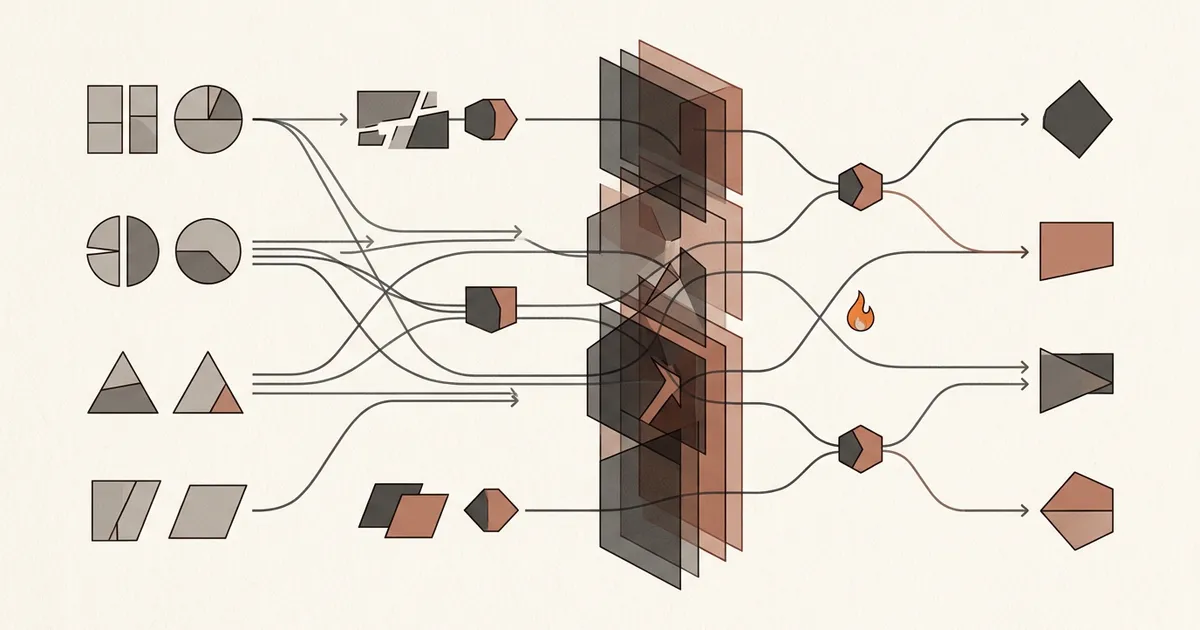
Assess one revision from current work to intended future work
Keep the assessment tied to one change revision and one evidence cutoff. Record explicit impacts where they exist, preserve unknowns, and send decisions outside this owner to accountable handoffs.
Freeze the revision and assessment boundary
Name the change reference, version, evidence cutoff, current state, intended future state, scope, and exclusions. Reassess when the design, affected groups, or evidence boundary changes rather than silently editing the old conclusion.
Sources: [impact-pack], [exeter-change-impact], [bc-sdlc-planning]
Define affected groups and relevant dimensions
Segment people by the work they perform, not by a list of personal names. Declare which organizational and operational dimensions are included or excluded, such as process, tools, roles, skills, controls, data, workload, or service experience.
Sources: [impact-pack], [exeter-change-impact], [prosci-impact-worksheet]
Record explicit current-to-future impacts
For each real group-and-dimension intersection, describe the current state, future state, precise impact, evidence, direction, degree, breadth, timing, duration, confidence, and validation state. Do not manufacture a full matrix when no impact exists.
Sources: [impact-pack], [prosci-impact-worksheet], [mural-impact-template]
Validate ratings without an aggregate readiness score
Review impacts with group owners and affected representatives. A low or none rating needs evidence, while high and unknown impacts need a named reviewer and accountable handoff. Keep missing evidence unknown instead of turning it green.
Sources: [impact-pack], [exeter-change-impact], [mural-impact-template]
Route actions to the document that owns them
Send approval to the change request, adoption activity to the change management plan, investment logic to the business case, ordered delivery to the implementation plan, uncertainty management to the risk register, and technical propagation to the requirements traceability matrix.
Sources: [impact-pack], [bc-sdlc-planning], [exeter-change-impact]
What this change impact assessment owns
This owner describes organizational and operational effects of one proposed change on affected groups. It informs neighboring records but does not absorb their decisions, controls, or evidence.
Included
- One change reference, revision, evidence cutoff, current state, intended future state, scope, and explicit exclusions
- Affected groups and declared organizational or operational dimensions with inclusion rationale
- Explicit group-by-dimension impacts with direction, degree, breadth, timing, duration, evidence, confidence, and validation state
- Group-level barriers, unanswered questions, reviewers, and accountable handoffs
- Revision-bound review status without a composite approval, readiness, compliance, or adoption score
Not included
- Change approval, baseline control, commercial effect, and schedule decision owned by the change request
- Communication, training, support, resistance, adoption, and reinforcement owned by the change management plan
- Alternatives, costs, benefits, recommendation, and investment decision owned by the business case
- Ordered phases, work packages, delivery gates, deployment, rollback, and operational handoff owned by the implementation plan
- Probability, response, residual exposure, escalation, and acceptance owned by the risk register
- Versioned requirement, design, implementation, test, evidence, defect, change, and release propagation owned by the requirements traceability matrix
- Privacy, equality, environmental, regulatory, AI, security, safety, continuity, accessibility, legal, employment, and other specialist impact decisions
DOWNLOADABLE RESOURCE
Download the change impact assessment template pack
The ZIP is rebuilt from an explicit allowlist with fixed timestamps. Use the CSV for spreadsheet import, HTML for accessible review, JSON as the canonical machine record, and Markdown for editing and review.
Change impact assessment template pack
A deterministic organizational and operational impact pack with an editable outline, canonical fictional example, three derived review formats, a closed schema, semantic validator, and reproducible ZIP builder.
Format: ZIP with CSV, accessible HTML, JSON, Markdown, JSON Schema, and JavaScript validator/tests
Locally reproduced August 1, 2026. SHA-256: ccfd16c6fe7a41a1ec6642f785999fdd3c87aa630cbac962641c5999b03e6d42
Included
- Editable Markdown assessment outline with current-to-future and ownership boundaries
- Canonical fictional JSON example covering four affected groups, nine dimensions, twelve impacts, and seven accountable handoffs
- Formula-safe CSV register, accessible HTML review table, and Markdown review copy derived from the JSON
- Closed Draft 2020-12 JSON Schema with eleven false authority, readiness, compliance, and outcome flags
- Dependency-free semantic validator with 54 positive, mutation, security, parity, and accessibility tests
- No XLSX: the mandated spreadsheet-authoring runtime was unavailable, so the release does not make an unverified workbook claim
Verification boundary
Rebuilt twice with fixed timestamps; archive allowlist, extraction, source/public/archive byte parity, derived-format parity, closed schema, 54 tests, validator output, and SHA-256 were checked locally. Public target availability is not claimed until release verification.
Three ways to apply the assessment boundary
The same structure works at different scales when the team keeps the affected work, evidence, and neighboring owners explicit. These are patterns, not completed assessments for a real organization.
Internal support intake transition
Use when: Requests move from email and chat into a structured intake workflow used by requesters, triage operators, specialists, and support leadership.
Compare how each group currently submits, classifies, receives, resolves, and reviews requests with the intended workflow. Record tool, process, role, skill, data, workload, and service-experience impacts separately, then route training, risks, implementation work, and technical traceability to their owners.
Structure
- Four role-based groups with group-level evidence and no personal data
- Explicit current and future work for each material group-and-dimension impact
- High or unknown impacts linked bidirectionally to accountable handoffs
Watch for: A reviewed assessment does not approve the intake change, prove that integrations work, establish privacy or accessibility compliance, accept service risk, or show adoption.
Sources: [impact-pack], [exeter-change-impact], [prosci-impact-worksheet]
Multi-team policy and process change
Use when: One policy revision changes decisions, controls, records, responsibilities, or escalation paths across several operating teams.
Start from the current decision and evidence path, then map future responsibilities and control points for each affected group. Keep policy approval in the change request and specialist interpretation with legal, compliance, employment, accessibility, or other qualified reviewers.
Structure
- Revision-bound policy reference and explicit operational exclusions
- Group-specific role, control, data, workload, and knowledge impacts
- Unanswered questions routed to risk, implementation, adoption, or specialist owners
Watch for: The matrix can expose possible effects but cannot interpret law, approve policy, decide employment obligations, certify compliance, or replace consultation required by the organization.
Sources: [impact-pack], [bc-sdlc-planning], [mural-impact-template]
Customer-facing service or tool change
Use when: A new interface, channel, workflow, or service rule changes work for customers, frontline staff, support teams, and operational owners.
Separate internal workflow impacts from customer or service-experience impacts. Record observed evidence and uncertain assumptions, distinguish breadth from severity, and send delivery, accessibility, security, privacy, continuity, support, and adoption work to the teams accountable for those decisions.
Structure
- Affected customer and internal groups described without personal data
- Current-to-future process, tool, workload, data, and service-experience impacts
- Review dates tied to design revisions, test evidence, and controlled handoffs
Watch for: The assessment is not user research, accessibility conformance evidence, a privacy assessment, security approval, service acceptance, release authorization, or proof of customer benefit.
Sources: [impact-pack], [exeter-change-impact], [bc-sdlc-planning], [mural-impact-template]
Decide whether the assessment is ready for coordination
A reviewable assessment traces every material statement to the affected work, evidence, confidence, reviewer, and next owner. It leaves incomplete evidence visible instead of converting uncertainty into a favorable status.
The record names departments but does not describe the distinct work each affected group performs.
Choose: Segment groups by workflow and responsibility, then record impacts against those role-based groups without adding personal names.
Tradeoff: The group model takes longer to establish, but generic department-level ratings stop hiding different operational effects.
The impact statement describes the future solution but not how it differs from the current state.
Choose: Rewrite it as a current-to-future comparison with one precise work change, then attach evidence and the affected dimension.
Tradeoff: The assessment becomes less promotional, but reviewers can see the actual transition they must validate.
A low or none rating has no dated evidence or group-owner review.
Choose: Mark the degree unknown until evidence supports the rating and a responsible owner reviews it.
Tradeoff: More uncertainty remains visible, but missing evidence cannot masquerade as low disruption.
A high or unknown impact has no reviewer, barrier, next action, or accountable handoff.
Choose: Assign a role-based reviewer and route the required decision or work to the owning record before coordination review.
Tradeoff: The assessment does not resolve every issue itself, but every material gap has an attributable next owner.
The team wants one aggregate score to declare the change ready, approved, compliant, or likely to succeed.
Choose: Keep direction, degree, breadth, confidence, and validation visible by group and dimension, then use the organization’s actual decision records and qualified reviews.
Tradeoff: There is no single green number, but important differences and unresolved decisions remain reviewable.
The change design, scope, affected groups, or evidence cutoff has changed.
Choose: Create or record a new assessment revision and revalidate the impacts that depend on the changed boundary.
Tradeoff: Revision control adds maintenance, but conclusions are not silently carried into a materially different change.
FROM IMPACT EVIDENCE TO A BOUNDED WORKFLOW
Prototype the affected work without hiding uncertainty
Describe the approved users, records, states, access rules, evidence, exclusions, handoffs, and stop conditions. Keep unresolved impacts and specialist reviews visible.
Explore internal tool buildingA Playcode build does not approve the change or replace organizational, privacy, security, accessibility, legal, employment, safety, or operational review.
Explore internal workflow prototypingUse this only after the change boundary and affected work are clear enough to prototype safely.
Limits of this change impact assessment template
A structured record can make scope, differences, evidence, ratings, unknowns, reviewers, and handoffs inspectable. It cannot establish whether the proposed change should proceed or whether a real organization has met its obligations.
- The pack is an editorial planning artifact, not organizational, employment, legal, regulatory, privacy, security, accessibility, safety, equality, environmental, AI, continuity, or professional advice.
- Every organization, role, group, workflow, observation, rating, barrier, impact, handoff, and date in the example is fictional teaching data, not a benchmark, customer result, forecast, or promise.
- The validator checks closed keys, references, dates, current-to-future differences, rating rules, reviewers, handoffs, derived-file parity, reserved URLs, sensitive-data patterns, and eleven false boundary flags. It does not prove any supplied fact.
- The CSV is formula-safe and intended for import. It is not a governed workbook, live system of record, aggregate dashboard, or evidence that a reviewer used the information correctly.
- No XLSX is included because the mandated spreadsheet-authoring runtime was unavailable. The accessible HTML, canonical JSON, CSV, and Markdown are verified; an unverified workbook was not fabricated with another library.
- University of Exeter, the Government of British Columbia, Prosci, and Mural did not review, approve, certify, or endorse this Playcode artifact.
- Keep personal feedback, protected characteristics, health information, credentials, private evidence, legal advice, security findings, and confidential decisions out of a public template file.
- Use qualified owners and affected representatives to review the real change, evidence, obligations, technical effects, authority, delivery, risk, accessibility, privacy, security, safety, employment, and operating conditions.
Reviewed guidance and artifact evidence
These sources support the current-to-future, affected-group, operational-impact, evidence, validation, and handoff structure. The downloadable template, fictional example, schema, validator, and derived formats are Playcode editorial work.
[impact-pack] Playcode:Change impact assessment template pack
Checked August 1, 2026. Supports: The same-release editable outline, fictional canonical record, CSV, accessible HTML, Markdown, closed schema, semantic validator, 54 tests, deterministic builder, and recorded SHA-256.
[exeter-change-impact] University of Exeter:Change impact assessment
Checked August 1, 2026. Supports: Early diagnosis through current and future process comparison, affected groups, impact types and degree, stakeholder validation, and use of findings to inform change-management interventions.
[bc-sdlc-planning] Government of British Columbia:System Development Life Cycle: Planning
Checked August 1, 2026. Supports: Separate business change impact and technical impact work, including affected stakeholders, business processes, roles, responsibilities, and skill requirements.
[prosci-impact-worksheet] Prosci:Change Impact Assessment Worksheet
Checked August 1, 2026. Supports: The general practice of describing current-to-future changes by affected group. This page does not reproduce Prosci’s proprietary worksheet or framework.
[mural-impact-template] Mural:Change Impact Assessment Template
Checked August 1, 2026. Supports: A standalone template intent centered on affected groups, impact dimensions, degree of impact, and stakeholder review.
Change impact assessment template questions
What is a change impact assessment?
A change impact assessment is a revision-bound record of how a proposed change alters current work for affected groups. It compares current and intended future states across relevant organizational and operational dimensions, records evidence and uncertainty, and routes resulting work or decisions to accountable owners.
Is change impact analysis different from change impact assessment?
Teams often use the terms for the same current-to-future analysis. This page owns the organizational and operational assessment by affected group. Technical code, requirement, test, and release propagation remains with engineering analysis and the requirements traceability matrix.
How is this different from a change management plan?
The assessment identifies who is affected, what work changes, how material and broad it may be, what evidence supports it, and what remains unknown. The change management plan owns communication, training, support, resistance, adoption measurement, and reinforcement activities informed by those findings.
How is this different from a change request?
The assessment describes organizational and operational effects. The change request owns the controlled approval decision, requested baseline change, reason, commercial or schedule effects, decision state, authority, conditions, and audit trail for the exact revision.
How is this different from an implementation plan?
The assessment identifies affected work and accountable handoffs. The implementation plan owns ordered phases, work packages, dependencies, readiness gates, deployment, rollback, validation, and operational handoff. Reviewed impacts do not prove implementation readiness.
How is this different from a risk register?
An impact describes a current-to-future effect on a group. A risk register manages uncertainty through likelihood, impact, triggers, response, ownership, residual exposure, escalation, and acceptance. Unknown or adverse impacts may create risk entries, but the records remain distinct.
How is this different from a business case?
The assessment describes effects on people and work. The business case compares alternatives, costs, benefit hypotheses, risks, assumptions, sensitivity, and a conditional recommendation for a named investment decision. Impact evidence can inform a business case but cannot authorize investment.
How is this different from a requirements traceability matrix?
The assessment owns group-level organizational and operational change. A requirements traceability matrix links versioned requirements to design, implementation, tests, evidence, defects, changes, and releases. It is the better owner for technical dependency and coverage propagation.
Why does the download not include an XLSX?
The approved spreadsheet-authoring runtime was unavailable for this release, so an unverified workbook was not fabricated. The pack instead provides a formula-safe CSV for spreadsheet import, accessible HTML, canonical JSON, Markdown, a closed schema, and deterministic tests that prove the derived views match.
Does a reviewed assessment mean the change is approved or ready?
No. Reviewed for coordination means the recorded impacts and handoffs reached the stated review boundary. It does not approve the change, authorize investment, accept risk, prove technical completeness, establish compliance, confirm implementation readiness or adoption, or guarantee an outcome.
TURN A REVIEWED IMPACT BOUNDARY INTO A TESTABLE FIRST VERSION
Build the smallest workflow the evidence supports
Describe the approved roles, current and future records, states, access, evidence, exclusions, handoffs, monitoring, and stop conditions. Keep unknowns visible and specialist decisions outside the app’s claims.
Build an internal tool with PlaycodeThis informational article does not grant AI signup credits. The linked product page follows its own current eligibility rules.