QUICK ANSWER
What should a requirements traceability matrix include?
A requirements traceability matrix links each versioned source and requirement to downstream design, implementation, verification, test, defect, change, release, owner, and evidence records in both directions. Stable IDs, explicit relationship types, orphan detection, stale-link checks, coverage reports, and change-impact review make missing or outdated traces visible without treating the matrix as approval or proof of quality.
A requirements traceability matrix, or RTM, is a lifecycle map rather than a second specification. It keeps stable references between authoritative sources, versioned requirements, design, implementation, tests, defects, proposed changes, releases, evidence, and accountable owners so reviewers can see what is missing or stale.
This downloadable pack applies that boundary to one fictional booking-request workflow. Its CSV and JSON views, closed schema, orphan and impact report, validator, and tests make structural gaps visible. They do not approve the source records, prove that work happened, or authorize a change or release.
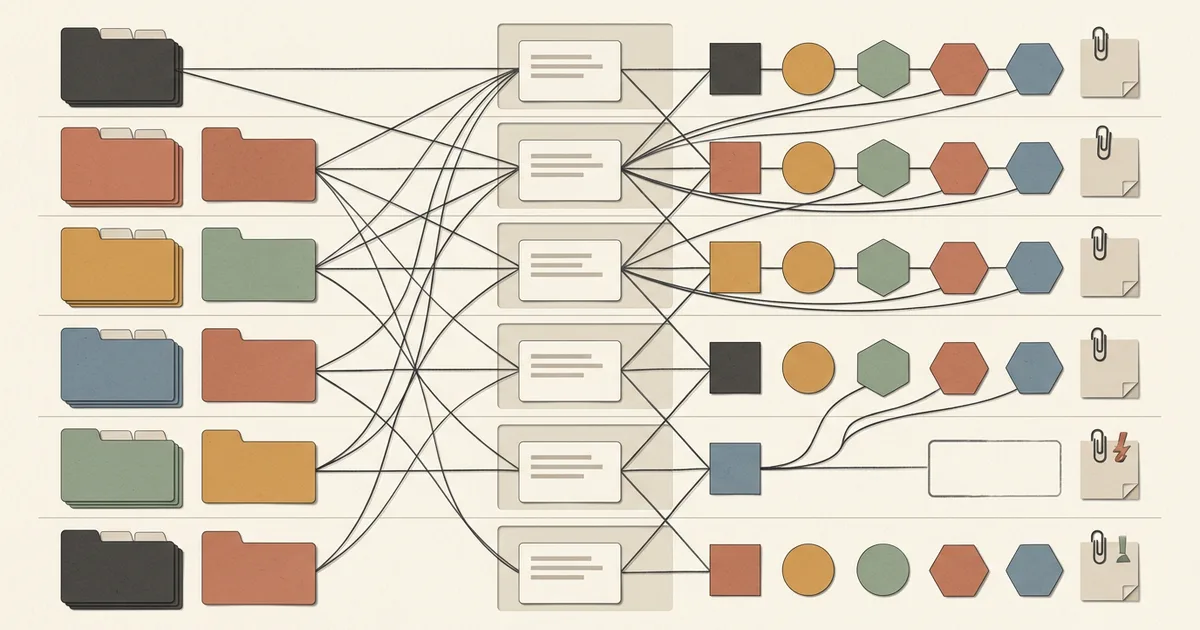
Build one versioned lifecycle trace graph
Keep each authoritative record with its real owner. The matrix should connect those records, expose gaps, and preserve history without silently becoming the specification, test plan, approval system, or release decision.
Freeze the source set and reviewed versions
List the exact approved source records the matrix may reference, including each stable locator, version, status, owner role, and review date. Do not copy their prose into the RTM or imply that the matrix approved them.
Sources: [rtm-pack], [nasa-requirements-management], [gsa-finalize-requirements]
Assign stable identities, versions, and owners
Give every requirement and lifecycle record one stable ID. Store its current version, record type, owner role, status, and locator. When reviewed meaning changes, create a new version instead of recycling an old identity.
Sources: [rtm-pack], [nasa-requirements-management], [texas-rtm-template]
Link each requirement back to its sources
Use explicit source-to-requirement relationship types and bind both endpoint versions. Review forward coverage from a source and backward coverage from a requirement so either direction can reveal an orphan or outdated trace.
Sources: [rtm-pack], [nasa-requirements-management], [gsa-finalize-requirements]
Connect design, implementation, tests, and evidence
Link requirements to the design, implementation, verification method, test case, and planned evidence records that cover them. Preserve the target versions and owner roles. A link describes the planned relationship; it does not prove the implementation exists or the test passed.
Sources: [rtm-pack], [nasa-verification-matrix], [gsa-test-systems]
Detect orphan, stale, and coverage gaps
Reject unknown endpoints, duplicate relationships, invalid directions, stale versions, and disconnected records. Report requirements missing sources, designs, implementation references, or test cases rather than dropping incomplete rows from an export.
Sources: [rtm-pack], [nasa-requirements-management], [gsa-test-systems]
Review change impact and preserve history
For every proposed change, traverse the connected requirements, designs, implementation references, tests, planned evidence, defects, and release records. Let the accountable owners decide what must change, then retain superseded versions and decisions for auditability.
Sources: [rtm-pack], [nasa-requirements-management], [texas-rtm-template]
The RTM owner boundary
Use this resource to maintain lifecycle relationships, version coverage, orphan review, stale-link review, and change-impact visibility. Keep the meaning and approval of every connected record with its accountable owner.
Included
- Stable source, requirement, design, implementation, test-case, defect, change, release, evidence, and owner references
- Typed links with source and target versions for bidirectional review
- Requirement coverage, orphan detection, stale-link detection, and change-impact views
- CSV and JSON representations, a closed JSON Schema contract, deterministic validator, and negative tests
- Fictional records on a reserved domain with role labels instead of people or personal data
- Preserved history and explicit handoffs to the owners of connected records and decisions
Not included
- Writing or approving a software requirements specification, product requirements document, or business requirements document
- Writing user stories, defining acceptance criteria, or deciding that a requirement is correct, feasible, complete, valuable, or approved
- Creating a test strategy, release test plan, test case, UAT plan, representative-user decision, security assessment, or accessibility evaluation
- Reproducing a defect, approving a bug report, deciding a proposed change, or authorizing a release, deployment, or website launch
- Proof that implementation exists, a test ran or passed, evidence is sufficient, a defect was fixed, a release shipped, or production is safe
- A guarantee of coverage, quality, compliance, security, accessibility, reliability, release readiness, or business value
DOWNLOADABLE RESOURCE
Download the requirements traceability matrix pack
Start with the spreadsheet view when reviewing coverage with a team. Use the JSON graph and schema for automation, and run the included validator and tests before adapting any fictional record.
Requirements traceability matrix template pack
A provider-neutral fictional lifecycle graph for a booking-request workflow, with stable records, typed versioned links, coverage checks, orphan detection, stale-link checks, and change-impact views.
Format: CSV, JSON, JSON Schema, report, validator, tests, and README in one reproducible ZIP
Locally reproduced August 1, 2026. SHA-256: b0a6f6c870cae1466b23fc59129ec5b064085350a105c74d9b995211dda016fa
Included
- Editable requirements traceability matrix CSV with one formula-safe row per requirement
- Authoritative JSON graph with 39 records and 44 typed, version-bound relationships
- Closed JSON Schema 2020-12 contract for the graph
- Generated orphan, stale-link, requirement-coverage, and proposed-change impact report
- Dated primary-source register with claim and jurisdiction boundaries
- Dependency-free validator and 20 deterministic positive and negative tests
Verification boundary
Rebuilt with fixed timestamps and exact eight-entry archive order. Verified repeated-build identity, source-byte parity, clean extraction, CSV projection parity, closed record shapes, stable IDs, current endpoint versions, allowed relationship directions, requirement coverage, orphan rejection, planned evidence state, reserved URLs, dated sources, formula safety, secret rejection, personal-address rejection, schema parity, report parity, archive bytes, and SHA-256.
Three traceability review patterns
The record types stay stable while the review question changes. In every pattern, the RTM exposes links and gaps while the connected record owners retain their decisions.
Baseline coverage review
Use when: A team needs to confirm that every versioned requirement has an authoritative source and named downstream design, implementation, test, and planned-evidence handoff.
Review backward links from every requirement to its source and forward links to its lifecycle records. Treat missing links as review work, not as proof that the requirement or downstream work is wrong.
Structure
- Freeze source and requirement versions before measuring coverage
- Report missing source, design, implementation, or test references by stable ID and owner role
- Keep planned evidence explicitly planned until a separate execution record exists
Watch for: Complete structural coverage does not prove that the requirements, design, implementation, tests, or evidence are correct or sufficient.
Sources: [rtm-pack], [nasa-requirements-management], [nasa-verification-matrix]
Proposed change impact review
Use when: A proposed requirement or design change could affect implementation, verification, defects, evidence, or a planned release.
Traverse the typed links from the proposed change to every connected lifecycle record. Give the impact view to those record owners for analysis and approval without recording the proposal as automatically accepted.
Structure
- Bind the proposed change to exact requirement, design, and test-case versions
- Expand the review to connected implementation, evidence, defect, and release records
- Create new record versions after approval and preserve the superseded graph
Watch for: An impact list supports a decision but cannot estimate all work, approve the change, or authorize a release.
Sources: [rtm-pack], [gsa-finalize-requirements], [texas-rtm-template]
Test, defect, and release handoff review
Use when: A reviewer needs to see how a requirement connects to a verification method, test case, planned evidence, known defect, proposed correction, and release record.
Keep each record independently versioned and link it with an explicit relationship. The RTM can reveal a missing or stale handoff, while QA, defect, change, and release owners decide the status of their own records.
Structure
- Map each requirement to a named verification method and test-case record
- Link observed defects and corrective proposals without overwriting failed history
- Keep evidence and release records planned until their owners record observed outcomes and decisions
Watch for: A linked test, defect, evidence, or release record is not proof that testing ran, a correction worked, or a release shipped.
Sources: [rtm-pack], [nasa-verification-matrix], [gsa-test-systems]
Decide whether the trace graph is reviewable
Structural validation gives reviewers a reliable set of references. It cannot make the substantive decisions that live behind those references.
A link points to an unknown record, an outdated endpoint version, itself, or an invalid target type.
Choose: Reject the matrix version and repair the source graph with the accountable record owners before using its coverage or impact report.
Tradeoff: The review pauses, but a stale or malformed trace cannot silently appear current.
A requirement has no source, design, implementation, or test-case relationship, or another lifecycle record is orphaned.
Choose: Keep the gap visible with its stable ID and owner role. Resolve the missing handoff or document why the record should be retired.
Tradeoff: Coverage remains incomplete, but the matrix does not invent a relationship to improve a metric.
A proposed change affects several connected requirements, designs, tests, implementation references, evidence records, or releases.
Choose: Generate the impact view and ask each affected owner to assess its record before the change-control owner makes a decision.
Tradeoff: The decision takes coordination, but a single matrix editor cannot silently approve downstream consequences.
A clean coverage report is being treated as proof of approval, implementation, test success, defect closure, or release readiness.
Choose: Restore the RTM boundary and link the current observed evidence and decisions from the qualified requirements, QA, UAT, security, accessibility, change, and release owners.
Tradeoff: The graph no longer gives one universal green status, but every claim remains accountable to the record that can support it.
START WITH THE TRACE GRAPH
Download the RTM and inspect every link
Open the spreadsheet and JSON graph, review coverage in both directions, inspect the generated orphan and impact report, and run the included validator before adapting the fictional records.
Download the RTM template packThe ZIP is reproduced locally. Public availability and adapted record accuracy require separate verification.
Keep requirement meaning in the SRSUse the SRS owner to define and review the software requirements. Use this RTM owner to reference their stable versions through the lifecycle.
What an RTM cannot prove
A strict matrix can make missing and outdated relationships easier to find. Its usefulness is still limited by the source records, link maintenance, ownership, version discipline, and review process around it.
- A source-to-requirement link does not prove that the source is approved, current, complete, lawful, or correctly interpreted.
- A requirement with downstream coverage may still be ambiguous, infeasible, unsafe, inaccessible, unnecessary, or incorrectly prioritized.
- A design or implementation link does not prove that the design was reviewed or that the referenced implementation exists or behaves as intended.
- A test-case or evidence link does not prove that a test ran, passed, covered the real risk, or used a representative environment and data set.
- A defect or change link does not reproduce an issue, approve a correction, estimate all impact, or establish that a fix worked.
- A release relationship does not prove release authorization, deployment, monitoring, recovery, production safety, or customer value.
- A clean orphan and stale-link report proves only the graph rules that the validator checked, not universal lifecycle completeness.
- This ordinary informational article does not grant AI signup credits. The linked product page follows its own current eligibility rules.
Sources and verification record
The same-release artifact directly supports the fictional counts and validation behavior. Current NASA, GSA, and Texas public guidance supports traceability concepts and example structures without certifying this pack or prescribing one universal process.
[rtm-pack] Playcode:Requirements traceability matrix fictional example pack
Checked August 1, 2026. Supports: The locally reproduced 39 records, 44 typed versioned links, six requirements, five sources, six planned evidence records, two proposed changes, one planned release, generated coverage and impact report, validator, tests, and exact archive bytes. Public availability remains unverified until deployment.
[nasa-requirements-management] NASA:Requirements Management
Checked August 1, 2026. Supports: Bidirectional parent and child traceability and controlled electronic records in NASA program guidance. It is not a universal project rule or approval for this pack.
[nasa-verification-matrix] NASA:Requirements Verification Matrix
Checked August 1, 2026. Supports: An example structure connecting requirement identity, source, verification method, owner, and verification record. It does not prove a requirement or system was verified.
[gsa-finalize-requirements] M3 Playbook by GSA:Finalize Requirements
Checked August 1, 2026. Supports: Joint RTM baselining, status, ownership, and testing support in federal shared-services guidance. Projects must adapt it to their context and jurisdiction.
[gsa-test-systems] M3 Playbook by GSA:Test Systems and Processes
Checked August 1, 2026. Supports: Mapping requirements to test cases, scripts, results, and defect records. The playbook does not certify testing completeness or release readiness.
[texas-rtm-template] Texas Department of Information Resources:Requirements Traceability Matrix Template
Checked August 1, 2026. Supports: A current public-sector RTM document template and structured-template intent. Texas-specific fields and procedures are examples rather than universal requirements.
Requirements traceability matrix questions
What is a requirements traceability matrix?
An RTM is a versioned map between authoritative sources, requirements, and downstream lifecycle records such as design, implementation, tests, defects, changes, releases, evidence, and owners. It supports forward and backward review so missing, orphaned, or stale relationships are visible without duplicating the records themselves.
What is bidirectional requirements traceability?
Bidirectional traceability lets a reviewer follow a source or requirement forward into downstream work and follow any downstream record back to the requirement and source that motivated it. Store explicit relationship types and both endpoint versions so an old link cannot appear current after one record changes.
What columns should an RTM spreadsheet include?
Useful fields include stable requirement ID and version, title, owner role, status, source references, design references, implementation references, verification method, test-case references, defect references, change references, release references, evidence references, and last review date. Keep multi-value references stable and formula-safe.
Who should own a requirements traceability matrix?
Name one accountable matrix owner for link quality, version coverage, orphan review, and stale-link review. The matrix owner should not replace the owners who approve source documents, requirements, architecture, tests, UAT, security, accessibility, changes, or releases. Role labels are safer than personal data inside a reusable template.
Does complete RTM coverage prove that a product is ready?
No. Complete structural coverage shows that required relationships exist under the rules checked. It does not prove that the linked records are correct, sufficient, implemented, tested, approved, secure, accessible, reliable, deployed, or valuable. Review current evidence and decisions with the qualified owners.
Can Playcode turn an RTM into an internal workflow?
Playcode can help build a bounded app around a reviewed record model, stable IDs, versions, relationship types, roles, reports, and handoffs. Before operational use, verify server-side authorization, concurrent editing, audit history, imports, exports, retention, integrations, evidence handling, approval ownership, recovery, and privacy boundaries.
BUILD THE REVIEWED WORKFLOW
Turn the trace model into a bounded app
Give Playcode the reviewed record types, stable IDs, versions, roles, link rules, reports, and handoff boundaries. Verify authorization, concurrency, audit, imports, exports, retention, integrations, evidence handling, recovery, and every approval owner before operational use.
Build your requirements workflowThis informational article does not grant AI signup credits. No requirement, coverage, implementation, test, change, release, quality, compliance, security, accessibility, reliability, or business outcome is guaranteed.