QUICK ANSWER
What should a stakeholder register template include?
A stakeholder register template should give each role, group, or organization a stable ID, project relevance, likely impact, dated interest and influence assessment, evidence or labeled opinion, contact level, engagement owner, approved directory reference, and next review. It should hand communication schedules, project authority, RAID items, RACI assignments, and privacy decisions to separate records.
RELATED TEMPLATE
Stakeholder analysis template and map
A stakeholder analysis template should identify each stakeholder group or role, record why it matters, score interest and influence with a declared local scale, preserve dated evidence separately from reviewed opinion, derive a reviewable map or contact level, and assign an engagement owner. This register stores that analysis and history; communication cadence, RACI assignments, RAID decisions, project-charter authority, and stakeholder approval remain separate.
A stakeholder register should answer who is involved or affected, why they matter to the project, how the current team assessed their interest and influence, who owns the relationship, when the assessment was reviewed, and where the next decision belongs. It should make the basis for a contact level visible without labeling people as problems or pretending a score predicts their behavior.
The downloadable pack includes an editable register, current-record and append-only review CSV files, a completed fictional JSON record, a closed JSON Schema, and a dependency-free validator with adversarial tests. It deliberately stops before project authorization, communication schedules, RAID content, RACI assignments, privacy approval, or automated engagement.
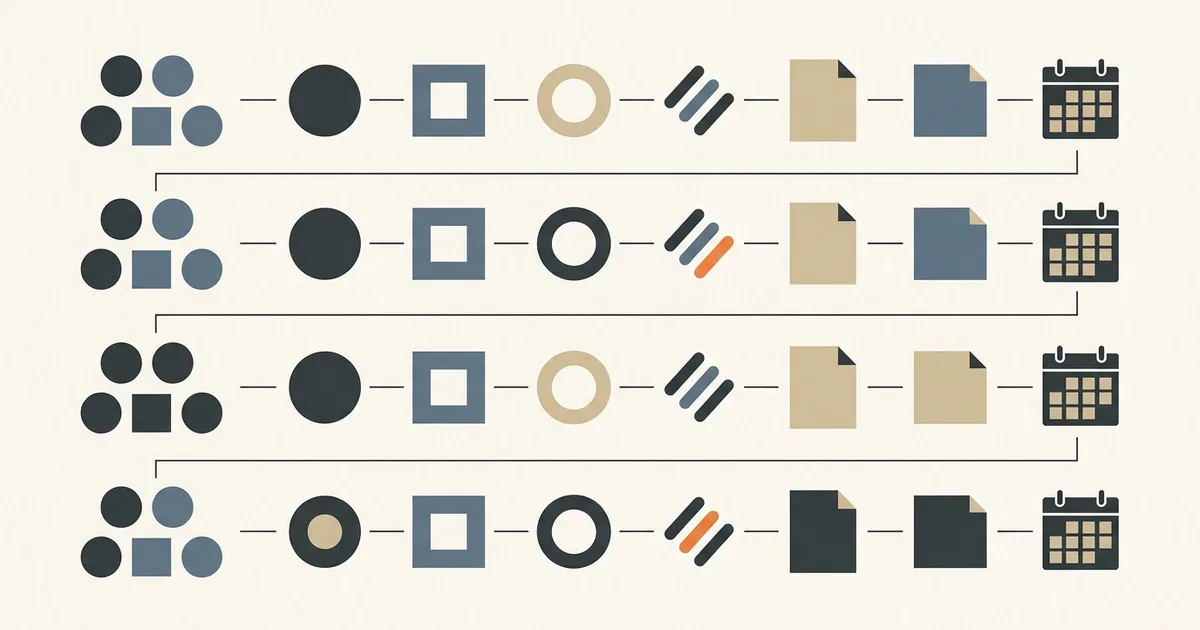
Identify first, classify transparently, then hand off action
A useful register keeps identification and review separate from the plans that authorize work or schedule engagement. Every score needs a dated basis, a moderator, and a route to reconsider it.
Define the project purpose and stakeholder boundary
Start from an approved objective and identify roles, groups, and organizations that are involved, affected, or able to influence the work. Use a stable project and charter reference. Do not copy the charter objective into an implied authorization or treat the register owner as the project sponsor.
Sources: [stakeholder-pack], [finance-ni-engagement]
Record only the minimum useful stakeholder information
Use non-personal labels and approved directory references in the starter pack. Keep direct contact details, special-category data, private opinions, credentials, and protected notes outside the public file. State the purpose, access owner, and retention-review date before collecting real records.
Sources: [stakeholder-pack], [ico-data-minimisation]
Assess interest and influence with a dated rationale
Choose one local scale, publish its threshold, and score interest separately from influence. Record whether the basis is evidence or a reviewed opinion, its reference, moderator role, date, and concise rationale. The pack uses a 1-to-10 scale with 6 as the local high threshold; that is an editorial convention, not a universal standard.
Sources: [stakeholder-pack], [ons-stakeholder-mapping]
Derive the contact level without automating engagement
The example maps high-high to manage closely, low-high to consult with, high-low to keep satisfied, and low-low to keep informed. Treat the result as one input to human review. A numeric quadrant cannot decide whether, when, or how a real person should be contacted.
Sources: [stakeholder-pack], [ons-stakeholder-mapping], [apm-engagement]
Append review history and preserve every handoff
Add an initial history row, then append changes instead of overwriting them. The latest history event must match the current contact level and review date. Store only references to the communication plan, RAID log, and RACI matrix so each controlled record retains its own owner and revision.
Sources: [stakeholder-pack], [ons-stakeholder-mapping], [finance-ni-engagement]
What this stakeholder register pack owns
Use the pack for project-level stakeholder identification, a transparent current assessment, and review history. Keep authorization, communication execution, risk and issue work, responsibility assignment, and privacy decisions with their accountable owners.
Included
- Controlled register, project, charter, revision, purpose, sponsor-role, register-owner, status, and review identities
- Role, group, or organization label; project relevance; likely impact; interest and influence scores; derived contact level; and dated assessment basis
- Engagement-owner and approved-directory references plus external communication-plan, RAID, and RACI references
- Append-only contact-level review history with prior state, current state, reason, evidence, reviewer role, revision, and date
- Editable Markdown and CSV, fictional JSON, closed JSON Schema, dependency-free validator, twenty-six adversarial tests, README, and deterministic ZIP build
Not included
- Project objective approval, sponsor authority, scope authorization, funding, governance, phase exits, or change authorization owned by a project charter and accountable decisions
- Audience-specific messages, channels, senders, cadence, timing, feedback, consultation design, or delivery evidence owned by a communication or engagement plan
- Risk, assumption, issue, dependency, response, escalation, or disposition content owned by a RAID log and its qualified decision processes
- Responsible, accountable, consulted, or informed assignments for governed activities owned by a RACI matrix
- Direct contact details, special-category data, private opinions, credentials, lawful-basis decisions, privacy notices, retention approval, or security controls
- A promise of support, buy-in, approval, adoption, delivery, compliance, relationship quality, stakeholder completeness, or project success
DOWNLOADABLE RESOURCE
Download the stakeholder register template pack
The ZIP contains a starter register, two editable CSV controls, one canonical fictional JSON record, its closed schema, and the validator used to expose score drift, reference drift, missing review history, privacy-boundary violations, dismissive labels, direct contact details, and cross-format differences.
Stakeholder register template pack
A revision-controlled stakeholder identification and review pack with a local power-interest convention, privacy boundary, append-only history, and explicit adjacent-record handoffs.
Format: Markdown, CSV, JSON, JSON Schema, and dependency-free Node.js validator/tests
Locally reproduced August 1, 2026. SHA-256: f292ef645bd8ac681e4905bb90337c16d16664537c04afefe69ac66fa4545913
Included
- Editable stakeholder register guide with a local 1-to-10 interest and influence convention and four derived contact levels
- Current stakeholder CSV and append-only review-history CSV byte-matched to the canonical fictional JSON record
- Closed Draft 2020-12 JSON Schema, strict validator, twenty-six positive and adversarial tests, and clean-extraction ZIP builder
Verification boundary
The allowlisted archive was rebuilt twice, extracted, byte-compared with its canonical sources, rebuilt from the clean extraction, and tested locally. This verifies file integrity, semantic contracts, score derivation, review chains, and cross-format parity, not real stakeholder data or an engagement result.
Three stakeholder-register shapes for different review jobs
The same controlled structure can support different projects. Change the purpose, stakeholder boundary, assessment evidence, privacy decision, and linked plans rather than copying the fictional scores.
Internal workflow change register
Use when: A project changes daily work across operations, service design, governance, provider, and review roles.
Identify the sponsor role, affected operator groups, qualified review roles, and downstream organizations. Record the project impact, dated basis, relationship owner, and handoffs without putting task assignments, risks, or message schedules into the register.
Structure
- Role- and group-based records with approved directory references instead of copied contact details
- Current contact levels connected to one append-only history chain per stakeholder
- Separate communication-plan, RAID, RACI, and charter references for the exact project revision
Watch for: A high influence score does not create sponsor authority, and a high interest score does not prove support or permission to contact someone through any channel.
Sources: [stakeholder-pack], [finance-ni-engagement], [ico-data-minimisation]
Service redesign stakeholder register
Use when: A service team must identify people who operate, receive, govern, or are affected by a changed service before designing engagement.
Group stakeholders using clear project-specific criteria, record likely impact and the basis for the current map, and review the classification when discovery changes what the team knows. Let the communication plan own channels, cadence, messages, and feedback.
Structure
- Stakeholder group definition, relevance, likely impact, and evidence or reviewed-opinion basis
- Interest and influence scored separately under one declared local convention
- Next-review dates aligned with discovery and governance checkpoints
Watch for: Do not use a group score to erase accessibility needs, representation gaps, objections, or individual circumstances that require a separate qualified review.
Sources: [ons-stakeholder-mapping], [apm-engagement], [ico-data-minimisation]
External partner change register
Use when: A project changes approved outputs, interfaces, or handoffs used by external organizations without giving those organizations project authority.
Record the organization-level relevance, interface impact, evidence reference, engagement owner, and next review. Keep named contacts in an approved directory, actual dependencies in the RAID log, responsibility assignments in RACI, and communications in the communication plan.
Structure
- Organization-level record with minimum-purpose directory reference and no direct contact value
- Evidence-backed impact and influence review without a private sentiment score
- Explicit project-record handoffs so the stakeholder register does not become an uncontrolled master file
Watch for: A register entry does not establish contractual notice, consent, consultation sufficiency, data-sharing authority, or acceptance of a changed interface.
Sources: [stakeholder-pack], [finance-ni-engagement], [ico-data-minimisation]
Decide whether the register is ready for project review
The register is ready when its current revision exposes the purpose, stakeholder boundary, evidence, local scoring method, privacy limit, owner, review chain, and adjacent-record handoffs. Missing information stays visible instead of becoming a guessed score.
The project objective, charter revision, sponsor role, or register owner is missing or disputed.
Choose: Keep the register in draft and resolve the project-authorization record before treating its stakeholder boundary as current.
Tradeoff: Mapping starts later, but the register does not silently authorize a different project or owner.
A score has no evidence or labeled reviewed opinion, moderator role, assessment date, and concise rationale.
Choose: Remove the score from comparison until the team records a reviewable basis under the declared convention.
Tradeoff: The map has fewer complete rows, but unsupported impressions cannot masquerade as objective stakeholder facts.
The register contains direct contacts, sensitive traits, private opinions, or protected notes.
Choose: Move the data to an approved access-controlled system, record only the minimum directory reference, and obtain qualified privacy review.
Tradeoff: Reviewers follow a controlled reference, but the downloadable register has a smaller privacy and disclosure footprint.
A row contains communication cadence, RAID details, RACI assignments, or project authorization.
Choose: Move the content to its owned record and retain only the exact controlled reference in the register.
Tradeoff: The project maintains several linked records, but each decision keeps one accountable owner and revision.
The latest history event does not match the current contact level and last-review date.
Choose: Reject the export, restore the missing append-only review event, and rerun JSON and CSV parity checks.
Tradeoff: The stakeholder review pauses, but readers do not rely on a current map with an incomplete decision trail.
FROM A REVIEWED STAKEHOLDER MAP TO PROJECT AUTHORITY
Keep the charter and stakeholder register linked, not blended
Use the charter for the approved objective, sponsor, high-level scope, authority, risks, and exits. Use the register for who is involved or affected and why the current map says so.
Download the project charter templateCommunication plans, RAID logs, and RACI matrices still keep their own controlled revisions and accountable owners.
Review the risk register templateUse the risk-register owner for uncertainty, scoring, response, triggers, residual exposure, and review history. This stakeholder register stores only RAID references.
Limits to review before using the register
A structured register can expose missing identities, evidence, score derivation, dates, history, and handoffs. It cannot prove the stakeholder set is complete, a classification is objective, engagement is appropriate, or personal-data processing is lawful.
- The 1-to-10 scale and threshold 6 are a transparent local convention for this fictional pack. They are not an APM, government, PMI, ISO, or Playcode universal scoring standard.
- Interest, influence, likely impact, and contact level are contextual assessments. Record evidence or label an opinion, name its moderator and date, and review it when the project changes.
- The public pack intentionally excludes names and direct contact details. A real organization still needs a lawful purpose, access controls, accuracy, retention, deletion, security, and qualified privacy review.
- The register does not authorize a project, schedule or send communications, resolve a relationship, assign RACI accountability, own RAID items, or make a decision for a person.
- The fictional roles, groups, organizations, scores, references, dates, and review events are examples, not benchmarks, behavioral predictions, or recommendations about real people.
- No UK Government department, APM, ICO, or other source organization reviewed, approved, certified, or endorsed this Playcode artifact.
Primary guidance and artifact verification
The same-release pack is the exact source for its fields, scoring convention, examples, and tests. Current official and professional guidance supports stakeholder mapping, engagement ownership, regular review, and data minimization without prescribing this exact artifact.
[stakeholder-pack] Playcode editorial artifact:Stakeholder register template pack
Checked August 1, 2026. Supports: The exact fictional records, local score derivation, boundary flags, review chain, CSV parity, validator behavior, test count, and reproducible archive described on this page.
[ons-stakeholder-mapping] UK Government Analysis Function and Office for National Statistics:Stakeholder mapping
Checked August 1, 2026. Supports: Identifying stakeholders, assessing power or influence and interest, assigning contact levels, recording a reason with moderator and date, and regularly reviewing the map before using it in an engagement plan.
[finance-ni-engagement] Northern Ireland Department of Finance:Stakeholder engagement within a programme or project
Checked August 1, 2026. Supports: Stakeholder assessment and mapping, likely impact and concerns, relationship ownership, monitoring, and using mapping outputs as the basis for a separate flexible communication plan.
[apm-engagement] Association for Project Management:Stakeholder engagement
Checked August 1, 2026. Supports: Separating analysis of who and what from the relationship work of consultation, communication, negotiation, compromise, and engagement throughout the project lifecycle.
[ico-data-minimisation] UK Information Commissioner's Office:Principle (c): Data minimisation
Checked August 1, 2026. Supports: Collecting adequate, relevant, minimum-purpose personal data, periodically reviewing what is held, deleting what is no longer needed, and recording opinion with enough author, date, and context to interpret it.
Stakeholder register template questions
What is a stakeholder register?
A stakeholder register is a controlled identification and review record for roles, groups, or organizations involved in, affected by, or able to influence a project. It records why each entry is relevant, the current dated assessment, an engagement owner, approved references, and the next review.
Is this also a stakeholder analysis template and map?
Yes. The register preserves a dated interest-and-influence analysis, its evidence or clearly labeled reviewed opinion, the declared scoring convention, the derived contact level, the engagement owner, and append-only review history. The map is a reviewable planning view, not a personality judgment or prediction. A communication plan still owns messages, channels, cadence, consultation, and delivery evidence.
Is a stakeholder register the same as a communication plan?
No. The register identifies stakeholders and records the basis for a current contact level. A communication or engagement plan owns messages, channels, cadence, timing, senders, consultation methods, feedback, and delivery evidence. Link their revisions rather than mixing them.
Is a stakeholder register part of a project charter?
The two records should be linked but distinct. The charter owns the approved objective, sponsor, authority, high-level scope, governance, limits, and exits. The register owns who is involved or affected and the current review basis. A register cannot authorize the project.
Does a stakeholder register replace a RAID log or RACI matrix?
No. A RAID log owns risks, assumptions, issues, dependencies, responses, and decisions. A RACI matrix assigns responsible, accountable, consulted, and informed roles to governed activities. The stakeholder register stores only exact references to those separate records.
What should interest and influence scores mean?
They should mean exactly what the project team declares for one versioned local method. This pack uses integer scores from 1 to 10 and treats 6 through 10 as high. Record the evidence or reviewed opinion, moderator, date, and rationale. Never present the number as objective personality data or a prediction.
Should a stakeholder register contain names and contact details?
Only when the organization has a defined purpose, lawful and qualified handling decision, appropriate access, and a real need. This public starter pack uses role, group, and organization labels plus approved directory references. It excludes direct contacts, special-category data, private opinions, and protected notes.
How often should a stakeholder register be reviewed?
Use a cadence tied to the project and review again when objectives, scope, roles, impact, evidence, influence, interest, or operating conditions change. Record each decision in append-only history. The validator checks chronology and current-state parity, not whether the chosen cadence is sufficient.
TURN REVIEWED RECORDS INTO A BOUNDED INTERNAL WORKFLOW
Build the stakeholder review process your team actually owns
Describe the approved roles, records, review states, evidence, permissions, handoffs, and retention boundary. Keep project authority, communications, RAID, RACI, and privacy decisions explicit.
Build an internal tool with PlaycodeThis informational article does not grant AI signup credits. The linked commercial page follows its own current eligibility rules.