QUICK ANSWER
What should a communication plan template include?
A communication plan template should connect each audience to a bounded purpose, reviewed source message, credible sender, primary and fallback channels selected for stated access needs, cadence or event trigger, feedback route, owner, review date, and escalation rule. It should not discover stakeholders, authorize changes, rewrite project plans or status reports, prove delivery or understanding, grant marketing permission, or replace emergency and regulated communications.
A useful communication plan connects a bounded purpose and reviewed source message to the people who need it, a credible sender, a primary channel selected for stated access needs, an independent fallback, a cadence or event trigger, a feedback route, an accountable owner, and an escalation rule. It also records when the route must be reviewed again.
The downloadable pack turns that chain into one canonical fictional JSON record, editable Markdown, project-specific CSV views, a closed JSON Schema, and a dependency-free validator with adversarial tests. It plans communication without claiming that a message was delivered, understood, accepted, or acted on, and without turning a project record into marketing permission or a regulated-notice workflow.
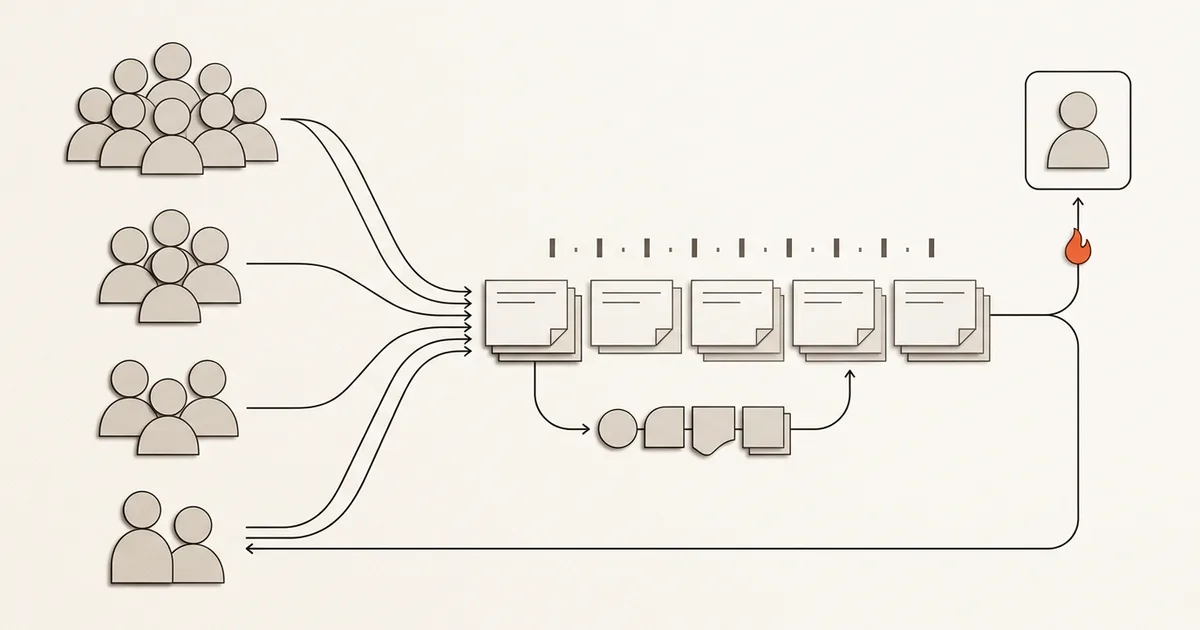
Build one reviewed route from purpose to escalation
Treat the plan as a routing and review record. Every message should begin with authority and a versioned source, then move through an audience, sender, channel, timing rule, feedback path, fallback, and accountable escalation without borrowing decisions from adjacent records.
Confirm the authority and communication boundary
Name the plan owner, reviewer, purpose, source project or operating record, revision, status, timezone, review date, and explicit exclusions. The plan can route approved information, but it cannot approve a project, authorize a change, define product behavior, rewrite a baseline, or create a sender authority that does not exist elsewhere.
Sources: [communication-plan-pack], [pmi-project-communications-curriculum]
Import reviewed audience IDs without copying a directory
Link role, group, or organization IDs from a reviewed stakeholder register and state each audience's information need, language, accessibility, timezone, access, and feedback needs. Keep names, direct contacts, protected notes, credentials, and relationship assessments in approved systems rather than duplicating them in the public template.
Sources: [communication-plan-pack], [pmi-project-communications-curriculum], [uk-govs-011-communication], [cdc-cerc-messages-audiences]
Classify the message before choosing a channel
Distinguish project updates, decision requests, change notices, risk notices, operational escalations, and feedback requests. Route promotional communication to current jurisdiction- and channel-specific review instead of treating this operational plan as marketing permission. Mixed messages require review of their primary purpose and applicable rules.
Sources: [communication-plan-pack], [ico-electronic-mail-marketing], [ftc-can-spam-business-guide]
Bind the purpose to a versioned source message and credible sender
Record the exact source revision, communication purpose, bounded message summary, sender role, reviewer role, sensitivity, and status. A sender should have real authority and enough context to answer or route questions. Copying unreviewed status, risk, change, or schedule language into the plan creates a second uncontrolled owner.
Sources: [communication-plan-pack], [pmi-project-communications-curriculum], [uk-govs-011-communication]
Choose an accessible primary channel and independent fallback
Choose channels from audience access, urgency, sensitivity, interaction, language, format, and resilience needs. Record which accessibility formats each route supports, then test the applicable structure, alternatives, contrast, links, language, keyboard access, captions, or attachments. A channel label or automated scan alone does not establish accessibility.
Sources: [communication-plan-pack], [uk-govs-011-communication], [cdc-cerc-messages-audiences], [w3c-wcag-22], [section508-accessible-email-checklist]
Set either a cadence or an event trigger
For routine communication, record an editable frequency, timezone, next review, and stop condition. For triggered communication, record the observable event, evidence owner, decision point, and expiration. Do not copy incident-update timing into routine work or publish one universal daily, weekly, or monthly rule.
Sources: [communication-plan-pack], [pmi-project-communications-curriculum], [cdc-cerc-messages-audiences], [nist-sp-800-61r3]
Route questions, feedback, and decisions to accountable roles
Name the feedback channel, triage owner, response boundary, controlled decision record, and fallback for every route. Preserve unanswered questions and disputed facts instead of marking the communication complete. Feedback can reveal a gap, but it does not by itself prove understanding, support, adoption, or authorization.
Sources: [communication-plan-pack], [uk-govs-011-communication], [cdc-cerc-messages-audiences]
Define bounded escalation and review the plan separately from outcomes
Record the condition, severity or impact basis, primary and fallback route, owner, reviewer, decision-log reference, and review trigger. Keep legal, regulatory, contractual, policy, security, and public-spokesperson decisions with qualified owners. Preserve official records according to the organization's access, retention, hold, and evidence rules, with no invented universal deadline.
Sources: [communication-plan-pack], [nist-sp-800-61r3], [cdc-cerc-messages-audiences], [ico-storage-limitation]
What this communication plan owns
Use the pack to control project and operational communication routes. It owns the reviewed connection among purpose, message source, audience, sender, channel, timing, feedback, fallback, review, and escalation, not the adjacent records that supply authority or outcome evidence.
Included
- Plan ID, revision, status, purpose, owner, reviewer, source-record reference, timezone, dates, and explicit boundary flags
- Role-, group-, or organization-level audience IDs with information, language, accessibility, access, timezone, and feedback needs
- Versioned message purpose, source, summary, sender, reviewer, sensitivity, and planning state
- Accessible primary channel, independent fallback, supported formats, evidence type, owner, and record location
- Scheduled or triggered cadence with timezone, frequency or event, stop condition, owner, and review date
- Feedback, decision, fallback, and escalation routes with conditions, severity, roles, review, and controlled references
- Canonical fictional JSON, editable Markdown, project CSV views, closed JSON Schema, dependency-free validator/tests, and deterministic archive build
Not included
- Stakeholder discovery, interest or influence assessment, relationship history, private notes, direct contacts, or directory ownership
- Adoption readiness, training, resistance, reinforcement, benefit measurement, or organizational change authorization
- Project objectives, work breakdown, dependencies, milestones, assignments, acceptance, release, rollback, or baseline control
- Dated progress observations, baseline variance, current risk and decision summaries, dependency state, or project forecasts
- Evidence that a message was sent, delivered, read, understood, accepted, remembered, answered, or acted on
- Marketing permission, suppression decisions, campaign compliance, emergency response, regulated notices, legal advice, or certification
- Personal data, credentials, secrets, protected incident details, unrestricted logs, confidential contracts, or fixed retention periods
DOWNLOADABLE RESOURCE
Download the communication plan template pack
Start with the editable guide, inspect the canonical fictional example, adapt the project-specific CSV views, and run the dependency-free validator before review. The pack keeps message routing machine-checkable while preserving the authority, privacy, accessibility, consent, emergency, and evidence boundaries that still need qualified human decisions.
Communication plan template pack
A fictional project communication plan connecting audiences, reviewed source messages, credible senders, accessible primary and fallback channels, cadence or triggers, feedback, review, and escalation.
Format: Markdown, CSV, JSON, JSON Schema, and dependency-free Node.js validator/tests in one reproducible ZIP
Locally reproduced August 1, 2026. SHA-256: dd53e07f82e5c60ed3059432a604bdb8919fc52dd473c62624d1e3cd18486aa6
Included
- Editable communication-plan guide plus a canonical fictional JSON example
- Audience, channel, cadence, communication-route, and escalation CSV views byte-checked against the canonical record
- Closed Draft 2020-12 JSON Schema with exact record shapes, stable IDs, enums, references, and all-false authority boundaries
- Dependency-free validator and adversarial tests for cross-references, accessibility support, fallback cycles, timing rules, unsafe values, and forbidden claims
- README, package commands, archive-local deterministic build script, fixed timestamps, exact allowlist, and reproducible ZIP bytes
Verification boundary
Rebuilt locally from the page-owned allowlist, tested, extracted, byte-compared across canonical and editable views, rebuilt from clean extraction, and checked for deterministic archive bytes. This verifies structure, parity, and selected semantic rules, not real audience data, authority, accessibility, delivery, understanding, permission, legal sufficiency, emergency readiness, retention, or outcomes.
Three communication-plan patterns for different routing jobs
Keep the record model stable while the purpose, audience, source, channel, timing, feedback, and escalation change. These patterns are fictional planning examples, not delivery records or universal cadence recommendations.
Routine project update
Use when: A reviewed project snapshot needs a predictable route to operating groups and decision roles without becoming the status report itself.
Link the current status-report revision, define a concise purpose, assign a sender and reviewer, choose accessible primary and fallback channels, set a timezone-aware reviewable cadence, and route questions back to the status owner. Preserve the reporting evidence and forecast in the status record.
Structure
- Role- and group-level audience IDs imported from the reviewed stakeholder register
- Versioned source message linked to the current status report rather than copied as a second baseline
- Scheduled cadence with timezone, next review, stop condition, feedback owner, and independent fallback
Watch for: A scheduled update and a send record do not prove delivery, understanding, agreement, consultation, project health, or future performance.
Sources: [communication-plan-pack], [pmi-project-communications-curriculum], [uk-govs-011-communication], [w3c-wcag-22]
Triggered decision request
Use when: A controlled risk, dependency, change, or project record reaches a condition that requires a decision from an authorized role.
Name the observable trigger, exact source revision, decision question, authorized recipient role, credible sender, accessible route, response owner, controlled decision-log destination, expiration, and fallback. The communication route requests a decision; it does not grant the authority or record the outcome.
Structure
- Event trigger and evidence reference instead of an invented recurring cadence
- Primary and fallback routes selected for access, sensitivity, interaction, and resilience needs
- Feedback and decision-log handoff with owner, review time, expiration, and unresolved state
Watch for: Receiving, opening, or answering a request does not prove authority, approval, legal sufficiency, acceptance of a change, or permission for a different communication purpose.
Sources: [communication-plan-pack], [uk-govs-011-communication], [section508-accessible-email-checklist], [ico-electronic-mail-marketing], [ftc-can-spam-business-guide]
Bounded operational escalation
Use when: A defined operational or security condition requires named internal coordination and a controlled handoff to incident, legal, regulatory, or public-communication owners.
Record the condition and impact basis, initial owner, primary and independent fallback routes, approved reviewer, decision-log reference, confidentiality boundary, update trigger, and stop or handoff condition. Keep emergency instructions and protected evidence in the authoritative response process.
Structure
- Pre-established roles, authority references, and severity or impact criteria
- Primary and fallback coordination routes with access, confidentiality, and resilience checks
- Review, update, evidence-preservation, and handoff fields without a universal notification deadline
Watch for: This pattern is not an incident-response plan, emergency alerting system, legal-notice workflow, public disclosure approval, or assurance that every person can be reached.
Sources: [communication-plan-pack], [nist-sp-800-61r3], [cdc-cerc-messages-audiences], [ico-storage-limitation]
Decide whether a communication route is ready for review
A structurally complete row is only a planning gate. Review the underlying authority, audience needs, source revision, channel access, timing, feedback, fallback, and escalation before anyone relies on the route.
The purpose, authoritative source revision, plan owner, sender authority, or reviewer is missing or disputed.
Choose: Keep the route in draft and resolve the accountable source record before choosing timing or distribution.
Tradeoff: Communication starts later, but an unreviewed summary cannot become a second project, change, risk, or status owner.
An audience has no reviewed information, language, accessibility, timezone, access, or feedback needs.
Choose: Return to the stakeholder-register owner, record the minimum reviewed group-level needs, and leave unknowns visible.
Tradeoff: Channel selection pauses, but the plan does not infer needs or copy personal directory data into a broad file.
The primary channel cannot support a required format or access need, or the fallback depends on the same failure path.
Choose: Choose and test an accessible primary route plus an independent fallback, then record the test boundary and owner.
Tradeoff: Production and review take more effort, while a channel name or automated scan is not mistaken for accessible reach.
A routine row uses incident timing, a triggered row lacks an observable event, or no stop and review condition exists.
Choose: Select exactly one scheduled or triggered model, add timezone and ownership, and define when the route expires or is reviewed.
Tradeoff: The plan avoids one universal cadence, but each communication requires a context-specific timing decision.
Questions, feedback, disputes, or requested decisions have no triage owner, controlled destination, or fallback route.
Choose: Keep the communication unready, name the accountable routes, and preserve unresolved states instead of marking completion.
Tradeoff: The plan carries open work, but sending cannot be confused with understanding, agreement, response, or authorization.
The route mixes promotional content, regulated notice, emergency instruction, protected incident evidence, or a fixed legal deadline into ordinary project communication.
Choose: Separate the message, stop the ordinary route, and send the case to the qualified jurisdictional, legal, privacy, security, emergency, or records owner.
Tradeoff: Several controlled processes remain linked, but an editable template does not invent permission, obligations, deadlines, or authority.
EDITABLE RESOURCE
Download the communication plan pack
Open the fictional example, adapt the Markdown and CSV views, inspect the closed schema, and run the validator before the working review.
Download the ZIP template packThe pack contains no real contacts, credentials, delivery evidence, permission record, emergency response, or approval authority.
Start from the stakeholder register templateUse that adjacent owner for who is involved or affected and why. Import reviewed IDs and group-level needs, not copied directory data.
What this communication plan cannot establish
A closed record can expose missing IDs, references, routes, dates, fallbacks, boundaries, and selected contradictions. It cannot make the underlying audience insight, message, access, authority, evidence, or legal judgment true.
- The plan does not discover stakeholders or prove that the audience list, information needs, languages, access needs, or accessibility needs are complete or current.
- A channel marked as supporting a format still requires applicable human and technical accessibility testing. WCAG 2.2 and Section508.gov guidance do not certify this pack or every communication format.
- A cadence or trigger is an editable planning choice, not a service level, universal best practice, response deadline, notification obligation, or promise of timely receipt.
- A send, delivery, open, attendance, reply, or acknowledgement record would be separate evidence and still would not prove understanding, agreement, support, adoption, action, or outcome.
- The plan does not create sender, reviewer, sponsor, change, project, legal, regulatory, security, records, or public-spokesperson authority.
- Operational communication does not create marketing permission. Recipient location, message purpose, channel, suppression status, and applicable law require current qualified review before promotional use.
- The operational escalation example does not replace an incident-response plan, emergency-service path, life-safety instruction, contractual notice process, regulated notice, or authority direction.
- No fixed retention duration is appropriate for every record. Apply the organization's classification, privacy, access, hold, evidence-preservation, and retention rules with qualified review.
- No PMI, UK Government, CDC, W3C, Section508.gov, NIST, ICO, FTC, or other source reviewed, approved, certified, or endorsed this Playcode artifact.
Primary guidance and same-release verification
The pack is the direct source for its fictional records, validator, tests, and archive. Current authoritative sources support the planning principles and boundaries described here; none prescribes this exact artifact, chooses one universal channel or cadence, grants permission, or certifies the plan.
[communication-plan-pack] Playcode editorial artifact:Communication plan template pack
Checked August 1, 2026. Supports: The exact fictional records, project CSV views, closed schema, boundary flags, validator behavior, cross-format parity, and reproducible archive described on this page. Public availability remains unverified until deployment.
[pmi-project-communications-curriculum] Project Management Institute:Project Management Curriculum and Resources Volume
Checked August 1, 2026. Supports: Project-specific planning for who needs which information, when or how often, who produces it, technology and format, official record access, confidentiality, status, change, and issue boundaries. It is an educational resource, not a certification of this template.
[uk-govs-011-communication] UK Government and Government Communication Service:GovS 011: Communication, version 2.1
Checked August 1, 2026. Supports: Planning from objectives and audience insight through message, channel strategy, implementation, feedback, and evaluation, with reliable and timely crisis communication. The standard is not a universal private-sector legal rule.
[cdc-cerc-messages-audiences] US Centers for Disease Control and Prevention:CERC: Messages and Audiences
Checked August 1, 2026. Supports: Different audience information and access needs, adaptation for language, literacy, vision, hearing, infrastructure, multiple channels, message testing, feedback, and updated emergency information. It does not set routine project cadence.
[w3c-wcag-22] World Wide Web Consortium:Web Content Accessibility Guidelines (WCAG) 2.2
Checked August 1, 2026. Supports: Applicable web-content success criteria for perceivable, operable, understandable, and robust communication, including alternatives, structure, sequence, contrast, reflow, keyboard access, labels, language, and error assistance.
[section508-accessible-email-checklist] US General Services Administration, Section508.gov:Checklist for Accessible Email Messages
Checked August 1, 2026. Supports: Email production checks for format, audience-appropriate language, semantic headings and lists, simple tables, descriptive links and subjects, contrast, non-color meaning, attachments, and text alternatives without proving full conformance.
[nist-sp-800-61r3] US National Institute of Standards and Technology:Incident Response Recommendations and Considerations for Cybersecurity Risk Management
Checked August 1, 2026. Supports: Pre-established incident roles, authorities, escalation criteria, initial and status-update triggers, coordination, applicable approval and notification requirements, decision records, access, evidence preservation, and retention controls.
[ico-electronic-mail-marketing] UK Information Commissioner's Office:Guidance on direct marketing using electronic mail
Checked August 1, 2026. Supports: A UK-specific boundary: electronic-mail marketing analysis depends on subscriber type, solicitation, consent, soft-opt-in conditions, channel, context, and changing preferences. It does not create one global rule.
[ico-storage-limitation] UK Information Commissioner's Office:Principle (e): Storage limitation
Checked August 1, 2026. Supports: A UK-specific personal-data retention boundary: document categories, purposes, and reviewable retention rules instead of inventing one duration, while preserving applicable holds and evidence duties.
[ftc-can-spam-business-guide] US Federal Trade Commission:CAN-SPAM Act: A Compliance Guide for Business
Checked August 1, 2026. Supports: A US-specific commercial-email boundary covering routing and subject accuracy, advertising identification where required, address and opt-out controls, vendor oversight, and primary-purpose analysis without creating a universal opt-in rule.
Communication plan template questions
What is a communication plan?
A communication plan is a controlled routing record that connects a bounded purpose and reviewed source message to an audience, credible sender, access-checked primary and fallback channels, cadence or event trigger, feedback path, owner, review date, and escalation rule. Teams also call the same generic routing artifact a communications plan template or project communication plan template when the project records retain their own authority. It does not by itself send or prove a communication.
What is the difference between a communication plan and a stakeholder register?
A stakeholder register identifies roles, groups, or organizations involved in or affected by the work and records the current assessment basis. A stakeholder communication plan imports reviewed IDs and group-level needs, then owns messages, senders, channels, timing, feedback, fallbacks, and escalation without copying directory data or relationship history.
Is a communication plan part of a change management plan?
A change management plan can include an adoption-specific communication subplan alongside readiness, training, resistance, feedback, reinforcement, and adoption evidence. This owner covers general project and operational communication routing. Link the records and keep adoption decisions with the change-management owner.
Is a communication plan the same as a project plan or status report?
No. The project plan owns objectives, work, dependencies, milestones, acceptance, release, and rollback. The status report owns dated observations, baseline variance, current risks, decisions, dependencies, and a qualified forecast. The communication plan references their reviewed revisions and controls how bounded messages are routed.
How often should project communication happen?
Choose a project-specific scheduled cadence or observable event trigger based on audience need, urgency, access, sensitivity, decision timing, and review capacity. Record timezone, owner, stop condition, and review date. The sources do not support one universal daily, weekly, or monthly frequency.
Does a sent message prove that communication worked?
No. Sending, delivery, opening, attendance, reply, acknowledgement, understanding, agreement, action, and outcome are different evidence states. Record actual evidence in its authoritative system, preserve uncertainty, and do not let the planning row claim a later result.
Can the template be used for marketing email?
Not as a permission or compliance record. Promotional communication requires current review of recipient location and type, message primary purpose, channel, permission or lawful basis where applicable, suppression status, vendor roles, and jurisdiction-specific rules. Operational and promotional messages should remain clearly classified.
Does the escalation section replace an emergency or incident-response plan?
No. It can link defined conditions and coordination routes to qualified owners, but emergency instructions, life-safety communication, incident authority, protected evidence, public disclosure, contractual and regulated notices, and authority directions remain in their controlled response processes.
BUILD A BOUNDED COMMUNICATION WORKFLOW
Turn reviewed routes into an internal planning tool
Describe the audience IDs, source revisions, senders, channels, cadence or triggers, feedback, fallbacks, review states, access, and escalation boundaries your team owns.
Build an internal tool with PlaycodeThis ordinary informational article does not grant AI signup credits. Verify authority, privacy, accessibility, permissions, integrations, evidence handling, audit, export, and recovery before operational use.