QUICK ANSWER
What should a software project README template include?
A software project README template should include the project purpose, intended audience, scope, prerequisites, verified setup and usage instructions, configuration boundaries, support route, maintenance status, ownership, license reference, and links to deeper documentation. Commands should remain visibly unverified until they are tested in the target repository and recorded with their environment and expected result.
A useful repository README helps a new reader decide what a software project does, whether it fits their job, how to evaluate it safely, where deeper documentation lives, and who owns support and maintenance. It should orient a reader without pretending to be the project's API reference, runbook, changelog, or complete documentation set.
This downloadable pack includes an editable Markdown template, a fictional completed example, structured JSON records, a closed JSON Schema, and a dependency-free validator. Every command is an unverified placeholder that must be replaced and tested in the target repository. The pack does not create a profile README, certify the software, or prove that any setup command works.
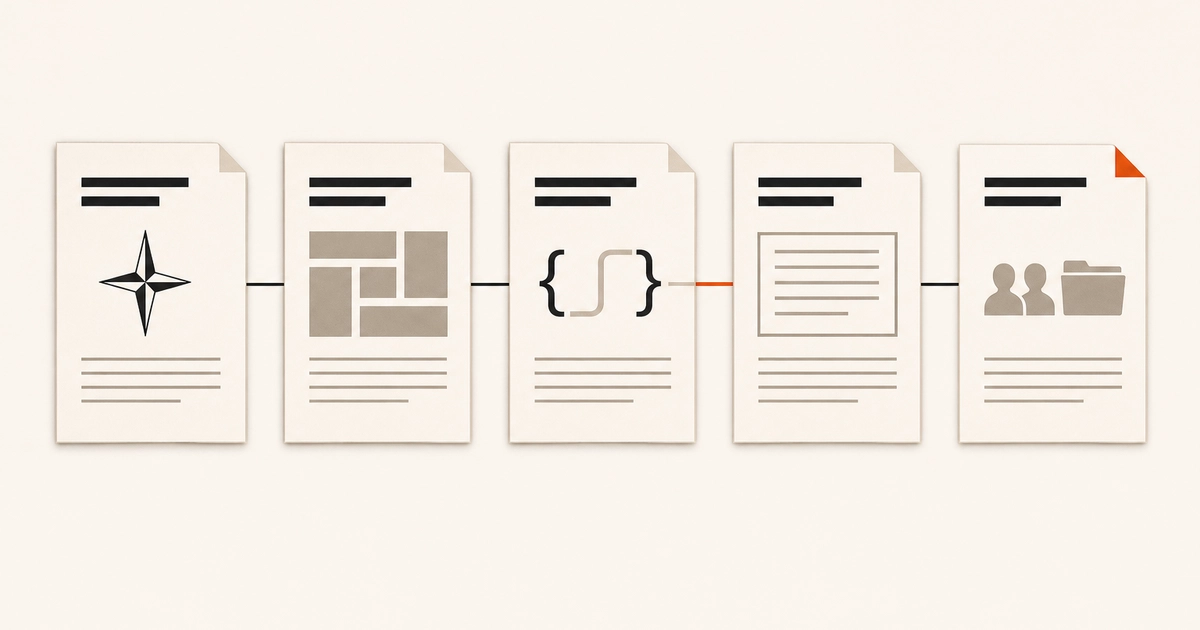
Make the repository entry point reviewable
Start with the reader's decision, keep executable claims tied to evidence, and hand detailed subjects to maintained documents instead of turning the README into a documentation dump.
Name the project, audience, purpose, and boundary
Open with what the software does, who it is for, why it exists, what is in scope, and what is explicitly outside the project. A reader should be able to decide whether to continue before reaching setup instructions.
Sources: [readme-pack], [github-readmes], [open-source-guide], [gnu-readme]
Separate prerequisites from setup
List required runtime, platform, access, data, and configuration conditions before any command. Keep every example command marked unverified until an owner records the exact environment, expected result, and reviewed date for that repository.
Sources: [readme-pack], [gnu-readme]
Explain the smallest useful path
Show the minimum evaluation or usage path, its inputs, expected behavior, verification check, and cleanup or recovery note. Link to maintained installation, API, operations, or security documents when the detail exceeds quick orientation.
Sources: [readme-pack], [github-readmes], [open-source-guide]
Route support, contribution, maintenance, and licensing
Name a role or public support route, current maintenance state, contribution policy, and the authoritative license file. A README can point to these records but must not invent approval, response time, support coverage, or license interpretation.
Sources: [readme-pack], [github-readmes], [open-source-guide], [gnu-readme]
Keep links portable and sensitive values out
Prefer maintained relative repository links where the hosting platform supports them, use reserved example.test or localhost values in fictional material, and never paste passwords, access tokens, private endpoints, or personal data into the document.
Sources: [readme-pack], [github-readmes], [github-secret-scanning], [rfc-2606]
Validate the record before publishing
Run structural checks, review every claim against the repository, execute each retained command in its declared environment, check internal links, and assign a next review date. Schema validity cannot prove that prose, commands, links, or project status are correct.
Sources: [readme-pack], [json-schema-2020-12]
The repository README boundary
Use this template for the root entry document of a software project repository. Keep profile identity, exhaustive technical reference, operational control, and promotional proof on their accountable surfaces.
Included
- Project purpose, audience, scope, prerequisites, setup and usage placeholders, expected results, verification notes, support route, ownership, maintenance status, and license reference
- Links to deeper contribution, installation, architecture, API, security, operations, changelog, and license documents without duplicating their complete content
- Editable Markdown, fictional JSON records, closed Draft 2020-12 schema, dependency-free validator, deterministic tests, and reproducible archive
Not included
- GitHub profile or organization READMEs, dataset cards, API reference, architecture specification, runbook, changelog, release notes, or a complete documentation site
- Badge marketing, download or adoption claims, project-quality scores, security or compliance assurance, support-time promises, licensing advice, or maintainer approval
- Verified setup or deployment commands, secrets, credentials, real personal data, real private endpoints, or proof that adapted software works in any environment
DOWNLOADABLE RESOURCE
Download the software project README pack
Start with the Markdown outline or draft JSON, inspect the fictional example, then replace and test every project fact, link, and command before publishing.
Software project README template pack
A project-entry pack for purpose, audience, scope, setup evidence, usage, support, ownership, maintenance, documentation links, and explicit boundaries.
Format: Markdown, JSON, JSON Schema, validator, and tests in one reproducible ZIP archive
Locally reproduced August 1, 2026. SHA-256: 95878855981d5f25c0e72dbce913b9011f2cb99475480cd863a41a7f2f7afe64
Included
- Editable Markdown README outline and a fictional completed example
- Draft and completed JSON records with explicit unverified-command states
- Closed Draft 2020-12 JSON Schema and dependency-free validator
- Deterministic tests for required sections, command evidence, reserved domains, secrets, links, boundaries, and archive safety
Verification boundary
Validated the draft and fictional example, ran the packaged deterministic tests, checked closed object shapes and cross-record references, copied an exact allowlist, stripped archive metadata, and reproduced the same ZIP bytes across consecutive builds and time zones.
Three repository entry patterns
Keep the same reader-first structure, then adjust the depth and handoff links to the project's real audience and operating model.
Internal service repository
Use when: A team needs a fast orientation path for maintainers while architecture, operations, and incident procedures already have accountable documents.
State service purpose, owners, dependencies, access prerequisites, local evaluation boundary, and links to architecture, runbook, support, and change records.
Structure
- Make authorization and environment prerequisites visible before commands
- Keep operations and recovery procedures in the maintained runbook
Watch for: Do not expose private endpoints, credentials, production data, access instructions, or an unsupported on-call promise.
Sources: [readme-pack], [github-readmes], [github-secret-scanning]
Public software library repository
Use when: Evaluators need purpose, compatibility, a smallest-use example, support and contribution routes, and an explicit license reference.
Lead with the supported job and audience, then link deeper installation, API, versioning, contribution, conduct, and licensing documents.
Structure
- Keep the entry example short and tied to a tested version and environment
- Send exhaustive API detail and contribution policy to their own maintained files
Watch for: Popularity badges, install counts, compatibility, and response-time claims need current proof and are not supplied by this pack.
Sources: [github-readmes], [open-source-guide], [gnu-readme]
Fictional sample application repository
Use when: A tutorial or demonstration project needs a bounded evaluation path without implying that the sample is production ready.
Explain the learning objective, sample limits, reserved data, placeholder configuration, expected observation, cleanup, and where the real system differs.
Structure
- Use example.test or localhost values and visibly fake non-secret identifiers
- Label commands unverified until the repository owner runs and records them
Watch for: A runnable sample does not prove security, reliability, performance, production readiness, or fitness for another environment.
Sources: [readme-pack], [rfc-2606], [github-secret-scanning]
Decide what belongs in the README
Keep content that changes a new reader's next decision. Link or remove detail whose evidence and maintenance belong elsewhere.
A command has no recorded environment, owner, review date, and expected result.
Choose: Keep it as a visibly unverified placeholder or remove it until the repository owner executes and reviews it.
Tradeoff: The document is less immediately executable, but it does not turn copied syntax into a false setup claim.
A section grows into exhaustive API, architecture, operations, or contribution detail.
Choose: Keep a short orientation and link the maintained authoritative document with a clear owner.
Tradeoff: Readers make one more navigation step, but deep guidance can evolve without making the entry page stale and unscannable.
A status, badge, metric, compatibility statement, or support promise lacks current proof.
Choose: Remove it or state the narrow reviewed fact with its date, evidence, and accountable owner.
Tradeoff: The README looks less promotional, but readers are not asked to trust an unsupported outcome or service level.
The document includes a credential, personal identifier, or private endpoint.
Choose: Remove the value, rotate any exposed credential through its accountable system, and use a reserved placeholder instead.
Tradeoff: Setup needs a separate secure configuration path, but the repository entry page no longer distributes sensitive data.
Repository entry pack
Start with a bounded README record
Download the Markdown and structured templates, inspect the fictional example, and keep every command unverified until a repository owner tests it.
Download the README template packSame-release artifact. Local bytes are verified; public availability is checked only after deployment.
Open the technical documentation templateUse the broader documentation-set owner when the job exceeds repository orientation.
What this README template cannot prove
A strict document model improves completeness and reviewability. It cannot inspect a software project or validate claims on behalf of its maintainers.
- A structurally valid record does not prove that prose, commands, links, compatibility, ownership, licensing, support, or maintenance status are correct.
- The pack does not replace installation documentation, API reference, architecture records, security guidance, operations runbooks, contribution policy, changelog, or release notes.
- The fictional example uses reserved values and unverified command placeholders. It is not proof that a real project can be installed, run, deployed, or recovered.
- This ordinary informational article is AI-credit-ineligible. The linked product page follows its own current eligibility rules.
Sources and verification record
These primary references were checked on 2026-08-01. They support repository-entry content, documentation handoffs, safe examples, and the pack format without reviewing or certifying this template.
[readme-pack] Playcode:Software project README fictional example
Checked August 1, 2026. Supports: The locally reviewed fictional record, template structure, unverified-command boundary, closed schema, validator rules, and deterministic tests. Public availability remains unverified until deployment.
[github-readmes] GitHub Docs:About the repository README file
Checked August 1, 2026. Supports: README orientation topics, recognized repository locations, relative links, and the handoff from quick-start information to longer documentation.
[open-source-guide] Open Source Guides:Starting an Open Source Project
Checked August 1, 2026. Supports: Questions a project README should answer and the separation among README, license, contribution guidance, and code of conduct for public open-source projects.
[gnu-readme] GNU Coding Standards:Making Releases: README file
Checked August 1, 2026. Supports: Package overview, version, purpose, installation reference, source-navigation hints, and license-file reference. GNU-specific release rules are not generalized to every project.
[github-secret-scanning] GitHub Docs:Secret scanning
Checked August 1, 2026. Supports: The risk boundary for committed passwords, API keys, tokens, and other hardcoded credentials. It does not prove that a repository is free of secrets.
[json-schema-2020-12] JSON Schema:JSON Schema Draft 2020-12
Checked August 1, 2026. Supports: The schema dialect declared by the structured template and fictional example.
[rfc-2606] RFC Editor:Reserved Top Level DNS Names
Checked August 1, 2026. Supports: Use of reserved example names in fictional documentation and test material.
README template FAQ
Is this a GitHub profile README template?
No. It is a software project repository README template. It does not target personal profiles, organization profiles, portfolio pages, or badge collections.
Should a repository README contain every technical detail?
No. Keep the purpose, audience, prerequisites, smallest useful path, support route, ownership, maintenance status, and document map easy to scan. Link exhaustive installation, API, architecture, security, operations, contribution, and release material to maintained authoritative files.
Are the commands in the downloadable example ready to run?
No. They are intentionally marked unverified placeholders. Replace them with repository-specific commands, execute them in the declared environment, record the expected and observed result, and assign a review date before presenting them as current guidance.
Does the template prove that a project is production ready?
No. A complete README does not prove correctness, security, reliability, accessibility, compliance, support coverage, maintenance quality, or production readiness. Those judgments need their own evidence and accountable review.
Can I include badges and project metrics?
Only when each badge or metric has a maintained source, current meaning, review owner, and honest scope. The pack omits badge marketing and does not supply adoption, quality, build, security, coverage, or compatibility claims.
Does this article grant Playcode AI signup credits?
No. This ordinary informational article is AI-credit-ineligible. The linked product page follows its own current eligibility rules.
Build from a reviewed brief
Turn the repository idea into working software
Describe the app and its constraints. Playcode can help build and run the project, while your team reviews the README facts, commands, links, and ownership before publication.
Explore the AI app builderThis article is AI-credit-ineligible. Product entry eligibility follows the current route policy.