QUICK ANSWER
What should a runbook template include?
A runbook template should include a trigger, scope and environment, prerequisites, role and authorization boundaries, ordered safe actions, an expected result and verification for every action, explicit stop gates, evidence references, escalation paths, rollback or forward recovery, communications, monitoring, revision history, and a named review owner.
A useful runbook maps one known trigger to a bounded technical operation. It states the environment, prerequisites, authorized roles, ordered actions, expected observations, stop gates, evidence references, escalation, recovery, communications, monitoring, and revision owner. It does not hide these decisions inside a generic checklist.
This original pack includes a Markdown template, a completed fictional JSON example at reserved domains, an action CSV, a closed Draft 2020-12 schema, a dependency-free validator, negative tests, and a deterministic ZIP. Its commands are read-only requests or local placeholders. Adaptation still requires accountable technical and authorization review.
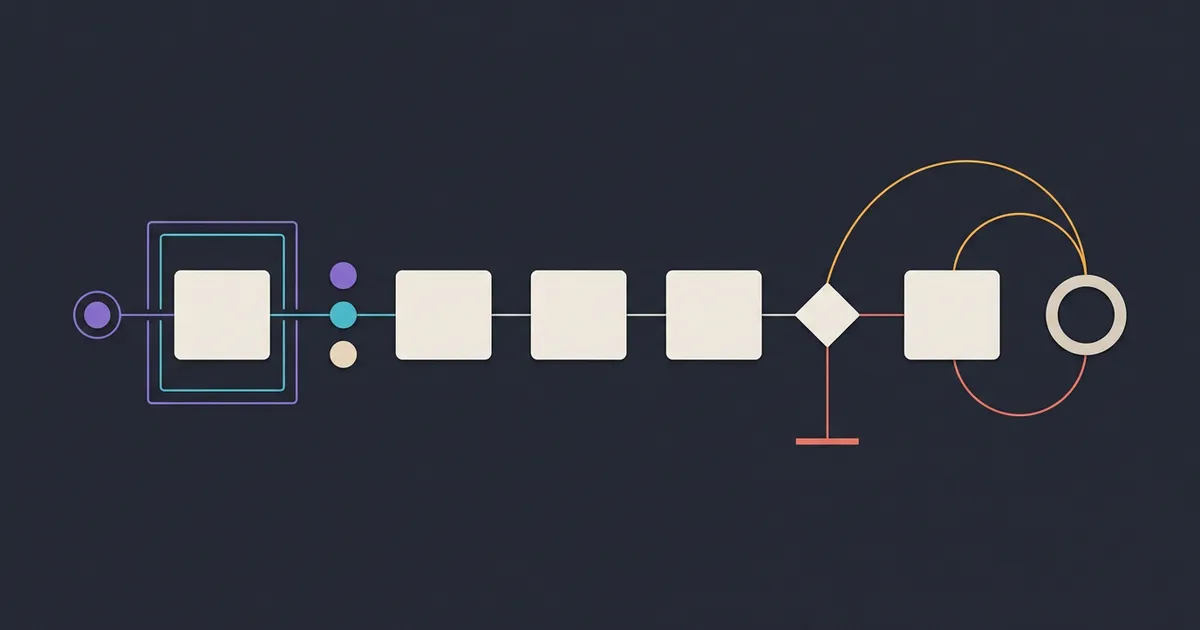
Build a runbook around one bounded operational decision
Start with the trigger and authority boundary, then make observations, stops, and recovery paths explicit. The document coordinates accountable action; it does not create authorization by itself.
Choose the correct operational owner
Use a runbook for a known technical procedure that leads to a specific operational outcome. AWS recommends documenting the desired outcome, permissions, error handling, escalation, owner, and updates. Use process documentation for current-state or target-state work that crosses roles, systems, records, decisions, and handoffs. Keep one broader repeatable procedure in an SOP. During an incident, keep classification, command, coordination, and organizational response in the incident process even when responders invoke an approved runbook.
Sources: [aws-runbooks], [google-incident], [nist-incident]
Freeze the trigger, environment, roles, and prerequisites
Name one observable trigger and one explicit environment. Record what must be true before action, who can execute, who can authorize, and what each role cannot do. OWASP recommends least privilege, deny by default, and authorization checks on every request; a runbook should point to that boundary without embedding credentials.
Sources: [aws-runbooks], [owasp-authorization], [runbook-pack]
Pair every action with an expected observation and verification
An action without an expected result leaves the operator guessing. State the observable result, a separate verification, and the evidence reference before moving on. Google SRE incident guidance emphasizes clear roles, a live incident document, and an operational log; these practices make uncertainty and handoffs visible when the runbook is used within incident command.
Sources: [google-incident], [runbook-pack]
Put stop, escalation, and recovery before the risky edge
Define the condition that stops execution before expanding impact. Make each stop gate point to an accountable escalation and a reachable rollback or forward-recovery record. NIST incident guidance provides the larger response boundary; this template covers only the bounded technical operation assigned to it.
Sources: [aws-runbooks], [nist-incident], [runbook-pack]
Record minimum useful evidence without secrets or personal data
Use references to controlled evidence locations instead of pasting raw payloads. OWASP logging guidance warns against recording access tokens, passwords, sensitive personal data, and other secrets directly. Record expected and observed state, uncertainty, stop decisions, recovery state, and retention ownership.
Sources: [owasp-logging], [runbook-pack]
Validate the record graph and review the real operation
A closed Draft 2020-12 schema limits allowed shapes. The pack adds cross-record checks for action order, references, revisions, expected-result pairs, safe identities, command patterns, and recovery reachability. Structural checks catch drift, while accountable reviewers must still validate the real system, command, authorization, risk, and evidence policy.
Sources: [json-schema], [runbook-pack]
What this runbook owner covers
Use this template for one repeatable technical operation or for one pre-approved execution path invoked inside a separately managed incident. Keep adjacent systems of record separate.
Included
- Trigger, bounded purpose, environment, prerequisites, accountable roles, and authorization boundary
- Ordered safe or placeholder actions with expected outputs, independent verification, and stop gates
- Evidence references, escalation, rollback and forward recovery, communications, monitoring, revisions, and review triggers
- Original Markdown, JSON, CSV, closed schema, dependency-free validator, negative tests, and deterministic exact-allowlist ZIP
Not included
- Cross-functional current-state or target-state process maps, actors, systems, decisions, records, and handoffs owned by process documentation
- Generic repeatable business or team procedure documentation owned by a standard operating procedure
- Incident classification, declaration, command, coordination, communications authority, and organizational response owned by an incident response plan and approved playbooks
- On-call schedules, paging policy, rotations, and platform administration
- Executable deployment automation, infrastructure as code, real production hosts, credentials, secrets, personal data, and genuinely destructive instructions
- Proof that commands ran, guaranteed recovery, production authorization, security approval, compliance certification, or legal approval
DOWNLOADABLE RESOURCE
Download the deterministic runbook pack
Use the Markdown file for accountable review, JSON for the closed record, and CSV for action-table inspection. The completed cache-freshness example is fictional, stays on reserved `.test` domains, and represents no live service or successful operation.
Runbook template pack
An original provider-neutral template for a trigger-specific technical operation with explicit authority, expected observations, stops, evidence, escalation, recovery, monitoring, and revision.
Format: Markdown template, fictional JSON example, action CSV, closed Draft 2020-12 schema, dependency-free validator, tests, and package scripts in one ZIP
Locally reproduced August 1, 2026. SHA-256: d290c989323f0c85f3266a7608e0ec9da833c3139353cf3ad8096386ddfe6032
Included
- Editable Markdown template and completed fictional JSON example at reserved domains
- Review-friendly action CSV kept in exact parity with the JSON action sequence
- Closed Draft 2020-12 schema and dependency-free validator with forty positive and negative tests
- Exact eight-file deterministic ZIP with fixed source timestamps and no dependencies, real hosts, secrets, or production commands
Verification boundary
After extraction, run npm run check. It validates the fictional example plus schema, Markdown, and action-table parity. Rebuilding the repository source pack under different time zones must produce the locked SHA-256. These checks do not exercise a target system.
Three bounded runbook patterns
Each pattern keeps its trigger and operation narrow. Replace the fictional fields only after the target owner reviews the actual environment and action boundary.
Routine non-production health verification
Use when: A known fixture signal must be compared with a reviewed expected state.
Record the trigger, fixture environment, read-only prerequisite, operator role, ordered observations, expected metadata, stop-on-mismatch gate, owner escalation, and a return-to-baseline record. The downloadable example uses this pattern without contacting a real service.
Structure
- Reserved fixture URL, read-only observations, expected metadata, independent comparison, and evidence references
- Stop gate on uncertainty, accountable escalation, no-change rollback record, forward review, monitoring, and revision trigger
Watch for: A valid fictional record does not prove a real endpoint exists, that a request ran, or that the same observation is safe in production.
Sources: [aws-runbooks], [runbook-pack]
Scheduled certificate-renewal preflight
Use when: An owner needs a read-only expiry and authorization check before separate approved automation acts.
Keep the runbook to observation, expected expiry state, role boundary, evidence reference, stop threshold, and escalation. Let the reviewed automation owner perform issuance or deployment, and link its result back without copying private keys or tokens.
Structure
- Scheduled trigger, non-production preflight environment, authorization check, read-only expiry observation, and expected result
- Stop-before-change gate, owner escalation, minimum evidence reference, monitoring window, and next review date
Watch for: Do not place private keys, tokens, live hostnames, issuance commands, or deployment automation in a public template or evidence record.
Sources: [owasp-authorization], [owasp-logging], [aws-runbooks]
Bounded execution path inside incident command
Use when: An incident commander assigns a known technical action that already has an approved runbook.
The incident process owns declaration, roles, coordination, operational log, communications, and final response. The runbook owns only the assigned trigger-specific action, expected observation, stop gate, escalation back to command, and reachable recovery path.
Structure
- Incident reference, explicit assigned role, bounded environment and action, expected observation, evidence link, and stop condition
- Escalation to incident command, rollback or forward recovery, monitoring handoff, uncertainty note, and revision follow-up
Watch for: Do not let a technical runbook silently become the incident response plan. NIST and Google guidance cover the larger organizational response and coordination boundary.
Sources: [google-incident], [nist-incident], [runbook-pack]
Choose the owner before filling the template
The right artifact depends on who owns the decision, not on whether the document happens to contain numbered steps.
A known signal maps to a repeatable technical action with an environment, expected observation, stop gate, escalation, and recovery.
Choose: Use this runbook template.
Tradeoff: The runbook must be reviewed whenever the system, role, command, expected result, evidence policy, or recovery path changes.
Several roles or systems exchange records across a current-state or target-state flow, and the team needs to see decisions, handoffs, loops, and exceptions.
Choose: Use the process documentation template.
Tradeoff: Process documentation shows the wider operating flow, but it should link to a specialist runbook when one handoff reaches trigger-specific technical execution.
The team needs a broad repeatable procedure for a business, administrative, or cross-functional workflow.
Choose: Use the standard operating procedure template.
Tradeoff: An SOP can own wider process context, but it should link to a specialist runbook for risky or environment-specific technical execution.
An unplanned incident needs classification, declaration, command, coordination, stakeholder communications, and organizational response.
Choose: Use the incident response plan and its approved playbooks.
Tradeoff: Incident command may invoke a runbook, but the runbook does not own severity, coordination, authority, or the complete response record.
The desired outcome is repeatable executable deployment or infrastructure state rather than operator guidance.
Choose: Use reviewed automation or infrastructure as code.
Tradeoff: Automation still needs authorization, observability, failure handling, and recovery, while this public template intentionally contains no real destructive or production instructions.
Inspect the original files
Start with the bounded runbook pack
Download the Markdown, JSON, CSV, closed schema, validator, and tests. Replace the fictional values only after the target owner reviews the operation, authorization, expected observations, evidence policy, and recovery paths.
Download the runbook packThe pack is a structural starting point, not production authorization or proof that an operation ran.
Compare the standard operating procedure templateUse the SOP owner when the procedure is broad rather than a trigger-specific technical operation.
What the pack and validator cannot prove
Deterministic structure is useful review evidence, but it is not operational evidence from a target environment.
- The example is fictional and uses reserved `.test` identities; no command was run against a real host and no system result is represented.
- The command-pattern checks catch a bounded set of obvious destructive strings and credentials, not every unsafe composition, shell behavior, secret, personal-data field, or environment risk.
- The dependency-free validator checks the closed record graph, sequencing, expected-result pairs, references, recovery reachability, revisions, and source parity; it is not a full JSON Schema engine or security scanner.
- A runbook cannot grant access, authorize production work, replace change control, command an incident, certify compliance, or guarantee that rollback or forward recovery will work.
- Official guidance and target systems change. Recheck sources, permissions, commands, expected results, monitoring, evidence handling, owners, and review dates before each material revision.
Primary sources and ownership boundaries
These current official sources were checked on August 1, 2026. They informed the original field model and boundaries; their text and external templates were not copied.
[runbook-pack] Playcode:Same-release runbook template pack
Checked August 1, 2026. Supports: The exact fictional fields, action sequence, expected-result pairs, stop gates, references, recovery paths, revision history, validator boundary, tests, and reproducible archive described here.
[aws-runbooks] Amazon Web Services:OPS07-BP03 Use runbooks to perform procedures
Checked August 1, 2026. Supports: Runbooks as documented procedures for specific outcomes, with tools, permissions, error handling, escalation, ownership, versioning, central access, and validation by another team member.
[google-incident] Google SRE:Google SRE Workbook: Incident Response
Checked August 1, 2026. Supports: The larger incident-management boundary, including clear roles, a recognized command post, a live incident document, an operational work log, handoffs, and managed communications.
[nist-incident] National Institute of Standards and Technology:NIST SP 800-61 Revision 3
Checked August 1, 2026. Supports: The organizational cybersecurity incident-response and risk-management boundary that remains outside a single technical runbook.
[owasp-logging] OWASP Foundation:OWASP Logging Cheat Sheet
Checked August 1, 2026. Supports: Useful event logging and the exclusion or masking of access tokens, passwords, sensitive personal data, connection strings, keys, and other secrets.
[json-schema] JSON Schema project:JSON Schema Draft 2020-12
Checked August 1, 2026. Supports: The schema dialect and structural-validation vocabulary used for the pack, with a clear boundary between shape validation and operational truth.
Runbook template questions
What is a runbook?
A runbook is an owned record for one known technical operation. It maps an observable trigger to a bounded environment, prerequisites, authorized roles, ordered actions, expected observations, stop gates, evidence references, escalation, recovery, communications, monitoring, and revision review.
What is the difference between a runbook and an SOP?
An SOP owns a broader repeatable procedure across business, administrative, or team contexts. A runbook owns trigger-specific technical execution with environment and recovery detail. An SOP can link to a runbook when a process reaches a specialist technical operation.
What is the difference between a runbook and process documentation?
Process documentation maps a wider current-state or target-state flow across actors, activities, systems, records, decisions, handoffs, loops, and exceptions. A runbook narrows one known technical trigger to authorized actions, expected observations, stop gates, escalation, and recovery. The process map can link to a runbook at the technical handoff.
Can a runbook be used during an incident?
Yes, if incident command assigns a known, approved technical operation. The incident response plan still owns declaration, severity, roles, coordination, communications authority, and the organizational response. The runbook owns only its bounded execution and escalation back to command.
Should a runbook contain real production commands?
A public template should not. The pack uses read-only requests to reserved domains and local placeholders. A private adapted runbook needs accountable review of the exact environment, authorization, command behavior, side effects, expected result, stop condition, evidence handling, and recovery path.
Why does every action need an expected result and verification?
Without both, an operator cannot distinguish expected progress from an unexplained state. The expected result states what should be observable; verification states how it is independently compared. A mismatch should lead to a documented stop, escalation, and recovery decision.
Can the validator prove that a runbook is safe?
No. It rejects unknown fields, broken references, sequence and revision errors, missing expected-result pairs, unreachable recovery, non-reserved identities, obvious credential strings, selected destructive command patterns, and pack drift. It cannot model every shell behavior, permission, dependency, side effect, or target-system state.
Is the fictional example production-ready?
No. It represents a non-production cache-freshness simulation on reserved `.test` domains. Its actions are read-only observations or local output placeholders. It supplies no evidence of a live service, executed command, authorization, safety, recovery, security, compliance, or production readiness.
Build from reviewed operations intent
Turn the bounded workflow into an internal tool
Bring the reviewed trigger, roles, environment, evidence policy, stop gates, and recovery decisions. Playcode can help build the internal operations surface while accountable owners keep authorization and production decisions explicit.
Build the internal operations toolThis ordinary informational article does not grant signup AI credits or authorize production operations.