QUICK ANSWER
What should a stakeholder engagement plan template include?
A stakeholder engagement plan template should include a bounded purpose, what input can and cannot influence, reviewed stakeholder-group references, neutral question themes, varied two-way participation methods, access and support options, role aliases, an aggregate feedback store, human consideration and response steps, signals with denominators and limitations, evidence gaps, retention boundaries, review dates, expiry, and change history.
A useful stakeholder engagement plan starts after the stakeholder register has identified and reviewed the relevant groups. It states why input is needed, what the input can and cannot influence, which varied participation paths are available, what group-level access or support needs are known, who owns facilitation and consideration, and how an aggregate response will close the loop.
This downloadable pack includes editable Markdown, starter and completed fictional JSON, a closed Draft 2020-12 schema, an activity CSV, a dependency-free semantic validator, 97 tests, and a deterministic ZIP builder. It stores role and group aliases only, links raw feedback and accountable decisions externally, and makes no representation, consensus, accessibility, compliance, effectiveness, or outcome claim.
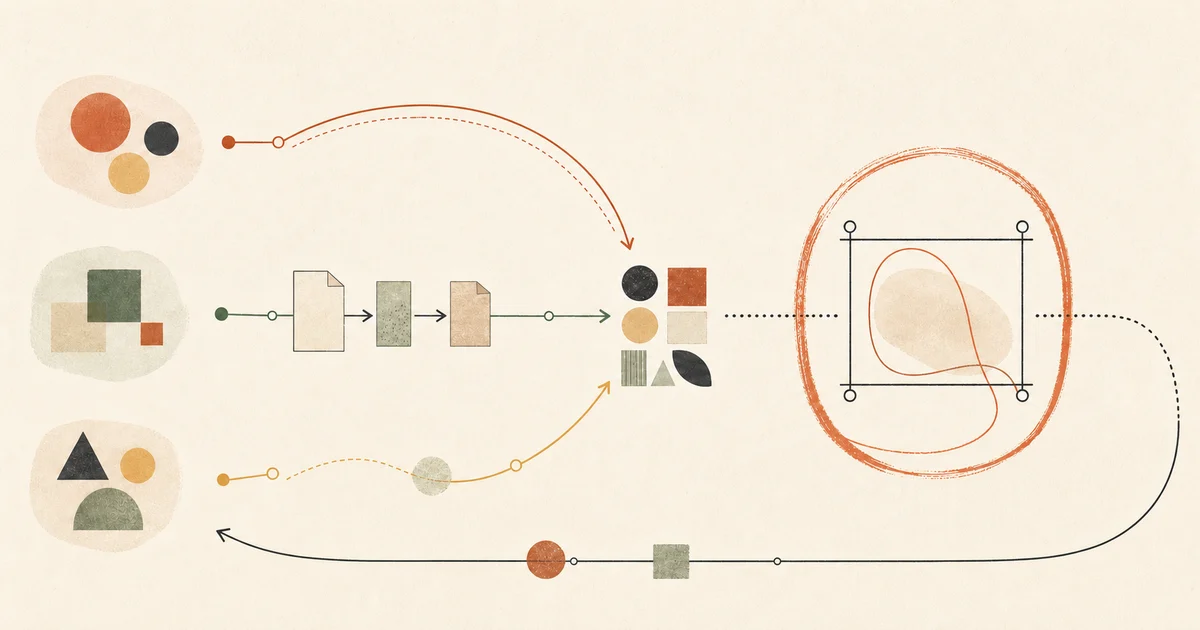
Move from a reviewed group reference to a closed feedback loop
Keep participation purpose, decision boundaries, varied access routes, aggregate evidence, accountable consideration, response, and expiry visible while adjacent records retain their own owners.
Start with reviewed group references and one bounded purpose
Link each aggregate group to the stakeholder register instead of copying discovery notes, contacts, or influence and interest scores. State the engagement purpose, one participation question, what input can change, what it cannot change, the plan owner role, evidence cutoff, review date, and expiry.
Sources: [engagement-plan-pack], [apsc-engagement]
Separate the engagement question from the research instrument
A plan-level question theme should expose the bounded decision without suggesting a preferred answer. Keep question sequencing, scales, recruiting, consent, raw responses, and analysis design with the separate instrument and qualified owners. UK consultation guidance supports clear purposes and usable questions but does not create legal authority for this fictional plan.
Sources: [engagement-plan-pack], [uk-consultation-principles]
Offer varied two-way participation and support paths
Connect objectives and group references to facilitated, asynchronous, verbal, or written paths that permit input and response. Record group-level access and support needs, equivalent alternatives, and role aliases. UNDP guidance informs general early and iterative participation patterns only; this pack does not transfer environmental or social compliance duties.
Sources: [engagement-plan-pack], [undp-ses-engagement], [wcag-22]
Minimize data and keep raw feedback external
State the aggregate feedback purpose, external store reference, access-owner role, retention-review date, and deletion or retention action. Keep contacts, sensitive attributes, participant identities, responses, transcripts, quotations, and credentials outside the portable plan. ICO guidance supports minimization and periodic review, not a compliance claim.
Sources: [engagement-plan-pack], [ico-data-minimisation], [rfc-2606]
Synthesize, consider, and respond without automating judgment
Describe how role aliases will synthesize aggregate themes, reconcile differences, and preserve counts plus limitations. Require an accountable human to consider each theme against the can-influence boundary, record reasoning in the external decision record, and return an aggregate response through the communication-plan owner.
Sources: [engagement-plan-pack], [apsc-engagement], [uk-consultation-principles]
Record bounded signals, gaps, review, and expiry
Every signal needs a numerator, denominator, denominator definition, status, confidence, evidence IDs, and limitation. Preserve open gaps in the latest stable review record, keep all authority and outcome flags false, and rebuild the closed schema and semantic tests when the contract changes.
Sources: [engagement-plan-pack], [json-schema-2020-12]
What this stakeholder engagement plan owns
Use this pack for one bounded two-way participation and feedback-consideration cycle. Preserve discovery, communication delivery, research operations, decisions, and regulated obligations in their accountable records.
Included
- Stable plan, version, owner-role, group-reference, objective, activity, question-theme, evidence, consideration, signal, gap, and review IDs with dated human review and expiry
- Engagement purpose, can and cannot influence boundaries, varied participation methods, access and support options, aggregate synthesis, consideration and response steps, external handoffs, and data-minimization and retention boundaries
- Signals with numerators, denominators, definitions, status, confidence, evidence IDs, limitations, open gaps, change history, and all representation, effectiveness, authority, compliance, and outcome flags false
- Editable Markdown, completed and starter fictional JSON, activity CSV, closed Draft 2020-12 schema, dependency-free validator, 97 tests, and deterministic allowlisted ZIP
Not included
- Stakeholder discovery, register creation, contact inventory, impact, interest, influence, or power scoring, private sentiment, and stakeholder prioritization
- One-way messages, audiences, channels, senders, sends, cadence, delivery evidence, RACI work assignment, and change-adoption readiness, resistance, training, or reinforcement
- Survey, questionnaire, interview, or research-instrument design; recruitment; consent workflow; raw responses; transcripts; quotations; identities; contact details; sensitive attributes; and PII
- Lobbying, employment, customer-support operation, grievance mechanisms, legal or statutory consultation, environmental or social compliance, consent authority, approval, representation, consensus, inclusion, accessibility certification, effectiveness, causation, or outcome claims
DOWNLOADABLE RESOURCE
Download the stakeholder engagement plan template pack
Start with the blank Markdown or safe draft JSON, inspect the completed Cedar Harbor fictional example, and use the activity CSV to edit objectives, group references, question themes, participation paths, access options, evidence, and consideration links without introducing participant records.
Stakeholder engagement plan template pack
A fictional aggregate two-way engagement plan connecting reviewed group references and a bounded question to varied participation, aggregate evidence, human consideration, response, signals, gaps, and review.
Format: Markdown, JSON, CSV, JSON Schema, validator, and tests in one reproducible ZIP archive
Locally reproduced August 1, 2026. SHA-256: 4d75585487525c0901be078ecf454e0ab0fad84201974fc5ec22a195fce71059
Included
- Blank editable plan and completed fictional Cedar Harbor Markdown example
- Safe starter and canonical completed JSON using role and group aliases plus reserved example.test references
- Editable engagement-activities CSV projected exactly from the canonical example
- Closed Draft 2020-12 schema, dependency-free semantic validator, 97 tests, and deterministic flat ZIP builder
Verification boundary
Validated both fictional records, ran 97 packaged tests, checked closed shapes and strict references, compared the CSV with canonical activity JSON, copied an exact flat allowlist, fixed file and archive metadata, and reproduced identical bytes across clean builds and time zones.
Three bounded engagement-plan shapes
The same aggregate contract can support different participation methods and decision questions. These are planning shapes, not claims about a real engagement round.
Fictional service handoff round
Use when: Reviewed operator and assurance groups need varied ways to identify friction in a proposed handoff before a human decision.
Link aggregate group references to a neutral handoff theme, a facilitated scenario path, an asynchronous alternative, support options, aggregate evidence, and one accountable consideration record.
Structure
- Group references and role aliases only, with no contact inventory or power scoring
- Aggregate theme synthesis and response reasoning linked to external feedback and decision records
Watch for: Optional input cannot establish representation, consensus, approval, accessibility, effectiveness, or the perspectives of nonparticipants.
Sources: [engagement-plan-pack], [apsc-engagement], [ico-data-minimisation]
Fictional multi-path participation round
Use when: A bounded decision needs live, asynchronous, written, or verbal routes so reviewed groups can choose a workable participation path.
Record at least two equivalent routes, accessible materials, additional time or support options, facilitator and support role aliases, a shared question theme, and limitations for each aggregate evidence source.
Structure
- Varied two-way routes connected to the same bounded purpose and response loop
- Group-level access needs and alternatives without collecting individual circumstances
Watch for: Offering alternatives is a planning action, not proof of WCAG conformance, universal access, inclusion, consultation sufficiency, or equal participation.
Sources: [undp-ses-engagement], [uk-consultation-principles], [wcag-22]
Fictional aggregate review and response loop
Use when: A team needs traceable aggregate consideration without putting identities, raw responses, or decision authority into the plan.
Minimize the portable record, keep external feedback and decision references, require human consideration, preserve denominators and evidence gaps, and expire the plan when its assumptions or linked revisions become stale.
Structure
- Aggregate-only evidence with status, confidence, limitation, gap, and reserved example-domain references
- Closed schema, semantic validator, change history, retention review, and automatic decision flags fixed false
Watch for: A complete record proves neither lawful processing nor that feedback changed a decision, satisfied participants, improved a service, or produced an outcome.
Sources: [engagement-plan-pack], [ico-data-minimisation], [json-schema-2020-12], [rfc-2606]
Decide whether the plan is ready for accountable review
A polished activity list is not ready when the decision boundary, access paths, evidence limits, external handoffs, or human response loop are missing.
The stakeholder groups have not been reviewed, or the plan copies contacts, private opinions, or influence and interest scoring.
Choose: Keep the engagement plan in draft, complete the stakeholder-register review, and link only stable aggregate group references plus relevant group-level support needs.
Tradeoff: Planning may pause, but the engagement file does not become a second uncontrolled stakeholder register or contact database.
The purpose does not say what input can and cannot influence, or the question suggests a preferred answer.
Choose: Narrow the decision boundary, rewrite one neutral plan-level theme, and route full instrument design to the qualified instrument owner.
Tradeoff: The plan asks less, but participants can see the actual decision space and the team avoids implying authority it does not hold.
Only one participation path exists, a known group-level access need has no option, or an individual circumstance would need to be published.
Choose: Add a meaningfully equivalent route and role-based support path, while moving any individual record to the approved controlled system.
Tradeoff: The round requires more preparation, but the portable plan carries fewer participant-level risks and more usable participation choices.
Raw feedback, transcripts, quotations, participant identities, or contacts appear in the plan or downloadable files.
Choose: Remove them, retain only aggregate themes and external references, state the minimum purpose and retention action, and obtain qualified review before real use.
Tradeoff: Reviewers follow controlled references, but the public artifact has a smaller privacy and disclosure footprint.
A signal has no denominator or limitation, a gap is hidden, or the plan implies approval, representation, accessibility, effectiveness, or an outcome.
Choose: Reject the export, restore bounded counts and gaps, keep every authority and outcome flag false, and require a dated human review before response.
Tradeoff: The record makes fewer claims, but readers can distinguish descriptive evidence from unsupported inference.
START FROM THE REVIEWED STAKEHOLDER BOUNDARY
Keep group discovery and engagement design linked, not blended
Use the stakeholder register to identify and review groups, evidence, local scores, and relationship ownership. Use this engagement plan to design bounded two-way participation and the feedback response loop.
Download the stakeholder register templateThe engagement plan should carry only stable aggregate group references and relevant group-level support needs.
Review the communication plan templateUse the communication-plan owner for messages, audiences, channels, senders, sends, cadence, and delivery evidence. This page owns two-way participation and feedback consideration.
Limits to review before using the plan
A structured plan can expose purposes, references, access options, evidence status, denominators, gaps, review dates, and human decisions. It cannot prove participation quality, lawful processing, representation, consultation sufficiency, or results.
- The fictional group labels, roles, questions, methods, dates, counts, evidence, gaps, and decisions are examples, not benchmarks or recommendations for a real organization.
- Group-level access options reduce planning omissions but cannot capture every individual need or certify WCAG conformance, accessibility, inclusion, or equitable participation.
- Participation counts and consideration coverage are descriptive under stated denominators. They do not represent nonparticipants, establish consensus, prove approval, or support causal, effectiveness, or outcome claims.
- The pack excludes raw feedback and personal data. A real organization still needs a lawful purpose, appropriate notices, security, access, retention, deletion, consent where required, and qualified privacy and legal review.
- Public-policy and UNDP sources inform general structural patterns only. This artifact does not transfer statutory consultation, environmental or social standards, grievance, rights-holder, consent, or compliance duties.
- No cited organization reviewed, approved, certified, or endorsed this Playcode artifact.
Primary guidance and artifact verification
These sources were checked on 2026-08-01 and informed only the stated structural or technical choices. Playcode created the artifact independently. Citations do not imply review or endorsement.
[engagement-plan-pack] Playcode:Stakeholder engagement plan fictional canonical record
Checked August 1, 2026. Supports: Same-release source for the exact fictional fields, role and group aliases, activities, aggregate evidence, denominators, gaps, false authority flags, tests, and verification claims.
[apsc-engagement] Australian Public Service Commission:Getting stakeholder engagement right
Checked August 1, 2026. Supports: Published 2021-03-15 and updated 2024-02-27. Supports general purpose, method, role, iterative review, feedback-incorporation, response, and expectation-boundary patterns for APS taskforces only. It is not a universal standard and does not endorse this artifact.
[undp-ses-engagement] United Nations Development Programme:Guidance Note: UNDP Social and Environmental Standards - Stakeholder Engagement
Checked August 1, 2026. Supports: July 2022 guidance supports only general early, iterative, differentiated-access, plan-review, and feedback patterns here. No environmental or social screening, risk, grievance, rights-holder, consent, statutory, or compliance duty transfers to this pack.
[uk-consultation-principles] UK Cabinet Office:Consultation principles: guidance
Checked August 1, 2026. Supports: Updated 2018-03-19. Supports clear purpose, usable questions, participation while matters remain open, tailored methods, and explaining how input informed work. The guidance says it has no legal force; this pack makes no statutory-consultation claim.
[ico-data-minimisation] Information Commissioner’s Office:Principle (c): Data minimisation
Checked August 1, 2026. Supports: Supports adequate, relevant, necessary data and periodic review or deletion. The page is under review following UK legislation. It informs aggregate aliases and retention boundaries but is not legal advice or a compliance determination.
[wcag-22] World Wide Web Consortium:Web Content Accessibility Guidelines (WCAG) 2.2
Checked August 1, 2026. Supports: W3C Recommendation dated 2024-12-12. Supports general accessible web-content and participation-path design considerations only. This pack does not claim conformance, certification, universal access, or that every need is met.
[json-schema-2020-12] JSON Schema:JSON Schema Draft 2020-12
Checked August 1, 2026. Supports: Published 2022-06-16. Supports the declared structural schema dialect. Semantic reference, chronology, privacy, authority, and claim boundaries remain separate validator and human-review concerns.
[rfc-2606] Internet Engineering Task Force:RFC 2606: Reserved Top Level DNS Names
Checked August 1, 2026. Supports: Published June 1999 and updated by RFC 6761. Supports reserved test naming. An HTTPS .example.test fixture is non-production and is not expected to resolve or have a real certificate.
Stakeholder engagement plan template FAQ
What is the difference between a stakeholder register and an engagement plan?
The stakeholder register identifies and reviews relevant roles, groups, or organizations and may record a transparent local interest and influence assessment. The engagement plan links reviewed group references to a bounded participation purpose, varied two-way methods, access options, aggregate feedback consideration, response, evidence gaps, and dated human review.
What is the difference between an engagement plan and a communication plan?
An engagement plan owns two-way participation and how aggregate input will be synthesized, considered, and answered. A communication plan owns messages, audiences, channels, senders, sends, cadence, and delivery evidence. Link their controlled references without copying either record into the other.
Should this template contain survey questions or raw feedback?
No. It may state one neutral bounded question theme so participants understand the decision space. Full instrument design, recruitment, consent, response scales, raw answers, transcripts, quotations, identities, and analysis belong in approved controlled systems with qualified owners.
How should participation be measured?
Use descriptive signals with an explicit numerator, denominator, denominator definition, status, confidence, evidence reference, and limitation. Optional participation cannot support assumptions about nonparticipants or prove representation, inclusion, accessibility, consensus, effectiveness, causation, or outcomes.
How does the feedback response loop work?
Role aliases synthesize aggregate themes and preserve counts plus limitations in the external feedback store. An accountable human considers each theme against the stated can-influence boundary and records reasoning in the decision record. The engagement owner then coordinates an aggregate response without participant-level attribution.
Does a validated plan prove consultation or accessibility compliance?
No. Validation checks local shapes, references, dates, counts, gaps, and fixed false claims. It cannot determine legal duties, consultation sufficiency, consent, data-protection compliance, WCAG conformance, inclusive participation, approval, agreement, effectiveness, or results. Obtain qualified review for the real context.
TURN A REVIEWED PLAN INTO A WORKING RESOURCE
Build the supporting review tools in Playcode
Use Playcode to create the internal forms, dashboards, or review utilities your accountable team needs while keeping real feedback, identities, access controls, and decisions in approved systems.
Start building with PlaycodeThe downloadable pack is an editorial planning resource. Playcode does not automatically approve engagement, process participant data, or certify compliance or outcomes.