QUICK ANSWER
What should a training plan template include?
A training plan template should include one approved organization-level need, aggregate learner groups, role contexts and prerequisites, measurable but non-certifying learning objectives, ordered modules, delivery methods and accessibility alternatives, practice and assessment references, evaluation signals with denominators and limitations, reinforcement actions, role-based owners, evidence status and gaps, review dates, expiring assumptions, and an explicit human approval boundary.
A useful training plan template starts with one approved organization-level need and makes the learning response reviewable. It connects aggregate learner groups to prerequisites, measurable but non-certifying objectives, ordered modules, delivery alternatives, practice, assessment, evaluation signals, follow-up, accountable role aliases, evidence gaps, and dated human review.
This downloadable pack includes editable Markdown, a completed fictional example, starter and completed JSON, a closed JSON Schema, a CSV module register, a dependency-free validator, 145 positive and mutation tests, and a deterministic ZIP builder. It contains no learner names, individual scores, health or performance data, personnel records, real-company facts, assignments, approvals, certification, compliance, or outcome claims.
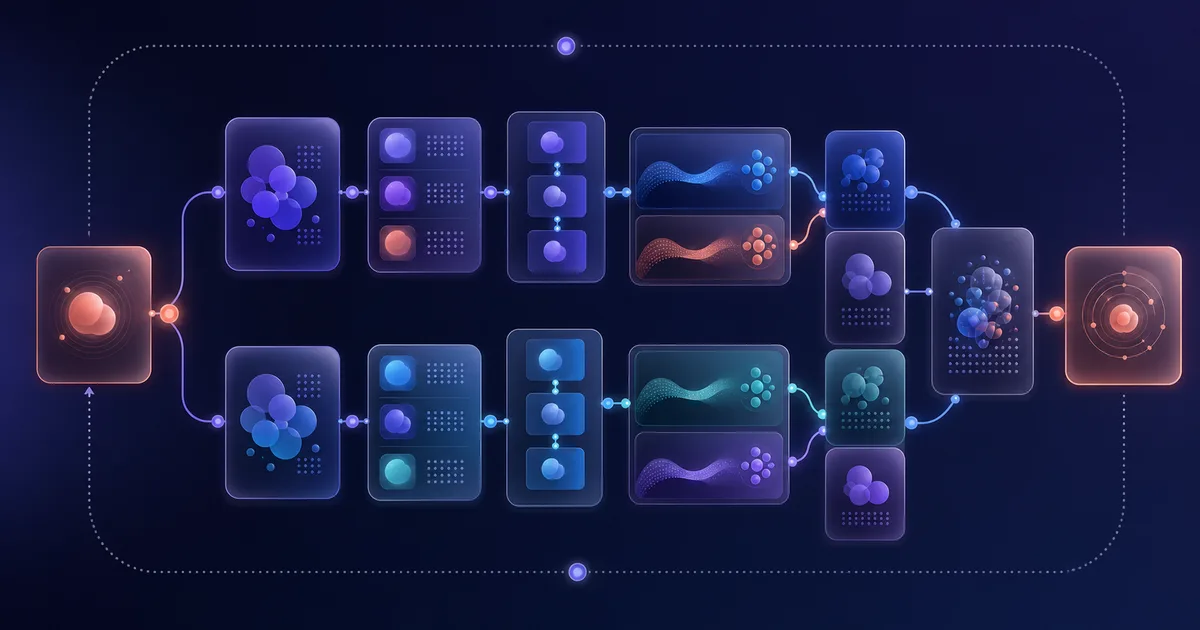
Move from one approved need to a reviewable learning loop
Keep the need, aggregate audience, objective, learning activity, evidence signal, limitation, and human decision visible so a training plan does not become an individual personnel record or an unsupported effectiveness claim.
Confirm the organization-level need and training boundary
Record the approved-need reference, aggregate evidence cutoff, scope, owner role, review date, expiry, and open gaps. CDC needs-analysis guidance explicitly asks whether training is needed, so keep process, tool, policy, or resourcing problems outside a learning response when training would not address them.
Sources: [training-plan-pack], [cdc-needs-analysis], [opm-planning-evaluating]
Describe aggregate learner groups and prerequisites
Use role or work-context groups, approximate counts, shared prerequisites, and group-level accessibility and support needs. Do not list names, contact details, health information, individual accommodations, performance or disciplinary information, personnel IDs, or automatic assignments.
Sources: [training-plan-pack], [cdc-quality-training-standards]
Write observable objectives without certifying learners
Connect each objective to an approved need, one or more aggregate learner groups, an observable action, conditions, a target description, and a non-certifying assessment reference. CDC describes learner-centered, action-oriented, specific, achievable, and measurable objectives, but a well-formed objective does not prove competence or an outcome.
Sequence modules, alternatives, practice, and support
Give every module a contiguous sequence, prerequisite module IDs, objective IDs, at least two delivery methods, a duration, accessibility alternatives, a support-owner role, practice references, and assessment references. Alternatives are planned options, not a certification that every delivery is accessible.
Sources: [cdc-training-development], [cdc-quality-training-standards], [training-plan-pack]
Plan assessment and evaluation as bounded signals
Keep practice and assessment records aggregate-only. For every evaluation signal, state the level, numerator, denominator, window, method, limitations, evidence status, confidence, and evidence IDs. Plan evaluation early and distinguish descriptive signals from causal or outcome claims.
Sources: [cdc-evaluation-plan], [cdc-measuring-effectiveness], [training-plan-pack], [rfc-2606]
Reinforce, review, revise, and expire assumptions
Name follow-up triggers, actions, role owners, and due windows. Mirror open gaps into the human-review record, preserve change triggers, and expire stale assumptions. A validator can require this workflow, but it cannot approve delivery, assign learners, operate an LMS, or replace accountable review.
Sources: [cdc-quality-training-standards], [training-plan-pack], [json-schema-2020-12]
What this training plan template owns
Use this pack for one bounded organization-level learning response and an aggregate objective-to-evidence loop. Keep individual personnel decisions, regulated qualification, platform operation, and broader adoption work with their accountable owners.
Included
- Stable plan and version IDs, approved-need references, aggregate learner groups, role contexts, prerequisites, group-level accessibility and support needs, objective conditions and non-certifying targets
- Ordered modules, delivery alternatives, practice and assessment references, aggregate evaluation signals with denominators and limitations, evidence status and confidence, gaps, follow-up, role aliases, review, expiry, and change triggers
- Editable Markdown, fictional starter and completed JSON, editable CSV module register, closed Draft 2020-12 schema, dependency-free validator, 145 tests, and deterministic allowlisted archive
Not included
- Employee onboarding or offboarding, individual development plans, performance management, discipline, attendance, named assignments, personnel records, HRIS or LMS operation, and automatic assignment or approval
- Course-business or marketing plans, fitness programs, K-12 or special-education plans, clinical or regulatory qualification, accreditation, certification, mandatory-training compliance, and legal or safety advice
- Broad change-management adoption, general project schedules, individual accommodations or health records, raw learner responses or scores, and claims of competence, readiness, accessibility, safety, effectiveness, transfer, productivity, or business outcomes
DOWNLOADABLE RESOURCE
Download the training plan template pack
Start with the editable Markdown or starter JSON, inspect the completed Cedar Signal fictional plan, and use the CSV register to edit module, objective, practice, assessment, and accessibility links without introducing individual learner data.
Training plan template pack
A fictional aggregate workforce training plan connecting an approved need to learner groups, objectives, modules, delivery alternatives, practice, non-certifying assessment, evaluation signals, follow-up, evidence, gaps, and human review.
Format: Markdown, JSON, CSV, JSON Schema, validator, and tests in one reproducible ZIP archive
Locally reproduced August 1, 2026. SHA-256: 230b16a81d1909ecdd8a350b2250c6958c149bfcf54cacc0135557805a77b794
Included
- Blank editable plan and completed fictional Cedar Signal Markdown example
- Starter and completed fictional JSON records using reserved example.test hosts and fixture digests
- Editable CSV module register with objective, prerequisite, delivery, practice, assessment, owner, accessibility, and review columns
- Closed Draft 2020-12 schema, dependency-free semantic validator, 145 tests, and deterministic flat ZIP builder
Verification boundary
Validated both fictional records, ran 145 packaged tests, checked closed shapes and reference parity, compared the CSV register with canonical module JSON, copied an exact flat allowlist, fixed file and archive metadata, rebuilt from a clean extraction, and reproduced identical ZIP bytes across time zones.
Three bounded ways to use the training plan
The aggregate evidence contract stays the same when the learning need, delivery mix, or review state changes. These examples describe fictional planning shapes, not results for a real workforce.
Fictional role-based workflow plan
Use when: One approved aggregate workflow need applies to several role contexts that share objectives but need different delivery methods or support options.
Use aggregate group IDs, shared objective IDs, module prerequisites, multiple delivery methods, text alternatives, role-based support owners, and non-certifying assessment references.
Structure
- Keep approximate group counts separate from attendance or personnel records
- Offer delivery and accessibility alternatives without claiming universal accessibility
Watch for: A role-based plan does not assign a named employee, approve participation, document an accommodation, or certify that anyone can perform the work.
Sources: [training-plan-pack], [cdc-quality-training-standards], [cdc-learning-objectives]
Fictional aggregate pilot and revision plan
Use when: A team wants a small, bounded learning pilot and needs to preserve what the aggregate evidence can and cannot say before revising modules.
Record optional aggregate response counts, denominators, exclusions, scenario-set signals, evidence confidence, limitations, and an open gap for evidence that is not yet available.
Structure
- Keep planned signals at zero counts with no evidence IDs until observation occurs
- Keep observed signals descriptive unless the method supports a stronger inference
Watch for: A positive reaction or scenario ratio does not establish competence, workplace transfer, causation, effectiveness, productivity, safety, or an operational outcome.
Sources: [cdc-evaluation-plan], [cdc-measuring-effectiveness], [training-plan-pack]
Fictional reinforcement and human-review loop
Use when: The plan needs a dated follow-up after delivery while the learning owner and workflow owner retain separate responsibilities.
Use trigger-based follow-up actions, role aliases, due windows, open-gap parity, review decisions, source digests, next-review dates, expiries, and change triggers.
Structure
- Require a human decision before delivery and keep automatic approval false
- Expire the record when its approved need, workflow, evidence, or learner-group assumptions become stale
Watch for: A reinforcement action is not an automatic assignment, individual performance intervention, change-adoption program, or general project plan.
Sources: [cdc-training-development], [opm-planning-evaluating], [training-plan-pack]
Decide whether the plan is safe and reviewable
A polished schedule can still hide a missing approved need, individual personnel data, inaccessible delivery assumptions, or an unsupported effectiveness claim. Stop when the record cannot preserve the aggregate planning boundary.
The proposed record contains a learner name, contact detail, employee ID, attendance row, individual score, raw response, health detail, accommodation record, performance note, or disciplinary information.
Choose: Remove it from the public pack and route it to the approved system with the required access, retention, privacy, and personnel controls.
Tradeoff: The planning record carries less individual detail, but it remains an aggregate learning-plan surface rather than a portable personnel file.
The need is not approved, evidence points to a process or tool problem, or the objective cannot connect to an observable learning action.
Choose: Keep the plan in draft, open an evidence gap, and return the problem to the accountable workflow or operating owner before adding modules.
Tradeoff: The plan may pause, but training is not used as a default response to a non-learning problem.
A delivery method has no meaningful alternative, an accessibility or support need is unresolved, or an individual accommodation would need to be published.
Choose: Keep the aggregate support need and safe alternatives in this record, open a gap, and route individual accommodation work to the controlled accountable process.
Tradeoff: The plan does not claim universal accessibility, but reviewers can see what alternatives and unresolved support needs exist.
The requested output is a certification, compliance record, individual development or performance plan, LMS workflow, course-business plan, change-adoption program, or proof of effectiveness.
Choose: Keep this record bounded to organization-level learning planning and hand the adjacent work to its accountable owner with evidence limitations intact.
Tradeoff: The template stops before a broader deliverable, but training planning does not silently absorb HR, regulatory, platform, commercial, or outcome authority.
Aggregate workforce training pack
Start with the need, groups, objectives, modules, and evidence gaps
Download the fictional plan, edit the Markdown or CSV register, and replace placeholders only with reviewed organization-level evidence and safe controlled references.
Download the training plan packSame-release artifact. Local bytes are verified; public availability is checked only after deployment.
Open the action plan templateUse the adjacent owner for approved follow-up tasks, deadlines, dependencies, evidence, and execution status after human review.
What this template cannot prove
A strict plan can reveal unsafe records, broken references, missing denominators, stale assumptions, and authority drift. It cannot make a learning intervention appropriate or turn a fictional signal into a real result.
- A validator pass checks structure, IDs, dates, ordering, references, aggregate-only states, denominators, evidence status, gaps, reserved hosts, unsafe strings, and explicit human-decision boundaries. It does not review instructional quality, accessibility, ethics, privacy, employment law, safety, or suitability.
- Measurable objectives and assessments are planning instruments. They do not certify competence, readiness, compliance, accreditation, qualification, or permission to perform work.
- Evaluation ratios require denominators, exclusions, limitations, and evidence references. Reaction, learning, behavior, or operational signals do not by themselves prove transfer, causation, effectiveness, productivity, safety, or business outcomes.
- This ordinary informational article and its download are AI-credit-ineligible and do not grant signup AI credits. Product pages follow their own current eligibility and plan limits.
Primary sources and verification record
These primary references were checked on 2026-08-01. They support the needs, objective, design, delivery, evaluation, aggregate workforce, structured-record, and safe-fixture boundaries described here. They did not review or endorse this template or the fictional example.
[training-plan-pack] Playcode:Training plan fictional example
Checked August 1, 2026. Supports: The locally reviewed fictional aggregate plan, module register, schema, validator, 145 tests, deterministic archive, non-certifying assessment states, evidence limitations, gaps, and human-review boundary. Public availability remains unverified until deployment.
[cdc-quality-training-standards] Centers for Disease Control and Prevention:Quality Training Standards
Checked August 1, 2026. Supports: A benchmark covering needs assessment, objectives, learner-centered design, evaluation, learner assessment, and follow-up. The page was last updated February 24, 2025. CDC frames all eight standards for training developed or funded by CDC; this pack is only informed by selected planning prompts and does not claim CDC quality status.
[cdc-training-development] Centers for Disease Control and Prevention:About Training Development
Checked August 1, 2026. Supports: A systematic analyze, design, develop, implement, and evaluate process with iterative feedback. The page was updated February 23, 2026 and is framed for public-health training, not as a universal mandate or outcome guarantee.
[cdc-needs-analysis] Centers for Disease Control and Prevention:Assess Training Needs: Conducting Needs Analysis
Checked August 1, 2026. Supports: Identifying aggregate workforce knowledge or skill gaps, asking whether training is needed, and considering barriers and facilitators. The page was updated February 5, 2025. It does not support individual appraisal, diagnosis, or HR action.
[cdc-learning-objectives] Centers for Disease Control and Prevention:Design Training: Learning Objectives
Checked August 1, 2026. Supports: Learner-centered, action-oriented, specific, achievable, and measurable objectives based on needs analysis. The page was updated February 23, 2026. Objective wording does not prove competence or an outcome.
[cdc-evaluation-plan] Centers for Disease Control and Prevention:Evaluate Training: Building an Evaluation Plan
Checked August 1, 2026. Supports: Planning evaluation early and recording purpose, questions, methods, timing, and feasibility. The page was updated May 21, 2026. An evaluation plan does not itself establish effectiveness or causality.
[cdc-measuring-effectiveness] Centers for Disease Control and Prevention:Evaluate Training: Measuring Effectiveness
Checked August 1, 2026. Supports: Aligning assessment to objectives, considering learning and transfer where feasible, and examining combined or aggregate results. The page was updated October 28, 2024. Post-only results do not establish change and no method guarantees transfer or outcomes.
[opm-planning-evaluating] U.S. Office of Personnel Management:Planning and Evaluating
Checked August 1, 2026. Supports: Organization- and occupation-level needs assessment, gap definition, stakeholder, resource, milestone, and program-evaluation context for U.S. federal agencies. The live page exposes no publication or update date. It is not private-sector law or generic compliance guidance.
[json-schema-2020-12] JSON Schema:JSON Schema Draft 2020-12
Checked August 1, 2026. Supports: The schema dialect used for the closed portable record shape. Draft 2020-12 was published June 16, 2022. Schema validation does not establish factual accuracy, instructional quality, authorization, safety, compliance, or effectiveness.
[rfc-2606] RFC Editor:Reserved Top Level DNS Names
Checked August 1, 2026. Supports: Reserved test and example names used for public-safe fictional references. RFC 2606 was published in June 1999 and is cited only for example naming, not as a broader privacy or security assurance.
Training plan template FAQ
What is the difference between a training plan and an individual development plan?
This training-plan owner connects one approved organization-level need to aggregate learner groups, objectives, modules, practice, evaluation, reinforcement, and human review. An individual development plan owns a named person’s goals, feedback, and personnel context and must remain in an approved controlled process, not this public pack.
Can the template assign employees or track individual scores?
No. Group counts, practices, assessments, and evaluation signals are aggregate-only. The validator rejects individual-record and individual-score states, automatic assignment, automatic approval, and automatic assessment decisions. Named enrollment, attendance, scores, and personnel actions belong in approved systems.
Does a measurable objective certify competence or readiness?
No. An observable action, conditions, target description, and assessment reference make a plan reviewable. They do not establish that a learner is competent, ready, qualified, compliant, safe, certified, or permitted to perform work.
How should a training plan handle accessibility?
Record aggregate accessibility and support needs, at least two delivery methods, meaningful alternatives, a support-owner role, and open gaps. Do not publish an individual accommodation or claim that the listed alternatives certify universal accessibility. Route individual needs through the accountable controlled process.
Can evaluation results prove that training worked?
Not by themselves. Record the signal level, numerator, denominator, window, method, exclusions, limitations, evidence status, confidence, and references. Reaction or assessment data may describe a bounded result, but causation, transfer, effectiveness, productivity, safety, and business outcomes require appropriate separate evidence.
Does this article grant Playcode AI signup credits?
No. This is an ordinary informational article with a downloadable resource, so it is AI-credit-ineligible and does not grant signup AI credits. Product entry eligibility and current plan limits are separate.
Prototype after human review
Turn a bounded learning need into a testable support tool
After accountable owners approve the need and delivery boundary, use Playcode to prototype a practice surface or reference tool while learner records, assignments, assessments, certification, compliance, and outcome decisions remain outside the prototype.
Explore prototyping with PlaycodeThis informational article is AI-credit-ineligible and does not grant signup AI credits. Product entry eligibility and plan limits are separate.