QUICK ANSWER
What should a user persona template include?
A user persona template should define an aggregate user group and service boundary, then record task-relevant needs, goals, behaviors, contexts, constraints, accessibility and support needs, evidence references, observed or inferred status, confidence, assumptions, research gaps, owners, and review dates. It should exclude personal data and clearly distinguish research findings from interpretation and untested assumptions.
A useful user persona is an aggregate profile of a group with similar task-relevant needs and behaviors. It should make the service boundary, evidence sources, needs, goals, behaviors, contexts, constraints, accessibility and support needs, confidence, assumptions, research gaps, owners, and review dates visible without inventing a biography and calling it research.
The downloadable pack includes an editable Markdown template, a completed fictional group example, matching JSON, a closed JSON Schema, and a dependency-free validator with mutation and security tests. It is for user-research synthesis. Buyer-persona marketing, user stories and acceptance criteria, journey-map visualization, demographic targeting authority, raw participant data, and product-outcome proof stay outside this article.
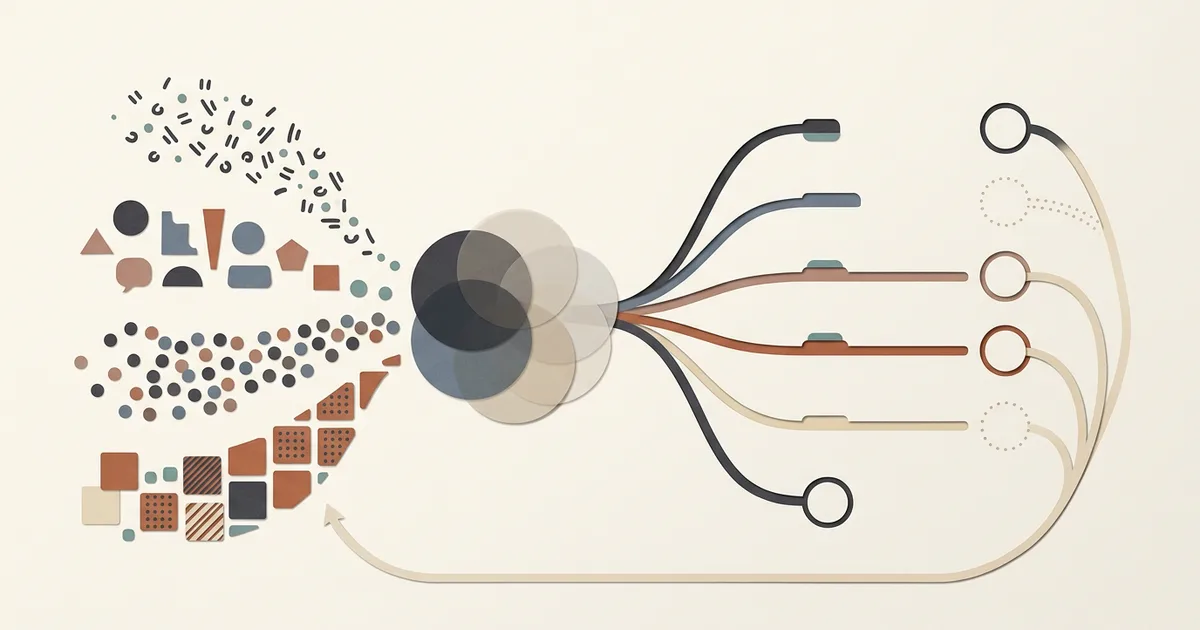
Build the profile from aggregate evidence, not character writing
Start with the service task and actual or likely users, then preserve the line from aggregate source to statement, interpretation, confidence, uncertainty, and review. Keep participant-level material in its authorized research system.
Define the service boundary and task-relevant group
Name the service or task the profile informs and group people by similar needs, goals, behaviors, contexts, or constraints that matter to that task. GOV.UK guidance describes personas or profiles as ways to present what research has learned about groups. A memorable fictional character is not a substitute for that evidence.
Sources: [persona-pack], [gov-user-research-hub], [gov-learning-users]
Register aggregate sources before writing statements
Give each interview synthesis, usability summary, service-data summary, support-log synthesis, survey summary, or desk-research summary a stable ID, observed period, aggregate count, owner, and minimum-purpose reference. GOV.UK planning guidance recommends turning unfounded assumptions into research questions and using profiles to capture what the team learns.
Sources: [persona-pack], [gov-plan-research]
Separate observation, inference, and assumption
Write each material statement as observed, inferred, or assumed. Link its sources, assign confidence, record an interpretation, and add a validation plan for every inference or assumption. GOV.UK analysis guidance separates what was seen or heard from interpretation and then develops findings from grouped observations.
Sources: [persona-pack], [gov-analyse-research], [json-schema-2020-12]
Include accessibility and support contexts without stereotypes
Research with actual or likely users across relevant access and support contexts. GOV.UK participant guidance explicitly includes disabled people, assistive-technology users, people with limited digital skills or literacy, and people who need support. Record demonstrated task needs, not demographic decoration or a claim that one person represents a population.
Sources: [persona-pack], [gov-find-participants], [gov-learning-users]
Minimize data and preserve gaps and review dates
Keep raw notes, recordings, transcripts, identities, and contact details outside the profile. The ICO says personal data should be adequate, relevant, and limited to what is necessary for the stated purpose. Track unanswered questions, owners, planned research, confidence, review-by dates, and triggers so uncertainty cannot quietly become fact.
Sources: [persona-pack], [ico-data-minimisation], [gov-analyse-research]
What this user persona template owns
Use the pack for one aggregate, evidence-backed user-group profile inside a stated service boundary. It owns traceable research synthesis and maintenance, not personal-data storage or downstream marketing and delivery decisions.
Included
- Controlled profile and fictional group IDs, status, version, created and review dates, service boundary, group definition, grouping basis, profile owner, role owners, and review cadence
- Four fictional aggregate evidence sources with stable IDs, kinds, observation periods, counts and units, minimum-purpose references, owners, summaries, and explicit no-personal-data flags
- Eleven task-relevant statements covering needs, a goal, behavior, context, constraints, accessibility and support needs, and assumptions, each classified as observed, inferred, or assumed with source IDs, confidence, interpretation, owner, and review date
- Two low-confidence assumptions with validation plans and three open research gaps with affected statements, source basis, unknown confidence, priority, owner, review date, and planned research
- Editable Markdown, matching fictional JSON, closed Draft 2020-12 schema, strict dependency-free validator, one hundred twenty mutation and security tests, and deterministic ZIP build
Not included
- A named fictional biography, portrait, quote, photo, life story, or individual character presented as user research or as representative of a population
- Demographic targeting without a demonstrated service or research need, stereotyping, identity-based segmentation authority, or a claim that demographic traits explain behavior
- Raw participant notes, recordings, transcripts, participant IDs, names, contact data, screening responses, private evidence, credentials, or another repository of personal information
- Buyer-persona marketing segmentation, positioning, messaging, campaigns, lead targeting, audience activation, or customer-acquisition ownership
- User-story writing, acceptance criteria, backlog or roadmap priority, journey-map visualization, implementation approval, accessibility certification, compliance advice, or proof that a product decision caused an outcome
DOWNLOADABLE RESOURCE
Download the user persona template pack
The ZIP packages the editable template with a completed fictional aggregate profile, matching machine-readable record, closed schema, validator, tests, and deterministic build script. Rebuild it locally to verify the exact allowlist and archive bytes.
User persona template pack
A privacy-bounded user-group profile for evidence sources, task-relevant statements, confidence, assumptions, gaps, owners, and review dates.
Format: Markdown, JSON, JSON Schema, and dependency-free Node.js validator/tests in one ZIP
Locally reproduced August 1, 2026. SHA-256: 4b588c760e1c991083f6ec700c4ad72b45fe2e32a4f2b6671c78ae3977bc0282
Included
- Editable Markdown template and completed fictional Alder Fern Library example with one aggregate user group, four accountable roles, four source summaries, and explicit privacy notes
- Matching JSON with eleven classified statements, two low-confidence assumptions, three open research gaps, maintenance history, and nine explicit false boundary flags
- Closed Draft 2020-12 JSON Schema, strict dependency-free validator, one hundred twenty mutation and security tests, README, package commands, and deterministic allowlisted ZIP builder
Verification boundary
The nine allowlisted source files were reproduced across four time zones, extracted, byte-compared, and validated locally with fixed UTC archive timestamps. This proves deterministic artifact structure and internal consistency, not public availability before deployment, research truth, privacy compliance, representativeness, targeting authority, accessibility, implementation, or outcome.
Three bounded user-group profile shapes
Adapt the group and evidence model to the service question. Keep every material statement classified and sourced, preserve uncertainty, and route buyer marketing, stories, journeys, participant data, and outcome decisions to their canonical owners.
Service-task user group
Use when: People share a task-relevant pattern across several channels or support contexts and the team needs one maintained evidence summary.
The fictional pack groups people renewing a library account who may use a shared device or ask staff for help. Four aggregate sources support eleven statements while inferences, assumptions, gaps, owners, and review dates remain explicit.
Structure
- One service boundary, one group definition, aggregate source register, and statement records for needs, goal, behavior, context, constraints, and accessibility or support needs
- Observed, inferred, and assumed status; source IDs; confidence; interpretation; validation plans; research gaps; owners; and review-by dates
Watch for: The fictional counts and findings demonstrate structure only. They do not represent a real population, prove prevalence, authorize targeting, or show that a service change worked.
Sources: [persona-pack], [gov-learning-users], [gov-plan-research]
Access and support context group
Use when: A service must understand task barriers and support needs across assistive-technology, literacy, digital-skill, channel, or assisted-service contexts.
Describe the task, relevant context, observed barriers, support need, evidence source, confidence, and remaining coverage gap. Recruit actual or likely users and preserve the difference between one observed path and coverage across a wider group.
Structure
- Task-relevant access or support statement with aggregate evidence, observed period, owner, confidence, review date, and narrow interpretation
- Explicit missing contexts, planned inclusive research, privacy boundary, and no certification or generalized demographic claim
Watch for: A profile can guide research and design questions, but it cannot certify accessibility or make one participant, tool, impairment, age, or channel representative of everyone.
Sources: [persona-pack], [gov-find-participants], [ico-data-minimisation]
Early-discovery profile with assumptions and gaps
Use when: The team has partial evidence and needs a reviewable starting profile without allowing unknowns to harden into user facts.
Record direct observations first, mark interpretations as inferred, keep proposed patterns as low-confidence assumptions, and turn uncovered contexts into owned research questions with planned research and review dates.
Structure
- Separate observed, inferred, and assumed statements with source references, confidence, interpretation, and a validation plan where needed
- Open gaps with affected statements, source basis, unknown confidence, priority, owner, planned research, and dated review trigger
Watch for: A polished profile can create false certainty. Retain visible assumptions and gaps until research changes their classification, and do not convert analysis actions into product proof or backlog authority.
Sources: [persona-pack], [gov-user-research-hub], [gov-analyse-research], [json-schema-2020-12]
Decide whether the profile is ready for human review
Structural readiness means a reviewer can trace each material group statement to its aggregate sources, classification, confidence, owner, and review date. The validator cannot determine whether the research is true, representative, ethical, lawful, or sufficient.
The profile reads like one named character, contains an invented backstory or quote, or has no aggregate source register.
Choose: Keep it in draft. Replace character writing with a task-bounded group definition and authorized aggregate evidence references.
Tradeoff: The profile may feel less memorable, but it stops narrative detail from impersonating research evidence.
A statement has no evidence status, source, confidence, interpretation, owner, or review date.
Choose: Do not treat it as maintained. Complete the provenance record or reframe the statement as an explicit research gap.
Tradeoff: The profile carries more visible uncertainty, but teammates can distinguish observation from interpretation and assumption.
The group definition relies on demographics or identity traits without a demonstrated connection to the service task or research question.
Choose: Remove the unsupported targeting field and research the task-relevant need, behavior, context, constraint, access barrier, or support need directly.
Tradeoff: The group may become narrower and harder to label, but the profile avoids stereotypes and unnecessary personal-data collection.
The requested artifact includes raw participant data, buyer marketing, user stories, acceptance criteria, a journey map, or product-outcome claims.
Choose: Keep this profile limited to aggregate research synthesis and hand the adjacent work to its authorized privacy, research, marketing, product, design, or delivery owner.
Tradeoff: There are more explicit handoffs, but one lightweight profile does not silently become a personal-data repository or downstream authority system.
Make user evidence reviewable
Turn the group profile into a bounded research workflow
Describe the source register, statement review, confidence changes, gap queue, privacy handoffs, and human approvals your team needs. Playcode can build the internal software around that process without becoming the research, privacy, accessibility, marketing, product, or outcome authority.
Explore internal toolsThe downloadable template and this ordinary informational article do not grant AI signup credits.
Use the user story template when researched needs become bounded product workThe persona preserves aggregate user evidence; the separately owned story defines a deliverable slice and acceptance boundary.
What this template cannot prove
The pack validates closed fictional records, references, classification, confidence, dates, and boundaries. It cannot observe a research session, inspect a protected source, assess representation, or make a lawful or ethical research decision.
- Alder Fern Library, its renewal service, aggregate counts, statements, owners, assumptions, gaps, and dates are fictional demonstration data, not findings about real people.
- A valid source reference does not prove the evidence exists, was collected with appropriate consent, is accurate, is representative, supports the interpretation, or remains current.
- The profile contains no raw participant notes, recordings, transcripts, identifiers, names, contact data, screening responses, sensitive characteristics, or participant-level quotations.
- A task-relevant group pattern does not authorize demographic targeting, identity-based segmentation, marketing activation, service exclusion, eligibility decisions, or differential treatment.
- The profile does not own buyer-persona marketing, user stories, acceptance criteria, backlog or roadmap priority, journey-map visualization, implementation approval, accessibility certification, legal review, privacy compliance, or product-outcome proof.
- This ordinary informational article and its download do not grant AI signup credits. Eligibility, if any, belongs to separately qualified commercial entry pages.
Sources and verification record
The same-release artifact is the direct source for its fictional records and tests. Current GOV.UK guidance supports research-led group profiles, actual or likely users, inclusion, analysis, and visible assumptions. ICO guidance supports minimum-purpose personal-data handling. JSON Schema supplies the validation vocabulary.
[persona-pack] Playcode:User persona fictional example
Checked August 1, 2026. Supports: The locally reviewed one fictional group, four roles, four aggregate sources, eleven statements, two assumptions, three gaps, one hundred twenty tests, explicit false boundary flags, and exact artifact hash. Public availability remains unverified until deployment.
[gov-user-research-hub] GOV.UK Service Manual:User research - Service Manual
Checked August 1, 2026. Supports: The current GOV.UK user-research guidance map for understanding needs, planning, participants, privacy, methods, analysis, and sharing. It does not prescribe this exact artifact.
[gov-learning-users] GOV.UK Service Manual:Learning about users and their needs
Checked August 1, 2026. Supports: Guidance to learn from existing evidence and actual or likely users, treat non-user opinions as assumptions, describe groups through user profiles or personas, validate needs, and keep user stories as a separate downstream artifact.
[gov-plan-research] GOV.UK Service Manual:Plan user research for your service
Checked August 1, 2026. Supports: Guidance to define research questions, turn unfounded assumptions into questions, identify relevant user groups, create profiles to capture what was learned, plan inclusive research, and revisit the plan as evidence changes.
[gov-find-participants] GOV.UK Service Manual:Finding participants for user research
Checked August 1, 2026. Supports: Guidance to research with actual or likely users, include disabled people and people with support needs, define task-relevant recruitment criteria, limit recruitment bias, protect privacy, and collect only minimum participant information.
[gov-analyse-research] GOV.UK Service Manual:Analyse a research session
Checked August 1, 2026. Supports: Guidance to separate observations from interpretation, group observations into patterns, determine findings, preserve team analysis, and turn remaining questions into future research or separately owned actions.
[ico-data-minimisation] Information Commissioner's Office:Principle (c): Data minimisation
Checked August 1, 2026. Supports: Current guidance that personal data should be adequate, relevant, and limited to what is necessary for the stated purpose, periodically reviewed, and removed when no longer needed. It is guidance, not legal advice or a compliance decision for a specific organization.
[json-schema-2020-12] JSON Schema:JSON Schema Draft 2020-12
Checked August 1, 2026. Supports: The current Draft 2020-12 specification family and metaschema identifier used by the downloadable closed schema. Schema validation checks representation, not research evidence or privacy compliance.
User persona template questions
What files are included in the user persona template?
The ZIP includes an editable Markdown template, completed fictional Markdown example, matching JSON profile, closed Draft 2020-12 JSON Schema, dependency-free validator, one hundred twenty mutation and security tests, README, package commands, and deterministic allowlisted ZIP builder.
Should a user persona be a fictional character?
Not when the character is presented as research. This pack describes an aggregate group through task-relevant evidence, statements, confidence, assumptions, and gaps. A fictional name, portrait, biography, quote, or lifestyle detail can create false certainty and should not replace evidence from actual or likely users.
How should observations, inferences, and assumptions differ?
Observed statements are directly present in the aggregate source. Inferred statements add a reasoned interpretation and require a validation plan. Assumed statements identify a proposed pattern that the sources do not establish; the pack requires low confidence and a validation plan. Every type still needs sources, an owner, and a review date.
Should a user persona include demographic information?
Only when an authorized research purpose demonstrates that the characteristic is relevant and necessary to the service question. Do not add demographic decoration or use identity traits as a shortcut for behavior. This example uses task, context, constraint, accessibility, and support evidence instead and contains no demographic fields.
Can raw participant notes or contact details go in this template?
No. Keep participant identities, contact details, screening answers, raw notes, recordings, transcripts, quotations, and protected evidence in separately governed systems with appropriate consent, access, privacy, security, and retention controls. The profile should carry only minimum-purpose aggregate references and summaries.
Does this persona own buyer marketing, user stories, journeys, or product proof?
No. Buyer segmentation and campaigns, user stories and acceptance criteria, journey-map visualization, roadmap or backlog decisions, implementation authority, accessibility certification, privacy compliance, and product-outcome proof stay with their authorized owners. The template and this ordinary article do not grant AI signup credits.
Build the workflow around the evidence
Create the tool your team uses to maintain groups, sources, and gaps
Start with the fictional pack, replace it with authorized minimum-purpose aggregate references, then describe the evidence-review workflow you want Playcode to build and run.
Build an internal toolNamed humans still own research ethics, participant privacy, evidence interpretation, demographic relevance, accessibility review, buyer marketing, user stories, journey mapping, prioritization, implementation, and every real outcome.